• WWW.YOURHORSE.CO.UK
    The countdown is on! 50 days to go until the European Eventing Championships at Blenheim
    There are just 50 days until the Agria FEI European Eventing Championships take place at Blenheim Palace on Thursday 18 Sunday 21 September.It will be the first time that Great Britain has hosted the European Championships since Blair Castle in 2015 and the first time they have taken place at Blenheim Palace since Zara Tindall won the title aboard Toytown in 2005. Zaras father Captain Mark Phillips has been named as the cross-country course designer. Reigning Olympic champions and current European winners Britain will start as favourites but will face stiff opposition from strong French and German teams at the Oxfordshire event.While exact teams have yet to be revealed, many formidable combinations have been named on individual countrys longlists. Eighteen pairs make up Britains longlist with Paris 2024 gold medallists Ros Canter, Laura Collett and Tom McEwen heading the list. World No.1 Harry Meade and 2022 world champion Yasmin Ingham have also been included.Germanys longlist includes Rio and Paris Olympic champion Michael Jung, Tokyo gold medallist Julia Krajewski and former world champion Sandra Auffarth.Breaking new groundFor the first time in history, Turkey will be represented at a senior European Eventing Championships after Kumru Kuki Say qualified for the competition at the Baborowko Equestrian Festival CCI4*L with Baladin De LOcean LA.The momentum is really starting to build now, said event director, Katrina Midgley.With such a world-class field shaping up we couldnt be more excited to welcome spectators to what promises to be a truly unforgettable Championship. Grandstand tickets have already sold out for the Sunday, which is a real testament to just how exciting this years event will be.Taking place alongside the European Championships will be the FEI Eventing 8&9 year old class and the Eventer Challenge. There will also be tradestands, meet and greet opportunities with This Esme and Meg Elphick and glamping and camping options.For more information and to book tickets click here. Image Libby Law.Related contentLaura Collett leads Britain to Nations Cup victory at BictonRide confidently in and out of the startbox with this advice from Emily KingMaster the 20m circle with Becky MoodyHow to stop a horse chipping in a stride when jumpingFive gears a cross-country horse needs to haveThe post The countdown is on! 50 days to go until the European Eventing Championships at Blenheim appeared first on Your Horse.
    0 Commentarios 0 Acciones 334 Views
  • WWW.HORSESPORTIRELAND.IE
    Young Rider Eventing squad chosen for European Championships in Strzegom
    The Horse Sport Ireland Eventing Young Rider squad has been selected for the FEI Eventing European Championships in Strzegom next month.Dag Albert has chosen a typically strong squad for the championships as Ireland bid for a return to the podium, having last won medals in 2023 when the team landed the silver medal, with Alannah Kelly winning bronze in the individual competition.The Horse Sport Ireland Young Rider squad for the upcoming FEI Eventing European Championships in Strzegom, Poland, in alphabetical order, is as follows:Ben Connors OLS King Aragon (ISH), owned by Kieran Connors and Michelle NelsonOleana Cowan RCA Royal Mist, owned by Amaya CowanGodfrey Gibbons Kilroe Lego Land (ISH), owned Maurice Coleman by OR Kilnamac Kasu (ISH), owned by Marie DunneAmelia McCarthy Finsceal Endeavour (ISH), owned by Zazel McCarthyTom Nestor Cooley Diamond Dancer (ISH), owned by David NestorMomo Sheehy TMX Herby, owned by Morgan Sheehy OR HHS Noble Call (ISH), owned Morgan SheehyReserves (non-travelling) in alphabetical order:Keeva Johnson Cornasaus Lad (ISH), owned by Keeva JohnsonKeelin McCarthy Romans Mr. Kane, owned by Tom McCarthyJack OHaire Jamaica Rose (ISH), owned by Penelope GuinnessHorse Sport Ireland High Performance Eventing Manager Albert said: Im very pleased to confirm the selection of the Young Rider team who will represent Ireland at the upcoming European Championships in Strzegom.There is great talent across the squad this season, which makes it all the more exciting. Im confident the team chosen is well equipped for the challenges that lie ahead at the championships.This is all made possible by the incredible support from the riders families and owners, coachGerald Bloomer, team vet JP King, and Horse Sport Ireland administrator Aileen Cartwright.We are also incredibly grateful to our sponsors, whose continued support is sincerely appreciated.The Irish Youth High Performance Programme is exclusively funded by Horse Sport Ireland and Sport IrelandBucas official supplier to Horse Sport Irelands High Performance programmeThe Horse Sport Ireland Youth High Performance programmes are kindly sponsored by Equieire, TRM Nutrition, Berney Bros, Dubarry and PC RacewearThe post Young Rider Eventing squad chosen for European Championships in Strzegom appeared first on Horse Sport Ireland.
    0 Commentarios 0 Acciones 343 Views
  • WWW.JUSTHORSERIDERS.CO.UK
    Discovering the Ideal Large Holed Haynet: Enhance Your Horse's Health and Feeding Routine
    Section Key Points Introduction Large-holed haynets help simulate natural grazing, reduce waste, and benefit equine health. Why Choose a Large Holed Haynet? Mimics natural grazing behavior, extends eating period, reduces stress, and promotes mental well-being. Key Benefits Reduced Hay Waste Improved Mental and Physical Health Weight Control and Metabolic Management Exercise and Social Benefits Scientific Insights Large-holed haynets balance slowing intake with facilitating a natural chewing rhythm. Choosing the Right Haynet Optimal Hole Size: 3-4 inches Durability: Heavy-duty materials Safety: Breakaway features Capacity: Fits feeding schedule Ease of Use: Clips or loops Tips for Transitioning Gradual introduction Start with larger holes Monitor and adjust as needed Conclusion A well-chosen large-holed haynet enhances horse welfare while reducing feeding waste. Finding the Perfect Large Holed Haynet: A Guide for Horse Owners For horse owners, ensuring horses eat comfortably and healthily is a constant balancing act. One tool that has revolutionized feeding is the large-holed haynet. These devices help simulate a natural grazing pattern, reduce waste, and offer a host of benefits for equine health. In this guide, we explore the reasons why these haynets are invaluable for horse owners. Why Choose a Large Holed Haynet? Horses have a natural grazing behavior, spending over 14.5 hours daily eating small, frequent meals. Modern feeding practices often disrupt this rhythm, leading to stress and obesity. Large-holed haynets mimic grazing by extending the eating period, reducing stress and promoting mental well-being. Key Benefits of Large Holed Haynets Reduced Hay Waste: Haynets significantly cut down on hay wastage by keeping forage contained, potentially saving horse owners up to 46% of their hay costs. This feature is not only wallet-friendly but also eco-conscious. Improved Mental and Physical Health: Specially designed to encourage natural foraging behavior, these haynets help in reducing stress and maintaining proper digestive health, crucial elements in preventing harmful stereotypies. Research indicates that prolonged forage availability has direct mental and physical health benefits. Weight Control and Metabolic Management: By regulating hay intake, these haynets reduce the risk of choking and assist horses with metabolic issues, ensuring they eat slowly while still having access to necessary nutrients. Exercise and Social Benefits: Distributing multiple large-holed haynets encourages horses to move around the pasture, promoting exercise and social interaction, key components to horse welfare. Scientific Insights on Haynet Use Studies have shown that different haynet designs impact chewing and eating behaviors. Research reported that horses fed from small-hole haynets consume hay more slowly compared to those using large-holed designs. This suggests that large-holed haynets strike a balance between slowing intake and facilitating a natural chewing rhythm. How to Choose the Right Large Holed Haynet Here are some considerations when selecting a large-holed haynet: Hole Size: Opt for hole sizes between 3-4 inches. These are ideal for allowing easy forage access while slowing down eating compared to free feeding. Durability: Durability is crucial, especially for horses prone to tearing nets. Choose heavy-duty materials for long-lasting results. Safety: Ensure the haynet is designed with the horse's safety in mind; breakaway features and chew-safe materials can prevent injuries. Capacity: Select a haynet capacity that fits your horse's feeding schedule, reducing the need for constant refilling. Ease of Use: Look for features such as clips or loops that make hanging and carrying the haynet easier for convenience. Tips for Transitioning Your Horse to a Haynet Here are some tips to ease the transition: Gradually introduce the haynet, allowing your horse to become accustomed to eating through the holes. Start with larger holes and observe your horse's eating speed before considering smaller ones. Monitor your horse for any signs of difficulty or frustration, and adjust the setup as needed. Conclusion When it comes to supporting natural feeding behaviors, reducing wastage, and enhancing horse welfare, a well-chosen large-holed haynet proves to be an invaluable tool. By understanding the benefits these haynets offer and choosing the right product, horse owners can enhance the health and happiness of their equine companions while cutting down on unnecessary feeding frustrations. Shop our Jodhpur Collection Horse Riding Boot Collection Horse Riding Gloves Collection Horse Riding Socks Collection With years of expertise, Just Horse Riders offers the best in horse riding equipment and apparel. From horse treats and gifts to everyday horse vitamins & supplements, discover high-quality products designed to improve your horse's wellbeing.```html```
    0 Commentarios 0 Acciones 377 Views
  • WWW.YOURHORSE.CO.UK
    9 things only a horse lover will understand
    Do you consider a yourself a true horse lover? We are too, so weve come up with a few things that only us horse lovers will get. How many of these can you relate to?They like to keep us on our toesEverything, and we mean everything, can be spooked at: a patch of grass thats the wrong colour, their shadow, you, a hedge, other horses, etc However, send a fire engine with a load of sirens past while youre out hacking and theyll not bat an eyelid.Were made of strong stuffYou fill up the wheelbarrow, you push it to the muck heap. Then youve got to get it up the ramp/plank of wood/whatever you use to try to pile up the never-ending mountain of manure. (Also, there is nothing more gutting than filling up the wheelbarrow and having it fall over on the way to the muck heap...)Carrying heavy water buckets filled to the brim? Check.Lifting hay bales/shavings bales/not letting go of an excitable 16.2hh cob on the way to the field? You bet. Who needs a gym, anyway?That horsey smellHay in your hay, the smell of garlic/turmeric/something else on your hands after mixing feeds, the lingering scent of horses on yard clothes youve been wearing for days.That thing you non-horsey people can smell in the supermarket if someones wearing jodhpurs and boots, its them. We dont even notice it anymore.Money cant buy happiness but it can buy a horseWe know, theyre expensive. Its sometimes best not to even tally up how much has been spent.The reality is that all of your money goes towards the horse fund. The truth is, you dont really mind all that much.Who needs a beach in Spain when you can go to Riding Club camp, anyway.Satisfying odd jobsPicking out hooves is oddly satisfying and there is something really rewarding about a freshly swept yard. It will only stay clean for about two seconds, but still.The smell of freshly cleaned tack and the sound of content horses munching hay.So good.Withdrawal symptomsA few days without riding feels like a lifetime and you start to have dreams about being back in the saddle again. You see pictures of horses, drive past horses in a field, hear people talk about horses and are just filled with this sense of longing. Then you ride again and everything is right in the world.(PS You have a good luck every time you see horses in a field even though youve got your own.)The equestrian tanYou get the weirdest tan lines, and your legs will never match your arms.One day you might just turn into a hay baleHay and straw gets everywhere. No matter how tidy you think you are, you will always find some in your hair, in your boots and even down your jodhpurs!Getting into the house without leaving a trail of hay behind (and inducing the wrath of your parent/partner/housemate) is a skill you (and we) still seem to be working on.Its all worth it!All that time, money even the heartache its all worth it in the end.Of course it is!Main image ShutterstockThe post 9 things only a horse lover will understand appeared first on Your Horse.
    0 Commentarios 0 Acciones 342 Views
  • WWW.HORSEILLUSTRATED.COM
    Building on Liberty Basics
    Table of ContentsToggleCircles on a LeadLoose HorseLiberty CirclesAdvancing to Next StepsWhen it comes to liberty training, we start with teaching the horse to come on command, which was discussed in Part 1 of this series. After the horse is coming willingly, we start calling him to us while he is in motion, and after that, we work on liberty circles. Once you have your horse coming to you and circling, you have a big portion of liberty figured out. Heres how you can build on liberty basics.Circles on a LeadAs discussed previously, the cues to call the horse are to step backward, call him with your voice cue, and possibly motion to him with the whip. After your horse is doing that from a standstill, its time to add some energy to the equation. Begin by circling the horse around you, keeping him near the perimeter of the round pen. Photo by Bronwyn IrwinStart by sending the horse around you, wearing a halter and long lead, on a left circle in a round pen. Hold the rope in your left hand and a longe whip or training stick in your right hand. Once the horse has gone around in one or two circles, swing the whip under the rope and out in front of him, which will block his forward motion.Give your voice command, and at the same time, swing the whip in front of the horse to block his forward motion. Photo by Bronwyn IrwinAt the same time, call your horse with your voice cue and step back, drawing him to you. Repeat this a few times, then go the other way and repeat the exercise with the horse traveling on circles to the right.Leave the lead on in the beginning to help the horse understand that he should come to you, that way you can pull on the lead if necessary. Since you have already taught the horse how to do this from a standstill, this part should be relatively easy.Loose HorseOnce you have had some success, take the halter and lead off and repeat the exercise with the horse loose. Send him around, cut him off just a little bit, and at the same time back up to draw him to you.After the basics are well established, remove the halter and lead and ask your horse to circle you at liberty. Photo by Bronwyn IrwinIn some ways it becomes easier once the horse is loose because you dont have to worry about getting tangled up in the lead rope. However, if youre having any trouble, just put the halter and lead back on until the horse figures this exercise out. You can practice this at different gaits, but I often find the trot is best because there will be enough energy without things getting too fast.Liberty CirclesThere are some misconceptions when it comes to horses circling at liberty; the main one is that a horse running around in a round pen without a halter on is not really a horse circling at liberty because the round pen is holding the horse in. It seems if the pen were bigger, then the horse would be farther away, so its not true liberty.We always start in a pen, but you want to work toward the horse circling with a strong enough connection to you that in theory, he could be doing small circles around you in a 100-acre field.When your horse really understands liberty, it should be the connection that keeps the horse with younot a fence. Photo by Bronwyn IrwinThe only tool you will need for this part is a whip (either a longe whip or buggy whip) or a training stick. Start by backing up to draw the horse to you.When he comes to you, stop backing and use the whip to guide him around you as if you were longeing. However, only send the horse about half a circle around you and then back up again and call him to you. Stop and pet the horse. Keep building off of this. Draw the horse to you, then have him start to circle a bit more, and then draw him back again. What keeps the horse with you is the thought that he shouldnt go far because at any second, you are going to call him back, and then he can stop and take a break. Your horse should look at being with you as his happy place for this training to work.Call your horse to you often and give lots of rest breaks. Your horse must think that being with you is the greatest place in the world for liberty training to work. Photo by Bronwyn IrwinAdvancing to Next StepsBuild up to where your horse will circle a few times around you before you call him back. If you notice that he looks like hes going to leave while doing a circle, call him back right away (before he leaves).If the horse does leave, move him briskly around the perimeter of the pen once or twice, then call him back and repeat the exercise. He will likely learn quickly that its easier to do the small, slower circles around you than the bigger, faster ones around the full pen.Practice on both sides at both the walk and trot. Eventually you can do liberty circles at the lope, but make sure the trot is nearly perfect first. Once your horse will come to you and circle both ways, you have an excellent liberty training foundation on your horse. From here, the world of liberty and all its possibilities open up to you. You can add obstacles, work in different settings, work with more than one liberty horse at onceand the list goes on. Use your imagination and have fun with it!Watch our webinar with Jason & Bronwyn Irwin.This article about building on liberty training basics appeared in the August 2024 issue of Horse Illustratedmagazine.Click here to subscribe!The post Building on Liberty Basics appeared first on Horse Illustrated Magazine.
    0 Commentarios 0 Acciones 419 Views
  • WWW.JUSTHORSERIDERS.CO.UK
    Transform Your Horse Into A Jumping Superstar: Expert Training Techniques And Technology Advances
    Key Points Details The Foundation of a Jumper A strong foundation in training and conditioning is essential for show jumping, focusing on strength, balance, and coordination. Importance of Physical Conditioning Consistent training such as free jumping and walking exercises enhance young horses' jumping abilities. Data-Driven Techniques Using kinematic analysis and sEMG helps identify muscle patterns for successful jumping. Embracing Modern Technology Accelerometer data classifies show jumping activities accurately, enabling customization of training programs. Promoting Confidence in Horses Psychological training builds trust and confidence, reducing refusals and knockdowns. Forging Strong Rider-Horse Partnerships Trust is fostered through consistent communication and shared skill growth between rider and horse. Success Stories & Real-World Results Intense training showed significant improvement in jumping efficiency and reduced refusals in trained horses. Real Measurement of Improvement Biomechanical analysis has led to enhancements in jump height and duration. Facts and Figures Adaptive training with accelerometers has 100% accuracy in classifying jumping training. Practical Advice for Aspiring Riders Consistent foundational training and gradual skill building are essential for developing coordination, balance, and confidence. Transforming a clumsy horse into a confident jumping superstar is not simply a dream but a reachable reality through strategic training, attention to details, and dedication. With show jumping being an exhilarating test of both rider and equine prowess, this article provides a deep dive into methods that ensure your horse jumps like a superstar. The Foundation of a Jumper A strong foundation in training and conditioning is vital. Without basic strength, balance, and coordination, a horse cannot excel in the demanding discipline of show jumping. Early training focused on building impulsion (hindlimb engagement) and joint articulation leads to efficient jumping technique (van Weeren et al., 2019). Importance of Physical Conditioning Physical conditioning should never be underestimated. Testing by van Weeren et al. shows that young horses with consistent training demonstrate superior jumping abilities. A blend of free jumping, walking exercises, and muscle-building activities contribute to this improvement. Data-Driven Techniques Relying on data and technology can give you the edge in training. By employing kinematic analysis and surface electromyography (sEMG), trainers can determine specific muscle patterns such as shorter gluteal contractions at take-off, which equate to successful jumping (PubMed studies). Embracing Modern Technology Advancements in technology, including accelerometer data, have allowed trainers to classify show jumping activities with pinpoint accuracy, enhancing their ability to tweak and customize horse training programs for unique needs (MadBarn's research). Promoting Confidence in Horses The psychological aspect of training is just as crucial as the physical one. A horse must trust its body and its rider to perform at its best. Gradual exposure to increasingly complex jumping tasks helps build their confidence exponentially, reducing refusals and knockdowns. Forging Strong Rider-Horse Partnerships The connection between a rider and their horse is sacred, and in Jumping, it becomes clear that trust is paramount. Consistent communication and shared growth in skills cultivate that trust, letting the horse approach obstacles with courage and certainty. Success Stories & Real-World Results Looking at success stories, a cohort of foals exhibited significant improvement when subjected to intensive, five-day-a-week training. By age 4, these horses were not only jumping efficiently but also showed fewer refusals in comparison to their untrained counterparts. Real Measurement of Improvement Applying biomechanical analysis and muscle activation monitoring has helped trainers and riders identify areas needing improvement. Tailored exercises have resulted in measurable enhancements in jump height and duration, showcasing science working hand-in-hand with traditional horsemanship approaches. Facts and Figures Jumping Proficiency: It has been shown that jumping training classified using accelerometers is 100% accurate, highlighting the precision provided by modern-day monitoring tools. Horses competing at the highest levels can clear 1013 obstacles up to 1.70 meters, a testament to their muscle power and coordination. Practical Advice for Aspiring Riders Jumping isnt just for the highly trained, its for those dedicated to the sport. Its essential always to remember the basics; a horse relies on consistent, foundational training. Gradually build upon exercises to further develop coordination, balance, and confidence. Embrace Equestrian Apparel Proper apparel ensures safety and enhances the riding experience. Check out Just Horse Riders' Jodhpur Collection to keep you and your horse decked out in the finest gear. Step Up Your Riding Boots Game Don't underestimate the power of good footwear. Explore types of boots that cater to different needs at this collection and invest in quality equestrian boots. Conclusion Transforming a clumsy horse into a confident show jumper requires deliberate training, informed by scientific insights, and a collaborative harmony between rider and horse. By integrating contemporary technology with time-honored traditions in horsemanship, you can foster an unbeatable show jumping partnership primed to excel. Should you need additional insights or equipment enhancements for both horse and rider, resources such as horse supplements and appropriate stable rugs available at Just Horse Riders can support this transformative journey. ```html```
    0 Commentarios 0 Acciones 378 Views
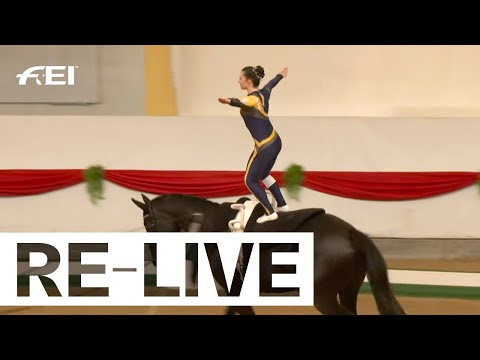
  • LIVE | FEI Vaulting World Championship for Young Vaulters - Compulsory test (Male & Female)
    Enjoy now the Compulsory test (Male & Female) of the FEI Vaulting World Championship for Young Vaulters in Stadl Paura ...
    0 Commentarios 0 Acciones 339 Views
  • Day one? Done! | Individual Senior Female Compulsory - FEI Vaulting European Championship 2025
    The individual senior female compulsory test marked the kick-off of the FEI Vaulting European Championship for Seniors and ...
    0 Commentarios 0 Acciones 342 Views
  • WWW.YOURHORSE.CO.UK
    This ragwort removal fork is so good that we virtually argued over who would use it!
    Your Horse is supported by our audience and when you purchase through links on our site, we may earn an affiliate commission.Heres how it worksOne of my horse paddocks used to boast about four pieces of ragwort a potentially lethal poisonous plant for horses in early summer. Now the number is more like 40. Im not sure what has caused this dramatic escalation in numbers, but its a pest because I have to move my mare, Panda, to ensure that she doesnt eat it. Having said that, I have never known one of my horses munch on ragwort because they always have plenty of forage, but those on starvation rations may be tempted and it is a very dangerous plant that can ultimately kill a horse. Exercise caution, therefore, if you see it appear in your fields and make sure that every piece including the roots are removed and burned or disposed of safely. Also always wear gloves when doing so.Initial thoughtsA month or so ago I was contacted by a sales manager from Spear & Jackson, one of the UKs leading manufacturers of garden tools, asking if I would like to test its new Ultra-Weeder Ragwort Removal Fork. This offer was manna from heaven as previously I had always relied on a bog standard garden fork, which admittedly did the job, but it was tough, laborious work.It also made huge holes in my paddock and it never coped in very hard, dry ground.When I say we, I mean that ragwort removal isnt just my job at home, but its a whole family affair. Last year I roped in my son, Will, just back from university. A satisfying, speedy processMy husband, Andrew, is usually in charge, especially of locating the used sacks into which every nuisance plant is popped to prevent any of it dropping and potentially seeding in other spots in the paddock. This year my daughter, Chloe, assisted Andrew and myself, admittedly reluctantly at first, but after the first five plants she was enjoying the experience so much that she was still removing ragwort an hour later, with no moaning at all. In fact, the three of us virtually argued over who would use the two tools that had been supplied as the process was so satisfying, enjoyable and speedy too.Even in hard, dry conditions like we had during a hot June, this fork is effectiveFirst impressionsThe ease at which plants relinquish their hold on the soil, even in hard, dry conditions like the ones we tested in (we conducted our test during mid-Junes sizzling hot spell) is impressive.When you hear that Spear & Jackson developed this new, innovative tool in collaboration with horse riders and yard managers, it becomes clear why it is actually so good.First and foremost, its a robust, well made tool. That doesnt mean that its overly heavy, but it is solid and you can tell from the get-go that the quality is excellent. In fact, I would have no doubt in taking a punt that it is likely to still be in use in 10 or even 20 years time.I found that small ragwort plants came out very easily using this forkEase of useAdditionally, its super easy to use. Small plants usually come out with just one thrust into the soil and then a pull down on the extra wide T handle. Usually the prongs remain in the root/soil as you remove the plant from the earth, so that you can manoeuvre flowers, stem and root together into your sack or wheelbarrow with no hand contact needed. At the point where you hover the plant over the open sack, the pump-action mechanism releases the root from the prongs.I like that the pump-action mechanism releases the root from the prongs no hands required!Removing bigger plantsBigger plants need a little loosening first. We went around each one, putting the prongs into the soil in four places, lifting lightly, but not pulling yet, and then, when the soil around it was loose enough, with one almighty pull even the tallest ragwort plant would obligingly come away from its place of residence with its roots too.Long term, one of the key benefits of the Ultra-Weeder isnt just its ability to do such an exceptional job of ragwort removal. The divots it creates are very small compared to those made by a garden fork, and so just a tiny bit of soil placed in the holes will soon see the paddock looking as good again as it did pre ragwort invasion.Divots are much smaller compared to those made by a regular garden forkFinal thoughtsI would not only recommend the Ultra-Weeder Ragwort Removal Fork to every equestrian I know I would shout its brilliance from the rooftops. This really is a must-have addition for any yard that suffers a yearly ragwort assault. And besides all that, at just 31.99 its a complete steal.Key featuresDurable all-metal construction: Built for long-lasting strength and performance.Extra-wide T-handle: Soft-feel, non-slip grips for enhanced comfort and control.Wide foot treads: Provide stability and ease of use when inserting into soil.Innovative pump-action mechanism: Allows for easy ejection of the weed without direct contact.Key informationFull name: Spear & Jackson Ultra-Weeder Ragwort Removal ForkRelated contentPlants that are poisonous to horses in picturesVet advice: how ragwort affects horses when eatenHow to tell if a horse is happyExpert guide to strip grazing fieldsThe post This ragwort removal fork is so good that we virtually argued over who would use it! appeared first on Your Horse.
    0 Commentarios 0 Acciones 328 Views
  • BOSANKOSPORTSHORSES.COM
    More byeh finalists !
    Congratulations to Louis pearn and Rodriguez winning the 4yo byeh qualifier at ryedale show this weeklouis now makes it the 10th Bsh graduate this year to qualify for 4yo the final !there are also 9 x 5yo heading there in September!well done to all connections ..#Bshgraduate
    0 Commentarios 0 Acciones 614 Views