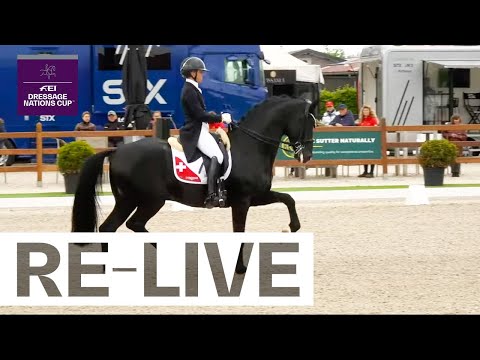
• LIVE | Grand Prix Special - FEI Dressage Nations Cup 2025 Lier
    Enjoy now the Grand Prix Special part of the FEI Dressage Nations Cup 2025 Lier Subscribe to our YouTube channel ...
    0 Reacties 0 aandelen 213 Views
  • THEHORSE.COM
    Can Dressage Cause Neck and Back Pain?
    Dressage can provide horses with a good foundation for their training, regardless of their main discipline. | iStockQ. Does dressage have a positive or a negative effect on a horses neck and back and his comfort and overall health?A. As most dressage trainers know, the answer depends on the skill and fitness of both the horse and the rider. With dressage, the rider is trying to accentuate natural movement patterns, while at the same time inducing head and neck positions and collective movements though set gait patterns. This can appear to be quite easy for some horses and their riders but much more problematic for others. Physical fitness requirements for both horse and rider include strength, core stability, and flexibility. Neck and back pain have negative influences on these attributes. Repetitive-use injuries are common in any equine athlete. Excessive caudal cervical extension can predispose to cervical osteoarthritis. Heavy or unstable riders can aggravate existing impinged thoracolumbar spinous processes and hind-limb lameness. The improper use (of tack) or ill-fitting tack also contributes to neck and back problems. In any athlete the constant reassessment of equipment, modifications in training, and use of preventative care is needed to maintain athletic conditioning and performance.In general, the horse-rider skills required in dressage provide a good foundational training across all equestrian disciplines. No matter the ridden activity, dressage provides the basic skills required to develop healthy horse-rider interactions, coordinated movement patterns at controlled speeds, and induced collected movements. Conversely, a lot of horses used in dressage can also benefit from cross-training during extended hacks, long-line work, or exercise over ground poles and small cavalletti.Where we get into problems is when riders do not put in the required time or incorporate the needed skills for proper training. Several studies have reported that most owners do not recognize neck or back pain in their horses and are not able to determine if their saddle fits appropriately or not. If these common issues are overlooked or not recognized, then continued ridden exercise can be detrimental. While this problem is not limited to dressage, asking horses to work through their pain is not productive and is often harmful. Any activity that is done too long, too intense, or too frequent can predispose a horse to fatigue and injury. Like us, a good balance between work and time off is needed to maintain health and well-being.
    0 Reacties 0 aandelen 247 Views
  • THEHORSE.COM
    Balancing Work and Rest for Horses Long-Term Soundness
    Giving horses sufficient time to recover from athletic events could help them avoid acute injury and long-term health problems.The recovery time needed after competition depends on many factors, including the individual horse, type of work performed, age of the horse, and his general health. | FEI/Benjamin ClarkTraining and conditioning sport horses helps prepare them both physically and mentally for competition, but the process can take a toll on their bodies. Without adequate rest, a horses body cannot fully recover, leading to overexertion and potentially acute injury or longterm soundness problems, increased risk of injury, and the horse becoming mentally burnt out.Recovery activities and the amount of time a horse needs to recuperate depend on the individual horse and his workload. For example, a horse jumping a 1.60-meter (5.25-foot) course in competition needs a different recovery plan than a racehorse in training or a dressage horse competing second level.The recovery time (needed) is dictated by the individual horse, the type of work performed, the general health of the body, age of the horse, and so on, says Tim Worden, PhD, an equestrian sports performance consultant based in Ontario, Canada. In general, younger and healthier horses will recover faster than older horses or those struggling with health issues.How The Horses Body RecoversFollowing exercise, the body works to restore normal function, repair damaged structures, remove any by-products of exercise, and replenish resources such as energy, says Worden. Additionally, exercise stimulates different signaling pathways, which lead to proteins being assembled in the body to improve exercise tolerance (e.g., structures in muscle that can improve oxidative capacity or increase force output) for the next time the horse needs to perform a strenuous activity.He adds that these processes take time, and a lack of proper rest can cause overexertion in the short-term or overtrainingan imbalance between workload and recoveryin the long-term. While allowing the horse to recover from a workout on Monday, you can still perform work on Tuesday, assuming you accommodate the fatigue level from the preceding day and steer clear of exercises that place similar demands on the body (for example, avoid doing two high-intensity jumping workouts on back-to-back days), he says.What Can a Horses Recovery Time Look Like?Extended periods of turnout will go a long way in helping horses recover from daily trainingand competition. | Adobe stockRecovery can be divided into two categories: passive and active. Passive recovery involves no added physical activity, which for horses usually means spending a day turned out with no ridden exercise or groundwork, says Worden. Active recovery is the deliberate prescription of low-to-moderate-intensity exercise to aid in the restoration of the horses body, he explains. This could be going for a trail ride or a light walk, trot, and canter on a track or in a field to let the horse stretch his body.Recovery will vary with the type of exertion and the horses level of fitness,says Steve Adair, MS, DVM, Dipl. ACVS, ACVSMR, associate professor at the University of Tennessees College of Veterinary Medicine, in Knoxville. Recovery time may be a few hours between events up to a few days. Recovery time can be anything from a complete layoff to non-sport-specific exercise such as trail riding.If I am building a training program, I may have one passive recovery day per week (assuming the horse can have extended turnout), but most of the time I prefer to use active recovery means, says Worden. Active recovery is helpful for pumping nutrients to the musculoskeletal system while simultaneously removing molecules and chemicals that accumulated during the preceding intense exercise.Active recovery can also give riders a chance to identify any potential soundness issues during less-intense training and provide horses with a mental break from typical ridden ring work.In my opinion, the No. 1 recovery method will always be active recovery, says Worden. Getting horses out of their normal environment and doing something fun. Some horses enjoy going for hacks, others enjoy controlled gallops on a track, and some will enjoy going to the beach. Figure out what allows your horse to mentally recharge and build that into your program as often as possible.Adair says the type of recovery time horses need varies tremendously depending on the sport. For instance, a halter horse is not going to need much recovery between shows, whereas a 100-mile endurance horse may require several days to a couple of weeks for recovery, he explains.The Trainers Role in Planning Recovery TimeWhen building a program, trainers should tailor a horses recovery time to match his workload. As trainers, we are essentially stress managers, says Worden, applying stress in the form of exercise to stimulate the signaling pathways mentioned earlier. This will ultimately result in improved aerobic performance, technique, power generation, and so on.Trainers should also ensure the horses recovery time is efficient and maximizes the training benefits. A horse can perform a lot of quality work in training, but if there are issues with the recovery means chosen, then any potential gains will be lost or, in worst-case scenarios, lead to injury, Worden adds.Always consider fitness when planning recovery time. The less fit an individual, the longer the recovery period that is needed, says Adair. The tissues (muscles, tendons, ligaments, cardiovascular system, etc.) of an unfit individual have not been conditioned to withstand heavy stress, thus they are more susceptible to injury.Riders and trainers can work with exercise physiologists and their horses veterinarians to perform multiday fitness tests designed to determine horses readiness to perform following a variety of recovery times, says Worden. Fitness wearables, which can collect information on the movement and health data (i.e., heart and respiration rates), can also give trainers and veterinarians more information about horses optimal recovery times, especially if used in daily training.Do Long Periods of Rest From Exercise Benefit Horses?In some cases trainers might choose to give horses several weeks of rest, especially during the winter in colder climates.However, long periods of complete rest are often not favorable to a horses health; keeping horses at a minimal level of fitness is often more beneficial, says Adair. Exercise and movement are important to prevent nagging issues from becoming a problem, he explains. For example, older horses with arthritis tend to fall apart if they are laid off for several weeks. It is better that they have some type of exercise, even if it is just trail riding.Happy and sound mature horses in a well-constructed training program often do not need extended periods of rest, adds Worden. I would prefer to give a week or 10 days of passive and active recovery a few times throughout the year versus one or two months off at one time, he says. The hardest thing to do in sports programming is to build an athlete back up (from significant time off or an injury) so, for that reason, I tend to stay a bit further away from extended time off.He adds that longer rest periods can help horses that have been overtrained, because giving the body time to fully recover is often the best way to counteract overtraining. Once a horse has reached the overtraining stage, you cannot continue to train through it, Worden says. If you do, you are likely to have an injury arise at some point.Longer periods of rest might also benefit younger horses because it gives them a break from the training environment, which can be mentally draining for them. Having downtime turned out with other horses can help them remain happy and sound in their work in the future.Care During RecoveryProper foot care is very important, says Adair. Correctly shoeing and trimming the foot to match the conformation of the leg and offer maximum weight-bearing support under the limbs can help horses maintain long-term soundness and reduce their risk of injury.Chiropractic evaluation and massage therapy can also be of benefit, he adds, noting that while there are many anecdotal claims about the benefits of complementary therapies for recovery, more research is needed to confirm their efficacy.Having a skilled team available to regularly evaluate the horse will help maximize recovery time. Someone who can listen with their hands is vital for both guiding therapy and training decisions, explains Adair. To know exactly where the horse is muscle sore following a workout and how the body responds to different types of exercises can tell you a lot about strengths and weaknesses.Take-Home MessageAppropriate recovery time is crucial to a horses long-term health and happiness in his work. Following exercise, a horses body needs to restore normal function, repair, and replenish energy supplies. The amount of time a horse needs to recover can vary greatly depending on the individual and the work he performs. Riders and trainers can use both active and passive recovery in their training programs and should find active recovery methods horses enjoy to help them recover mentally from challenging work.Know the horse. Ultimately, the most important thing for owners, riders, trainers, grooms, etc., to do is observe the horse and listen to what it is telling you, says Worden. If you know a horse well, then you will be able to detect slight personality and movement characteristics that indicate it is not yet fully recovered and may need an extra day before the next workout. It is always better to give an athlete an extra day off than to push them too soon and (risk) an injury or impact their confidence.This article is from the Older Horse 2025 issue ofThe Horse: Your Guide to Equine Health Care. We at The Horse work to provide you with the latest and most reliable news and information on equine health, care, management, and welfare through our magazine and TheHorse.com. Your subscription helps The Horse continue to offer this vital resource to horse owners of all breeds, disciplines, and experience levels. To access current issues included in your subscription, please sign in to theAppleorGoogleapps ORclick herefor the desktop version.
    0 Reacties 0 aandelen 236 Views
  • WWW.YOURHORSE.CO.UK
    Paralympic dressage champion dies aged 76
    Pioneering para dressage rider Anne Dunham passed away on Sunday at the age of 76.Anne won 32 championship medals for Great Britain in a career which spanned 23 years. She rode at five Paralympic Games, winning 10 medals six of which were gold, as well as at multiple World and European Championships.She was a trailblazer, tireless campaigner for her sport, fierce competitor and inspirational mentor.At the age of eight, Anne started riding at a local stables in Tyne and Wear and just a few years later she was running a yard of 80 horses at weekends. She continued to ride even after she was diagnosed with multiple sclerosis at the age of 27 and became a wheelchair user. Later in life, thanks to medical advances, she was correctly diagnosed with dystonia.Anne made her debut on the British team at the World Championships in 1994 and rode at her first Paralympics in Atlanta two years later. She was a regular fixture on the British team until 2017, when she retired from competitive riding as one of Britains most decorated para dressage riders.A huge lossAnne was a wonderful, dedicated and devoted member of the ParalympicsGB team whom I had the absolute pleasure of knowing since 2002, said Penny Briscoe, ParalympicsGB chef de mission.While her remarkable achievements over 20 years in Para dressage speak for themselves, what always stood out for me was her commitment to being her absolute best and encouraging the best from those around her.Anne really was a team player and represented the heart and soul of ParalympicsGB with passion and professionalism. The world of Para sport will miss her greatly and my deepest sympathy goes out to her family and friends.Anne enjoyed success aboard several horses including LJT Lucas Normark and Olret but it was Teddy Edwards, the Welsh cob with whom she won Paralympic, World and European titles, that she referred to as her horse of a lifetime.She was awarded an MBE in 2009 and received an OBE in 2017.InspirationalAnne was inspirational. She was the driving force behind me, pushing and succeeding to get para riders a pathway through British Horse Society qualifications, said Pammy Hutton, her trainer and friend who runs Talland School of Equitation.I was also never sure who was coaching who! She helped me, Charlie and Pippa [Pammys children] and fellow rider Suzanna Hext to name a few; whilst not a qualified coach, behind the scenes she was amazing and gave so much help, especially mentally.I am in our indoor as we speak and her words are with me still, and her words will stay with them too for their lifetime.She was a perfectionist and every step on a horse had to be perfect. I cannot repeat what she said when one half circle was one step short! A week later she won gold again for Great Britain and her footfalls were exact! She was unbelievable and if she had a gold medal to go get, if she humanly could, she would and did.She even asked permission to retire, who does that?! She lit up Talland andI will miss her so very much.Related contentHow to tell if a horse is happyUK bans live export of horses for slaughterPetition set up with the aim of updating the Dangerous Dogs Act to better protect horsesPublic attitudes towards horse sport on the right track but there is still more to doLearn to read your horses body language with this expert adviceThe post Paralympic dressage champion dies aged 76 appeared first on Your Horse.
    0 Reacties 0 aandelen 276 Views
  • LIVE | FEI Jumping Nations Cup Youth 2025 - Young Riders (1.45m) Busto Arsizio (ITA)
    Enjoy now the Young Riders (1.45m) class of the FEI Jumping Nations Cup Youth 2025 in Busto Arsizio (ITA) Subscribe to ...
    0 Reacties 0 aandelen 299 Views
  • WWW.JUSTHORSERIDERS.CO.UK
    The Ultimate Guide To Choosing An Elegant And Functional Dressage Saddlecloth
    Key Aspect Details Materials Opt for breathable fabrics like cotton or neoprene. Ensure airflow and moisture management. Design and Fit Complement the horse's withers; use high-withered or front-riser pads as needed. Colors and Patterns Traditional white is common, but navy, black, and burgundy offer elegance. Absorption and Support Gel pads provide impact absorption; breathable layers ensure comfort. Durability and Maintenance Choose cotton/polyester for durability; wash in cold water, air-dry. Embroidered Logos Logos must not exceed 200 square cm for professional riders. Elegant Colors Subtle colors like navy and black add elegance without being flashy. Choosing the Perfect Dressage Saddlecloth: A Guide to Elegant and Subtle DesignsWhen it comes to dressage, every detail matters, from the rider's attire to the horse's tack. One crucial element is the saddlecloth, which not only adds a touch of elegance to the overall appearance but also provides essential support and comfort for the horse. In this guide, we'll explore the key considerations for selecting the perfect dressage saddlecloth, focusing on elegance, subtlety, and functionality.Understanding Dressage Saddlecloth BasicsDressage is a highly disciplined equestrian sport that requires precision and harmony between the horse and rider. The saddlecloth plays a vital role in this harmony by ensuring the saddle fits comfortably on the horse's back, providing support and cushioning, and enhancing the aesthetic appeal of the pair.Key Features to Consider Materials: The choice of material is crucial. Breathable fabrics like cotton or neoprene are preferred as they allow for airflow and moisture management, reducing the risk of irritation or discomfort for the horse [source]. Design and Fit: The design should complement the shape of the horse's withers and the saddle. High-withered horses benefit from a high-withered saddlecloth, while a front-riser pad can help balance the saddle on horses with lower withers. Colors and Patterns: While white is traditional in dressage competitions, other colors like navy, black, and burgundy are also popular for their elegance and ease of maintenance [source].Functional ConsiderationsIn addition to aesthetics, the functional aspects of a saddlecloth are equally important. Here are some key points to consider:Absorption and Support Gel Dressage Saddle Pads: These pads are thin, like half-pads, but provide excellent impact absorption and weight distribution. They are ideal for horses with sore backs. Breathable Layers: Layers like honeycomb textures ensure a non-slip fit and promote airflow, enhancing comfort for the horse [source].Durability and Maintenance Materials: The choice of fabric affects durability. Cotton and polyester blends are common for their balance of breathability and durability. Care Instructions: Understanding how to wash and maintain the saddlecloth is crucial. It should be washed in cold water with gentle detergents and air-dried to preserve the fabric.Elegant and Subtle DesignsElegance in dressage is not just about functionality but also about aesthetics. Here are some design considerations:Embroidered LogosProfessional riders can use embroidered logos on their saddlecloths, but they must not exceed 200 square cm.ColorsWhile traditional white is often preferred for competitions, other subtle colors like navy or black can add a touch of elegance without being too flashy.ConclusionChoosing the perfect dressage saddlecloth is a balance of form and function. It must be comfortable for the horse, provide the necessary support, and enhance the overall appearance of the horse and rider. By considering the material, design, color, and functionality, you can find a saddlecloth that not only meets the technical requirements of dressage but also adds a touch of elegance to your performance.For more on elegant rider apparel, visit our Jodhpur Collection. And don't forget the essentials like our Horse Riding Boot Collection and Horse Riding Gloves Collection. Keep your performance seamless with the right gear!
    0 Reacties 0 aandelen 300 Views
  • Winning Round - Scott Brash - LGCT Grand Prix Shanghai
    Catch up on all LGCT events and access exclusive content on GCTV - https://gctv.gcglobalchampions.com Keep up to date with ...
    0 Reacties 0 aandelen 327 Views
  • BLOG.CITRUS-LIME.COM
    XC Talk with Harry Meade at Bicton International
    Join Us for an Exclusive XC Talk with Harry Meade at Bicton ArenaAre you passionate about eventing and looking to sharpen your cross-country skills? Dont miss this exciting opportunity to gain insight from one of the very best in the sport World Number 3, Harry Meade!Were thrilled to be hosting a Cross Country Course Talk with Harry on Friday, 23rd May at the beautiful Bicton Arena. Whether youre a seasoned rider or simply a fan of the sport, this is a unique chance to see the course through the eyes of a top-level professional.Best of all, this event is completely free and open to all. Just book your space and we will email you the meeting point before the event starts!Make the most of your Bicton experience by joining us for this special session with Harry Meade Eventing. Book Your Space Here! The post XC Talk with Harry Meade at Bicton International first appeared on Redpost Equestrian Blog.
    0 Reacties 0 aandelen 266 Views
  • WWW.CHESTNUTMILL.CO.UK
    The Mental Health Benefits of Horses
    IntroductionHorses have been our companions for centuries, not just as work animals but as loyal friends who understand us on a deeper level. Beyond their physical prowess, horses have a unique ability to positively impact our mental health. From teaching us mindfulness to building confidence and reducing stress, spending time with these magnificent creatures can truly transform our lives. In recent years, equine therapy has gained recognition as a powerful tool for improving mental well-being.Mindfulness: Living in the MomentInteracting with horses requires full attention. Whether grooming, feeding, or riding, horses demand a presence of mind that helps individuals focus on the here and now. Research published in the Journal of Equine Veterinary Science highlights how equine-assisted activities promote mindfulness, particularly for individuals dealing with anxiety or PTSD. The rhythmic motion of riding and the calming effect of being around horses create a meditative experience that naturally grounds people.Mindfulness is not just a buzzword; its a proven method for reducing stress and improving overall mental health. Horses, with their intuitive nature, mirror human emotions, making it easier for people to recognise and regulate their feelings. This unique interaction fosters a sense of calm and clarity.Confidence Building: Empowerment Through ConnectionHorses are powerful animals, yet they respond to trust and leadership. Learning to communicate with a horse and gaining its trust fosters a sense of achievement and empowerment. Studies have shown that equine therapy programmes significantly improve self-confidence in children and adults alike, especially those recovering from trauma or struggling with low self-esteem.For example, a study conducted by PATH International found that individuals participating in equine-assisted therapy reported greater self-assurance and a renewed sense of purpose. The act of leading or riding a horse instils a feeling of control and accomplishment, which can be life-changing for those facing personal challenges.Stress Reduction: Finding Peace in the SaddleSpending time with horses has been scientifically linked to reduced cortisol levelsthe hormone responsible for stress. A study conducted by the Human-Animal Interaction Bulletin found that participants in equine-assisted activities reported lower stress levels and improved mood after just a few sessions. The quiet, serene environment of a stable or riding trail further enhances this calming effect.For individuals with high-stress jobs or hectic lifestyles, even a short visit to a stable can provide a much-needed mental reset. Horses offer a non-judgmental presence, creating a safe space for emotional release.Getting Started with HorsesIf youre new to horses, consider visiting a local stable or equestrian centre. Many offer beginner-friendly sessions and even equine therapy programmes tailored to specific needs. Whether youre riding, grooming, or simply spending time with these majestic animals, the benefits are undeniable.ConclusionHorses are more than just animals; they are partners in our journey towards better mental health. Whether it's the mindfulness they inspire, the confidence they build, or the stress they help alleviate, horses have a profound impact on our well-being. If you're seeking a natural way to enhance your mental health, consider spending time with these incredible creaturesyour mind and soul will thank you.
    0 Reacties 0 aandelen 310 Views
  • WWW.HORSEILLUSTRATED.COM
    Overcoming Riding Fear
    Table of ContentsToggleThe Origins of FearPhysical Effects of FearCalming Your Nervous SystemGrounding ExerciseKey TakeawayHave you ever found yourself looking forward to going to the barn, but not wanting to ride? Or maybe you convince yourself to get on, but the first time your horse flinches or sidesteps, you feel like you want to dismount as soon as possible and get safely back on the ground. While youre on the horse, tension takes over your body from head to toe and you just dont feel the joy you used to feel while riding. If any (or all) of this sounds familiar, keep reading to discover tactics to overcome fear and bring confidence and relaxation back to your riding.The Origins of FearThe first thing to consider is where the fear is coming from. Has there been a pattern of negative behavior over time from your horse, such as spooking, bucking, rearing, or refusing jumps that caused the fear to build slowly? Or was there a specific event, such as a fall, that can be marked as the clear start of the problem?A single event or a pattern of negative behavior, such as spooking, bucking, or rearing, can cause fear to take over your rides. Photo by Christiane SlawikNo matter the answer, its important that you identify the root cause of your fear beyond just saying Im nervous or Im afraid. The best way to overcome fear is through logic and understanding so that youre able to take control of your emotions and redirect your thoughts. Physical Effects of FearAnother aspect of your fear to consider is how it manifests itself in your body. Some people can continue riding but with a very tense bodygripping thighs, lifted shoulders, or hands pulling on the reinsall without realizing it.Others experience a brain fog where they are unable to focus, or in more intense cases, have a panic attack and find themselves with shortness of breath and unable to make their body move, frozen on top of their horse, when they perceive a threat to their safety.Riders will often attempt to ignore their fear, hoping it will go away. I have never seen this work in the long term. Whether there is mental or physical tension, there is a notable effect on your horse. He is looking for guidance and leadership from you, his other herd member.Due to his natural instincts, he will translate your tension and hypervigilance into thinking a predator or other threat is nearby. By not confronting your riding fear head on, you allow your horse to continue to be affected, which is sure to take a toll on your rides overall.Calming Your Nervous SystemUsually fear causes either a repetitive thought or a fractured thought process. Examples might be hes going to spin; shes going to stop; or just a general inability to take deep breaths and have a complete and focused thought structure. The solution is to replace the hamster wheel of panicked thought with one or two positive, actionable mantras such as close your leg; push your hands forward; or melt in. This, paired with controlled deep breaths, allows you to begin to calm your nervous system and improve your riding in a way that directly targets the changes needing to be made.Replacing negative thoughts with one or two positive mantras helps calm your nervous system and improve your riding. Photo by Christiane SlawikSoothing your nervous system before you mount is extremely important as well. This may begin as early as during the car ride on the way to the barn. Listening to music or podcasts you enjoy is a good idea, separating you from the stress of whatever may be going on in your life outside the barn.Breathe and enjoy five to 10 minutes of walking before the main part of your ride begins. Photo by Christiane SlawikTry to allow ample time to tack your horse before a lesson so that you arent rushed. Leave time for stretching for both you and your horse, a light longe if your horse needs it, and five to 10 minutes of walking before the main part of your ride begins.If your horse can be reactive, start with groundwork or a light longe before getting on. Photo by Christiane SlawikGrounding ExerciseIf at any time you find your mind wandering and worrying about the upcoming ride (or something else entirely), begin to practice the 5-4-3-2-1 Grounding Technique to keep you in the present moment.To complete this exercise, you notice and acknowledge five things you can see, four things you can touch, three things you can hear, two things you can smell, and one thing you can taste, all from where you are currently located.This works great both on and off the horse, and it may be useful to share it with your instructor if they arent familiar so they can guide you through it if fear or anxiety show up during a lesson.Key TakeawaySoothing your nervous system before you get on helps set the stage. Take your time grooming and tacking instead of being in a rush. Photo by Christiane SlawikAs you begin your journey back to confidence and overcoming riding fear, be kind to yourself. At no point should you judge yourself or be embarrassed for being afraid while riding. Everyone, at all levels of equestrian sport, has had a similar experience. Remember, bravery isnt about being fearless, its about being afraid and doing it anyway.Further Reading: 8 Fear-Fighting Strategies for Riding Overcoming Fear After a Riding Accident Afraid to Ride? Help Your Horse Overcome FearThis article about overcoming riding fear appeared in the June 2024 issue of Horse Illustratedmagazine.Click here to subscribe!The post Overcoming Riding Fear appeared first on Horse Illustrated Magazine.
    0 Reacties 0 aandelen 257 Views