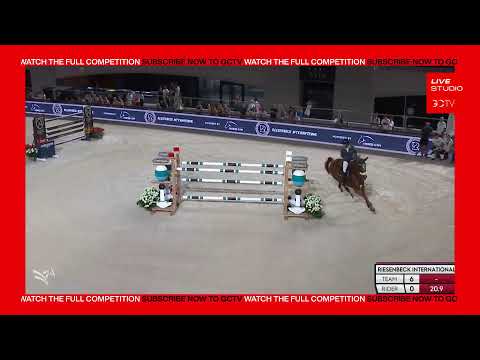
• LIVE STUDIO - GCL of Monaco - Mid-Show Round 2
    Longines Global Champions Tour.
    0 Σχόλια 0 Μοιράστηκε 267 Views
  • LIVE STUDIO - GCL of Monaco - Post-Show Round 2
    Tune in now: https://gctv.gcglobalchampions.com.
    0 Σχόλια 0 Μοιράστηκε 273 Views
  • LIVE STUDIO - GCL of Monaco - Post-Show Round 2
    Longines Global Champions Tour.
    0 Σχόλια 0 Μοιράστηκε 284 Views
  • LIVE STUDIO - GCL of Monaco - Post-Show Round 2
    Tune in now: https://gctv.gcglobalchampions.com.
    0 Σχόλια 0 Μοιράστηκε 295 Views
  • WWW.CHESTNUTMILL.CO.UK
    What Do I Need to Know About Electrolytes? A Guide for Horses During Competition Season
    Competition season is an exciting yet demanding time for both horses and their owners. With increased training, travel, and performance, your horses nutritional needs changeespecially when it comes to hydration and electrolyte balance. Electrolytes and recovery mashes play a crucial role in keeping your horse healthy, hydrated, and performing at their best.Why Are Electrolytes Important for Horses?Electrolytes are minerals (like sodium, potassium, chloride, calcium, and magnesium) that help regulate vital bodily functions in horses, including:Hydration:Maintaining fluid balance in and out of cellsMuscle Function:Preventing cramps and supporting muscle recoveryNerve Function:Allowing nerves to send signals efficientlyRecovery:Aiding the bodys ability to bounce back after strenuous activityDuring intense exercise, hot weather, or travel, horses sweat more and lose significant amounts of electrolytes. If these arent replaced, your horse can quickly become dehydrated, fatigued, or even suffer from heat stress and muscle problems.Signs Your Horse Might Need ElectrolytesExcessive sweating or working in hot conditionsLethargy or poor recovery after exerciseReduced appetite or water intakeMuscle tremors or crampingDark, concentrated urineIf your horse is competing, travelling, or working harder than usual, its smart to be proactive with electrolyte support.Electrolyte Supplements: What to Look ForNot all electrolyte supplements are created equal. Heres what to consider:Balanced Formula:Look for products with sodium, chloride, potassium, calcium, and magnesium (not just salt).Palatability:Some horses are fussychoose a supplement designed to be tasty or easily mixed into feed.Sugar Content:Avoid high-sugar formulas if your horse is prone to laminitis or metabolic issues.Ease of Use:Powders, pastes, and liquids are all availablepick what suits your routine.Explore our range of electrolyte supplements.The Role of Recovery MashesRecovery mashes arent just a treattheyre a strategic way to support hydration and replenish lost nutrients after strenuous work or competition.Why use a recovery mash?Encourages Drinking:The soaked texture helps increase water intakeDelivers Electrolytes:Many mashes are formulated with added electrolytesGentle on Digestion:Easily digestible, making them ideal after hard workAppetite Boost:Great for fussy eaters post-exercise or travelWhen to feed a recovery mash:After intense exercise or competitionDuring travel or hot weatherWhen your horse seems tired or reluctant to drinkBrowse soaking buckets and feeding equipment.Practical Tips for Supporting Your Horse During Competition SeasonAlways Provide Fresh Water:Horses may drink up to 50 litres a day during hot weather or intense work.Offer Salt Licks:Free access to asalt lickencourages natural electrolyte intake.Pre- and Post-Event Electrolytes:Add electrolytes to feed or water before and after exertionnever just in water, in case your horse refuses to drink.Use Recovery Mashes:Especially after travel or competition, to restore hydration and appetite.Monitor Recovery:Watch for signs of dehydration or fatigue, and adjust your routine as needed.Common QuestionsCan I just use table salt?While plain salt provides sodium and chloride, it doesnt cover potassium, magnesium, or calcium. A balanced supplement is best.What if my horse refuses electrolytes?Try different forms (powder, liquid, paste) or mix with tasty feeds or recovery mashes.SummaryElectrolytes and recovery mashes are essential tools for keeping your horse healthy, hydrated, and ready to perform during competition season. By understanding their importance and using them strategically, you can help your horse recover faster, stay comfortable, and enjoy every event.Explore our full range of electrolyte supplements, recovery mashes, and salt licks to keep your horse in top condition this season.
    0 Σχόλια 0 Μοιράστηκε 582 Views
  • WWW.HORSESPORTIRELAND.IE
    Ireland seventh in Aachen Nations Cup on testing German evening
    A difficult night in Aachen, Germany, saw the Irish senior show jumping team finish seventh in the Mercedes Benz five-star Nations Cup tonight (Thursday).Finishing on a final score of 26 faults, the damage had been done in round one as Ireland went into the break on 20 and the team of Denis Lynch, Tom Wachman, Shane Sweetnam and Cian OConnor out of contention with the leaders.The second round did prove to be more settled, with a clear for OConnor and just two time faults for Wachman the highlights, and the team move on to the five-star Nations Cup of Sweden in Falsterbo next, before the European Championship in La Coruna.United States of America took the honours with a final tally of four faults, with Belgium in second on eight and Britain filling the podium with a score of 10.Blake said: Tough night at the office we wanted to come and give a better go at defending our crown from last year but it wasnt to be. Things proved to be very difficult in round one and we just gave ourselves too big of a mountain to climb.Obviously all the lads improved in the second round and thats what well take away from it.Its always very important to learn lessons when things dont go your way I think the lads showed plenty of character to keep battling until the end and I was delighted for Tom, who left all poles standing, and Cian who delivered a clear round.It wasnt the start Ireland wanted as Lynch and Vistogrand dropped two poles en route to an eight-fault round, with Wachman and Tabasco De Toxandria Z coming in as second combination.They were unfortunate to drop a pole at the triple bar before settling down and coming home error-free for four faults and bring Ireland back into the mix.It started to slip away from Blakes men as Sweetnam and his Irish Sport Horse James Kann Cruz knocked two at the triple combination for eight faults to leave the team on 12 with just OConnor to come in round one.Ireland went into the break on a score of 20 as OConnor, like Lynch and Sweetnam before him, totalled eight faults with the sun beginning to set on Frank Rothenbergers course.Lynch and Vistogrand improved on their first effort in round two, with the open water jump proving the difference between a clear round and four faults, with once again Wachman showing his mettle on Tabasco De Toxandria Z for just two time faults with Tabasco De Toxandria Z.Sweetnam and James Kann Cruz were desperately unlucky to not jump clear in round two, with the water again the difference-maker. It had looked as though the pair had cleared the water on first view and on the replay with the Corkman checking it himself after his round. Nonetheless, they scored four faults despite a much more comfortable looking round.There was just OConnor and Bentley De Sury to come to round things out for Ireland and they provided a silver lining with a brilliant clear round to keep Ireland on a score of 26 and seventh position.BREEDINGJames Kann Cruz (ISH) 2013 gelding by Kannan out of CSF Telly Cruz by Cruising, bred by Patrick Connolly owned by Gizmo partners LLC. Ridden by Shane Sweetnam.The post Ireland seventh in Aachen Nations Cup on testing German evening appeared first on Horse Sport Ireland.
    0 Σχόλια 0 Μοιράστηκε 285 Views
  • WWW.CHESTNUTMILL.CO.UK
    Help Your Horse Stay Healthy: Practical Weight Management Tips for Summer
    Determining whether a horse or pony is overweight isnt always easy. In fact, studies show many owners underestimate fat coverage, and as a result, weight gain can creep up unnoticed. Carrying extra weight increases health risks, saps energy, and makes coping with hot weather much harder for horses and ponies alike.As grass becomes more plentiful and lush during the summer months, its the perfect time to review your horses weight management routine. Here at Chestnut Mill, were passionate about helping you keep your horse in top conditionso weve put together these practical tips to help you spot weight gain early and manage it effectively.How to Spot Weight Gain EarlyRegular Body Condition Scoring:Get hands-on and check your horses fat coverage at the neck, withers, ribs, and tail head. Ideally, you should be able to feelbut not seeyour horses ribs.Weigh Tape or Scales:Use a weigh tape around the girth or, if available, a weighbridge to monitor changes over time.Photographs:Take monthly side-on photos to help spot gradual changes that might not be obvious day-to-day.Managing Grazing and Grass IntakeRestrict Turnout:Use a grazing muzzle, smaller paddock, or track system to limit grass intake without reducing exercise.Adjust Turnout Times:Grazing early in the morning or late evening can help reduce sugar intake from grass.Provide Low-Calorie Forage:Supplement restricted grazing with hay or haylage thats low in sugar and energy.Choosing the Right FeedOpt for Fibre-Based Feeds:Choose chaffs, balancers, or cubes designed for good doers and nativesthese provide essential nutrients without unnecessary calories.Check Feed Labels:Avoid mixes high in sugar and starch, and look for products labelled as lite or low-calorie.Dont Forget Vitamins and Minerals:If your horse is on a restricted diet, ensure theyre still getting a balanced vitamin and mineral intake through a balancer or supplement.Balancing Diet, Exercise, and TurnoutIncrease Exercise:Even gentle hacking or in-hand work can make a big differenceaim for regular, consistent activity.Monitor Progress:Keep a record of your horses weight, condition, and exercise routine to help stay on track.Work with Your Vet or Nutritionist:If youre unsure where to start, seek professional advice tailored to your horses needs.Why Weight Management MattersMaintaining a healthy weight isnt just about appearanceits about your horses long-term health and wellbeing. Overweight horses are at greater risk of laminitis, metabolic disorders, and joint strain, and are less able to cope with hot weather or strenuous activity.Need Support?At Chestnut Mill, we stock a wide range of low-calorie horse feeds, grazing muzzles, and weight management supplements to help you keep your horse in the best possible condition. If you have questions or need advice, get in touch at info@chestnutmill.co.uk or call 01256 578011our friendly team is always happy to help.
    0 Σχόλια 0 Μοιράστηκε 582 Views
  • WWW.YOURHORSE.CO.UK
    Age-appropriate training: this is when horses physically mature
    There has always been great debate among equestrians as to what is considered the best and most appropriate age for training a horse, specifically in relation to when to begin riding.Traditional wisdom is that a horse should begin his or her ridden career at three years of age, for other riders it is to wait a few years more, whereas in areas such as the racing industry horses are commonly under saddle and on the track by two years of age.But do any of these opinions take the physiology of equine development into account?When do horses physically mature?No horse is skeletally mature until around six years of age at the earliest, with some not reaching full skeletal maturity until eight years of age. This is not breed specific, despite what is sometimes believed.Factors that affect the growth of both the skeleton and structural soft tissue such as the ligaments, muscles and tendons can include genetics, nutrition, diet, gender, environment and stress.Just as malnutrition can result in stunted growth, overfeeding high-energy grain to the young horse has been identified as a key aspect in the development of DOD (Developmental Orthopedic Disease), caused by an accelerated growth rate.One crucial factor that affects the development and mobility of a horse at any age is the intensity of exercise, and the way in which they are trained.This leads us to directly question how and when we should safely begin certain aspects of training with our horses.How do horses grow?Knowing how a horse develops skeletally, we can make an informed decision about what is best for our horses.Skeletal developmentThis refers to the formation of bone. It begins in utero and does not stop until the horse has fully matured.Growth platesA key part of how any skeleton forms is down to the growth plates. Growth plates are found in all mammals. They are areas of cartilage that lengthen the bone and are found at the end of every bone behind the skull.Multiple platesIn the case of bones with multiple angles, like the pelvis, there are multiple plates in these areas. Susceptible to injury and fractures, it is not until a certain age that these areas solidify to form hardened bone.Completion of growth platesThe completion of growth plates varies throughout the entire skeleton. For example, the coffin bone within the hoof capsule is fused at birth. The hock solidifies at 12 months of age and the scapula at four years.Vulnerable vertebraeThe vertebrae that run along the length of the horses body to form the spine specifically from the tail to the start of the thoracic vertebrae behind the wither, right where the weight of a rider and saddle sit dont complete this process until around six years of age.Unlike the bones in the legs, where the growth plates of the limbs run vertical to the ground, the spine is horizontal and relatively unsupported, relying on structures of connected soft tissue. This leaves the vertebrae extremely vulnerable to the impact of a rider on the back before they are fully fused.Final growth platesThe final plates to close are those of the spinous process of the withers and the base of the neck.When are horses mentally ready to work?An often under-discussed aspect of training is a horses mental readiness, psychologically and emotionally.There is a belief that does the rounds on yards that a horse started late usually referring to an age of six, seven or eight experiences behavioural problems as a result of that late starting.While the horse is skeletally and physically mature, mentally he has difficulty with certain aspects of his work, likely from a lack of preparation: being asked too much in comparison to his level of experience and expectations, due to his age.But in fact, horses that are started at a later age through correct management, in good physical condition and with compassionate teaching often go on to have a longer ridden career.Should ridden work wait until theyre older?So should we leave our horses in the field until they are six? No. The consequences of leaving a horse in the field until they are six and then starting a hard, fast training programme can be just as poor as those of starting a horse at two.The development of the muscles and soft tissues of the equine athletes body is just as important as skeletal development and they must be conditioned correctly. Tissue and bone adapt to changes that take place throughout life, not just in a set period.The key is to work at a level appropriate for each individual horse from a young age. Work progressively over a period of years, not months, to prepare the horse physically by conditioning and strengthening soft tissues.Doing so promotes bone density and a responsive and confident mind, helping you to produce a well-prepared riding partner.When we take on the responsibility of training a horse, we need to look at the whole picture: at what stage is the horse both physically and mentally ready?Remember, the training of a horse is always a process, never a sprint.Related contentWhy starting a horses ridden career has nothing to do with breaking inHow much weight can a horse carry?This is how a horse should move in trot *Video*How to develop a horses poor toplineWhy hacking a horse in-hand has huge benefits for you bothThe post Age-appropriate training: this is when horses physically mature appeared first on Your Horse.
    0 Σχόλια 0 Μοιράστηκε 285 Views
  • Winning Rounds - Valkenswaard United - GCL Monaco 2025 - Gilles Thomas & Lorenzo de Luca
    Keep up to date with GCL by following our social media: Instagram: @GCL_official Facebook: @OfficialGCL Twitter: ...
    0 Σχόλια 0 Μοιράστηκε 306 Views
  • Winning Team Interview - Valkenswaard United - GCL Monaco 2025
    Keep up to date with GCL by following our social media: Instagram: @GCL_official Facebook: @OfficialGCL Twitter: ...
    0 Σχόλια 0 Μοιράστηκε 310 Views