• WWW.HORSESPORTIRELAND.IE
    Coyle the Special One at Tryon
    Wachman, Talbot and Howley score in SpainDaniel Coyle played a major role once more in his teams triumph in the prestigious Major League Show Jumping series, combining with Ariel Granges Mourinho for a crucial clear round to lay the platform at North Carolinas Tryon InternationalIt was a second success in five MLSJ legs for the Roadrunners, who also count Shane Sweetnam amongst their numbers and though Coyles Olympic teammate was not on team duty this week, he posted some strong results at the five-star show on individual duty.Meanwhile, there were the usual consistent results in Europe, with Max Wachman and Niall Talbot victorious in Fridays pair of international classes at the two-star show in Oliva, where Richard Howley followed up on Saturday.The MLSJ series has eight competing teams and the format involves half of those being dropped after the initial speed class.By the time Coyle entered the ring with the horse, sharing a name with famously successful though immodest soccer manager, the requirement was evident to ensure progress.A speed class it may have been, but while he won the equivalent the previous week with Calippo 57 (Grange), this is not about individual glory and with a steady round sufficient, the Derry man and Mourinho (below) made no mistake.That ensured the Roadrunners spot in the next phase and Coyles teammates brought it home from there. Erynn Ballard (CAN) and Gaby de Bourcel had one rai down but McLain Ward (USA) and Hialita B got the key clear to secure a top-two berth. The gold medal match was a shootout against Northern Lights, and Erynn Ballard and Gaby de Courcel did the business.I find this a great class when youre on a great team and do two rounds every week. Its a big advantage, said a delighted Coyle.Sweetnam and Pia Maria H (below) have been clear round machines for the Roadrunners in previous weeks and they were at it again when finishing third in the opening Grand Prix qualifier.Though the first to deliver a double clear, they were there to be shot at with a time of 38.09 and Richard Vogel (GER), with the prodigiously talented eight-year-old Diatasio, galloped to win in 36.82. Nicholas Dello Joio (UA) and Cornets Cambridge were runners-up in 37.62.It was another fantastic effort over the 1.55m track against 36 other pairings, on a week when five of the top 10 riders in the world were participating, Sweetnam among those ranks of course as the No 3.The Castlemagner native and his Olympic Irish Sport Horse bred in Galway by Patrick Connolly, James Kann Cruz (Gizmo Partners), made their customary five-star Grand Prix jump-off at the end of the week but this time, last years runners-up just missed out on a podium, having a rail down in the tiebreaker to earn $34,000 in fourth.The competition was won by Ward, winning his 51st MLSJ GP on his 51st birthday, with High Star Hero, from Olympic champion Christian Kukuk (GER) and Akarad Tivoli Z.Also on Saturday, Coyle and the aforementioned mega-consistent Calippo 57 took bronze from a mammoth field of 73 in the two-star Grand Prix with a double clear round in a time of 34.64.Lt Raphael Lee has been a podium regular in Oliva in the past three weekends on the Autumn series of the Mediterranean Equestrian Tour, and though frustrated by some near-misses, not least being denied victory by one-thousandth of a second, adding another silver medal with the Irish Sport Horse Derrycush (Minister For Defence) on Thursday is admirable consistency from the Galwegian, and the Alfie Hillen-bred stallion.The in-form duo navigated the 1.45m speed class in 64.70, with only Laura Renwick (GBR) and NFS Top Gun, of the other 60 combinations able to better that target, by stopping the clock on 64.19.There were two Irish victories at the Spanish venue on Friday, with Max Wachman taking the feature with GRS Lady Amaro (Coolmore Showjumping), the 13-year-old mare bred by Denis Hickey in Co Wexford.The talented chestnut, with a five-star pedigree, showcased her class, with the considerable aid of the Tipperary rider in the stirrups. The pair posted a clear in the 1.50m speed class and GP qualifier, in 61.42, which was more than enough to take the spoils, as the Netherlands Lars Kersten and Cascalino 7 were the nearest challengers with a clear in 62.30.Kildares Niall Talbot was victorious in the opening international class, the Trofeo America, a 1.45m jump-off class.Only six of the 68 contestants were able to survive the opening test and Talbot, riding the 17-year-old stallion FTS Elliot (Talbot & Nicola Fitzgibbon), took the lead in convincing fashion in a time of 35.67.Mariano Martinez Bastida had a tilt at denying the Irish combination, with Bacardi O, and they gave it a good rattle but were still almost a half-second off the standard set, grabbing second by stopping the clock in 36.04.Richard Howley was another Green Jacket to score on the Med, steering Caprice dElle to the gold in definitive fashion in the 1.45m two-phase class on Sunday.The Sligo athlete and his 15-year-old stallion were electric over the speed section of the test, prevailing by more than a second and a half by virtue of their double clear in 28.03.James Chawke was a silver medallist in the Grand Prix at the two-star show in West Palms on Saturday, riding One Edition (Vanessa Mannix).The tiebreaker was made up of eight ambitious rivals, and it was a marvellous effort by the Laois pilot and his mare, as they registered a really competitive time of 38.04. That was enough to see off almost everyone, except for American Karl Cook, whose Heroes Kervec left all the jumps in pace in 37.84 to score.BREEDINGDERRYCUSH (ISH) 2014 gelding by Emerald Vant Ruytershof (BWP) out of ISHD Caldato (ISH) by Aldato (KWPN). Breeder: Alfie Hillen, Aughnacloy, Co Tyrone. Owner: Minister of Defence. Rider: Lt Raphael Lee (IRL).GRS LADY AMARO (ISH) 2013 mare by Amaretto Darco (BWP) out of Legal Lady (TB) by Over The River (TB). Breeder: Denis Hickey, Co Wexford. Owner: Coolmore Showjumping. Rider: Max Wachman (IRL).PHOTO CREDITSCoyle & Sweetnam: MLSJThe post Coyle the Special One at Tryon appeared first on .
    0 Commenti 0 condivisioni 901 Views
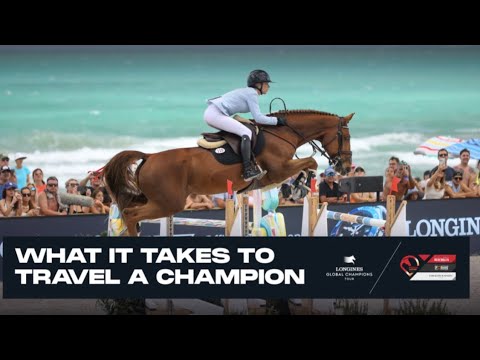
  • What does it take to travel a champion?
    What does it take to travel a champion? Go behind the scenes with LGCT competitor and RED MILLS ambassador Zascha ...
    0 Commenti 0 condivisioni 578 Views
  • NOELLEFLOYD.COM
    How to Watch NOLLE FLOYD: UNBRIDLED
    One woman. Two horses. A road across North America.My trainer once told me I ask too many questions. It wasnt said once. It became my story.That story travels with Nolle Floyd as she sets out with Lady and Galano on a 25,000-mile journey across North America. From Alberta to Idaho, she follows a trail of mentors, new skills, unexpected challenges, and questions about what it takes to meet a horse as a partner. The series moves through Alberta, Colorado, Florida, Texas, Wyoming, and Idaho, with the landscape changing at every stop and the lessons gathering along the way.The viewing journey is part of the story: watch Episodes 1 and 2 free on YouTube, then continue with Episodes 36 on NF+.Begin on YouTubeIn Albertas open country, Nolle and her horses arrive at their first stop: horseman Josh Nichols. With Lady, the work asks Nolle to pay attention to what her horse is telling her, stay in the conversation, and reconsider the instincts she brings to the ground and saddle. Watch for free below:Then the road carries them to Colorado. At Mark Rashids clinic, ideas from aikido meet horsemanship as Nolle explores contact and connection with her horses. Conversations with animal communicator Delaya Diana and therapist and horseman Duey Freeman take the inquiry further, toward the ways horses respond to the people beside them. Watch for free below:Continue the journey on NF+Episodes 1 and 2 are free on YouTube. To watch the rest of the season, you can either purchase UNBRIDLED Season 1 on its own or subscribe to NF+, which includes the complete series and the NF+ library.In Florida, Nolle and Lady work on liberty training with Tik Maynard while an equine health team investigates a concern about Galano. In Texas, Nolle visits the Fort Worth Stockyards, learns from cutting legend Lindy Burch, and takes Galano to a ranch sorting competition. The Wyoming episodes take Lady and Galano into the Wind River Range for a pack trip, where a steep trail leads to a nerve-racking moment. The season concludes in Idaho, where horseman Martin Black works with Nolle and Lady, and a new chapter begins for Nolle and her partner.Purchase the series on NF+Each stop brings its own scenery, teachers, and tests. Along the way, Nolle keeps learning with her horses, sharing the awkward moments as well as the breakthroughs.To see the whole story unfold, start with Episode 1 on YouTube, then follow Nolle, Lady, and Galano all the way to Idaho exclusively on NF+. By the end, you may see your own horses questions in a new way.
    0 Commenti 0 condivisioni 564 Views
  • WWW.YOURHORSE.CO.UK
    Go Low: Public urged to choose quieter fireworks as Bonfire Night approaches
    Redwings Horse Sanctuary has urged the public to Go Low and choose quieter fireworks as Bonfire Night (5 November) approaches.The charitys advice follows the closure of a government public consultation on the sale and use of fireworks earlier this month (7 October) and now that fireworks are on general sale to the public ahead of Guy Fawkes Night and Diwali.Redwings message is backed by charity ambassador Olivia Bowen whose friends horse died after being scared by loud fireworks let off nearby. Redwings has also lost three rescued residents due to fireworks in the past. Television personality and businesswoman Olivia used low-noise fireworks at her wedding to fellow Love Island star Alex.When planning the wedding it was either low fireworks or no fireworks, she said. Having horses or being around them my whole life, and having dogs, cats, any animal really, Ive always known that fireworks are absolute hell for them and no part of me wanted to get involved in that.Its such an easy switch. You still get these beautiful lights, you still get the amazing celebration, but youre also not harming animals and not scaring animals. Animals die from firework noise, and the fear and the anxiety. A friends horse had a heart attack and died in their field from being so scared and fearful of fireworks.People need to realise its not just animal charities making noise about this, its very real and very scary.I completely back Redwings on this and I feel like if everyone spreads the word then itll make a huge difference.How to enjoy fireworks responsiblyRedwings has launched a new online hub of resources to help people Go Low and reduce potential harm to animals if they want to enjoy fireworks this year.Loud fireworks cause distress to so many animals and vulnerable people every autumn and its a time of year that many horse owners dread, said Helen Whitelegg, Campaigns and Policy Manager at the charity.In some tragic cases, as with Olivias friends horse and our own Cinders, Percy and Sprite, they can even be fatal. We know that at least 28 horses have lost their lives to fireworks since 2021.We dont want to stop seasonal celebrations and know fireworks can be beautiful, but we just need to turn the volume down. Low-noise options have evolved so much in recent years and can create a really stunning spectacle to bring everyone together without causing so much misery and harm to others.The Redwings Go Low hub includes a practical guide to choosing low-noise fireworks, with low-noise party playlists, information from a professional pyrotechnician, downloadable posters, postcards and social media artwork to encourage your neighbours to Go Low. Lead image by Shutterstock/Alexander Prokopenko Related contentHorses and fireworks: advice to help equines cope on Bonfire NightFirst Aid Week: What to do if your horse is bleeding and the signs it is an emergencyWhy are horses more prone to colic in the autumn? Vet answersDoes your horse really need to wear a rug when its wet? Equine vet advisesThe post Go Low: Public urged to choose quieter fireworks as Bonfire Night approaches appeared first on Your Horse.
    0 Commenti 0 condivisioni 502 Views
  • WWW.YOURHORSE.CO.UK
    Meet Oliver Townend & Ballaghmor Class at Your Horse Live
    This is a truly special opportunity for equestrian fans.Were delighted to have the opportunity to hold an exclusive Meet & Greet with Olympic Gold medallist Oliver Townend and the legendary Ballaghmor Class at Your Horse Live.Together, Oliver and Thomas have delivered some of eventings most memorable performances, earning their place among the sports most celebrated partnerships. Their talent, determination and unique connection have inspired riders and horse lovers around the world, and now you have the chance to see that partnership up close.As part of this exclusive experience, youll be able to: Meet Oliver Townend and Ballaghmor Class in person See Ballaghmor Class up close Take a selfie and share a moment with a true champion View some of their 5 and Olympic-winning honours on display*Whether youve followed their journey for years or simply admire greatness in equestrian sport, this is a rare opportunity to celebrate a partnership that has left an unforgettable mark on the eventing world.Better still, the Meet & Greet will be supporting the Air Ambulance, helping to raise funds for a vital cause while creating memories that will last a lifetime.Dont miss your chance to meet these two greats of the equestrian world. This is a ticket only event due to timings and the schedule for the rider over the weekend. TICKETS AVAILABLE HEREThe post Meet Oliver Townend & Ballaghmor Class at Your Horse Live appeared first on Your Horse.
    0 Commenti 0 condivisioni 467 Views
  • WWW.HORSEILLUSTRATED.COM
    Horsemanship Myth 4: Pull them to stop.
    Imagine you just purchased a brand-new truck. Its shiny. It has that beautiful new car smell. It even turns on and accelerates great! The only problem is the braking system is inconsistent. Sometimes it slows down and stops just fine, but not when the environment is energetic, its away from its buddies, or something is spooky.It sounds ridiculous. But consider for a moment: Could we be describing your horse?Of course, you wouldnt drive a truck whose brakes are malfunctioning. Similarly, you shouldnt ride a horse who relies on the reins to stop. Read that again. Its the relying on the reins to stop thats the problem. Horses are masters at reading and understanding body language. If phases of energy can create forward motion, then a change in energy can also mean slow down and stop. To put it bluntly, relying solely on pulling the reins to stop a horse is dangerous and ineffective. In my previous article, I taught that one of the greatest keys to riding success is to replace kicking to go forward with fair and effective phases of pressure in your body language and in your legs.If it works for acceleration, it should also work for deceleration. Energy and life up in our body means go forwardso taking the life away or slowing down our energy can cause a horse to slow down, naturally.This works with horses because it works for them in nature. Horses are born innately knowing to synchronize with their mamas. When mama moves, the baby better get up and run. When mama stops, the baby learns to mirror her energy and slow down, too.To ensure our horses recognize this communication in our world as well, we must first establish this synchronization on the ground. This reinforces our role as leaders and simplifies the transition to the saddle. By teaching the horse to mirror our energy, first on the ground and then riding, the reins become the final phase of the stop, only if needed, rather than the primary means of control.This shift in sequence allows the reins to become so much more about communication than about control. When we put a bit in our horses mouth and begin to communicate with him in that zone of his body, it becomes what the great dressage master Walter Zettl taught me to call a matter of trust.Teaching your horse to respond to your seat and energy first creates true understanding and a soft, balanced stop. This leaves the reins available as a communication tool to shape the horse and refinerather than just controlthe movement. Sequence is the secret: Synchronize on the ground, carry that harmony into the saddle, and for the safety of both horse and rider, always check your brakes before heading out on your ride.Our goal is to teach you how to train your horse safely and effectively at home so that both you and your horse can have more fun and achieve excellence together, creating a true partnership based on trust and mutual understandingLearn more about our digital home-study curriculum, the Levels Program, at Parelli.com and take your riding to the next level of communication and understanding.Pat Parellis Horsemanship Myth Series Debunking 5 Common Horsemanship Myths Horsemanship Myth 1: Catch your horse any way you can. Horsemanship Myth 2: Saddle them up and get on. Horsemanship Myth 3: Kick them to go. Horsemanship Myth 4: Pull them to stop.This article appeared in the September/October 2026 issue of Horse Illustratedmagazine.Click here to subscribe!The post Horsemanship Myth 4: Pull them to stop. appeared first on Horse Illustrated Magazine.
    0 Commenti 0 condivisioni 288 Views
  • WWW.YOURHORSE.CO.UK
    Get Winter Ready with Exclusive WeatherBeeta Offers at Your Horse Live
    As the temperatures drop and winter approaches, theres no better time to upgrade your horses wardrobe and your own. This year at Your Horse Live, WeatherBeeta is bringing an incredible range of premium horse rugs, rider clothing and essential accessories, along with exclusive show offers you wont want to miss. Whether youre looking for ultimate turnout protection, stylish winter riding gear or everyday essentials for your horse, visit the WeatherBeeta stand to discover award-winning products designed to keep both horse and rider comfortable, protected and performing at their best all season long. From rugged winter turnouts to cosy rider outerwear and competition-ready accessories, theres something for every equestrian.WeatherBeeta ComFiTec Ultra Turnout Designed for horse owners who refuse to compromise, the ComFiTec Ultra Turnout Detach-A-Neck delivers premium comfort, protection and performance in all winter conditions. Its ultra-tough 1800 denier waterproof and breathable outer with Teflon EcoElite coating keeps horses dry and comfortable, while memory foam wither relief pads provide maximum comfort.Packed with premium features, including a removable Snug-Fit neck cover, liner compatibility, reflective details and a protective wrap-around tail flap, it offers versatile, all-weather protection. Combined with freedom-enhancing gussets and cupped shoulder darts, it ensures comfort, visibility and unrestricted movement every day. 30% 0FFWeatherBeeta ComFiTec Plus Dynamic Turnout Designed for horse owners who want premium protection without compromise, the ComFiTec Plus Dynamic combines a tough 1200 denier ripstop outer with waterproof and breathable performance to keep horses comfortable through the harshest winter weather. Thoughtful features such as memory foam wither relief pads help reduce rubbing, while the detachable neck, liner compatibility and secure, easy-to-use fittings make it a versatile choice for changing conditions. Reflective details, a wrap-around tail flap and freedom-enhancing gussets ensure your horse stays protected, comfortable and visible day after day. 30% 0FFWeatherBeeta ComFiTec Essential Turnout Reliable protection every day. The ComFiTec Essential is packed with practical features that make winter turnout easy. Built with a durable 1200 denier waterproof and breathable outer, it offers dependable weather protection alongside a comfortable lining that helps maintain coat condition. A fixed combo neck, reflective details, generous tail flap and liner compatibility provide outstanding value, making it an ideal choice for everyday winter wear. 30% 0FFShop Rider Winter EssentialsStay warm, dry and comfortable whatever the weather with WeatherBeetas latest rider collection. Visit the stand to explore our newest arrivals, designed specifically for equestrians who refuse to let the conditions get in the way of time in the saddle.All Purpose Waterproof Insulated Longline Riding Jacket Buy a Jacket, get a free baselayerDesigned for riders who need dependable protection through the toughest winter weather, the All Purpose Waterproof Insulated Longline Riding Jacket combines technical performance with everyday comfort. Featuring a highly waterproof and breathable outer fabric, along with windproof insulation, it keeps you warm, dry and comfortable in the saddle, around the yard and on show days. The helmet-compatible removable hood, cosy fleece-lined collar and pockets, and articulated sleeves ensure practical comfort without restricting movement. Thoughtfully designed with a two-way front zip, magnetic back gusset and adjustable waist for a tailored fit, this versatile longline jacket offers exceptional coverage, freedom of movement and visibility, making it an essential addition to any riders winter wardrobe.WeatherBeeta Waterproof Team Jacket Buy a Jacket, get a free baselayerCombining practical weather protection with smart everyday style, the Waterproof Team Jacket is a must-have for the season ahead. Featuring a highly waterproof and breathable outer with a 15,000mm waterproof rating, it is built to keep riders comfortable during wet and unpredictable weather. Waterproof zip pockets securely store essentials, while the sleek tonal WeatherBeeta branding creates a polished look whether youre at the yard, ringside or out and about.Winter Accessories Collection 3 for 2 on accessoriesDiscover our cosy range of cold-weather accessories, including stylish headbands alongside coordinating snoods, beanies, socks and gloves. Perfect for keeping warm at the yard, during winter hacks or while spectating between classes.Shop Horse Essentials Buy one get one half price on saddle pads and horse bootsFrom everyday training to competition preparation, WeatherBeetas horse essentials collection combines performance, comfort and durability to help your horse look and feel their best. Visit the stand to explore our latest saddle pads and protective boots, designed to support your horse through every ride.WeatherBeeta Satin Luxe Air-Tec Dressage Saddle PadFor riders looking to combine performance with premium style, the Satin Luxe Air-Tec Dressage Saddle Pad offers luxury without compromise. Featuring an elegant satin finish and sophisticated detailing, it delivers a polished look in the arena while the Air-Tec mesh spine promotes airflow and breathability. A bamboo blend lining helps wick away moisture and provides natural antibacterial properties for enhanced comfort, while the high-wither design and innovative detachable billet attachment ensure both practicality and performance.WeatherBeeta Tough-Tec Prime Brushing BootsEngineered for reliable everyday protection, the Tough-Tec Prime Brushing Boots combine soft, breathable neoprene with a durable strike pad to help shield your horses legs from knocks and impacts. Designed to offer support, shock absorption and a secure fit, they provide comfort and confidence whether schooling at home, hacking or competing. Adjustable touch-close fastenings ensure a snug fit that stays securely in place throughout exercise.WeatherBeeta Tough-Tec Mesh Brushing BootsIdeal for horses that work hard, the Tough-Tec Mesh Brushing Boots feature advanced 3D mesh technology to maximise airflow and keep legs cool during exercise. Lightweight yet protective, they combine shock-absorbing materials with a hard-wearing strike pad to help guard against bumps and strikes. Their breathable construction and comfortable fit make them an excellent choice for training, competition and everyday riding, delivering protection without compromising comfort.Whether youre refreshing your horses competition kit or searching for practical everyday essentials, visit the WeatherBeeta stand at Your Horse Live to discover our newest collections, best-selling favourites and exclusive show offers.The post Get Winter Ready with Exclusive WeatherBeeta Offers at Your Horse Live appeared first on Your Horse.
    0 Commenti 0 condivisioni 406 Views
  • WWW.HORSEILLUSTRATED.COM
    Fall Laminitis Concerns
    The peaceful scenario of grazing on pasture is a healthy and normal lifestyle for many horses, but not all. For some horses, the risk of laminitis is a concernand not just during spring. Fall months can also pose a danger. The culprit is the simple sugars that grasses and legumes make and store, as well as small amounts of more complex carbohydrates, such as starch and fructans. All together, they are referred to as non-structural carbohydrates (NSC).Photo by Kirkikis/Adobe StockLaminitis Risks in the FallMany horse owners are aware that springs lush new grass has higher NSC content due to rapid growth, but changing temperatures in the fall also increase the amount of sugar, upping the risk of laminitis for some horses.After the first killing frost in the fall, NSC levels in grass will be higher than normal, with levels remaining elevated for up to a week.Unfortunately, some breeds are more predisposed to laminitis than others, including equines that are genetically more likely to have metabolic issues. Andalusians, pony breeds, Miniature Horses, and donkeys fall into this category.Not every horse will develop laminitis on high NSC pastures, says Kathleen Crandell, Ph.D., an equine nutritionist who works with Kentucky Equine Research (KER). Certain breeds, like the easy keeper types and ponies, are more likely to be sensitive to the sugar content of the grass. Particularly if a horse is already overweight, the high sugar content could push him over the edge into full-blown laminitis.If a horse has not been turned out on grass and then is suddenly allowed unlimited access, the drastic change can provoke an episode of laminitis, she continues. In cases like this, its best to offer pasture access for 15 minutes the first few days and increase the time out on grass gradually in 15-minute increments.Inflammatory ConditionIn the most basic definition, laminitis is inflammation of the sensitive laminae of the hoof. The horses hoof is comprised of both sensitive (living) and insensitive (non-living) laminae that are closely interwoven to form the lamellar bond, which attaches the coffin bone to the hoof wall.If inflammation occurs in the sensitive laminae, the blood supply in the hoof is disrupted. Without treatment, the lamellar bond can become compromised. Should this bond fail, the coffin bone loses support and can rotate, permanently altering connections within the hoof. When that happens, the horse is said to have foundered.Many horses can suffer a bout of laminitis but not founder, provided they receive timely, proper treatment.Immediate treatment involves relieving inflammation and pain. This typically includes icing the feet, a course of nonsteroidal anti-inflammatory drugs (NSAIDs), and complete stall rest during the initial period. Support with hoof boots or special shoeing may also be indicated.After immediate treatment measures following a bout of laminitis, special shoeing may be needed. Photo by Christiane SlawikCauses of LaminitisBen Flakoll, DVM, a veterinary farrier and podiatrist in the Saratoga Springs, N.Y., practice of Rood & Riddle Equine Hospital, routinely works with laminitic horses. He explains that laminitis is a clinical syndrome with three main causes: Secondary to a systemic inflammatory response, such as a horse with pneumonia or colitis, or a mare with a retained placenta after foaling. Support limb laminitis, when a horse develops laminitis in the main weight-bearing limb after injury to the opposite foot. Endocrinopathic laminitis, which primarily occurs because of insulin dysregulation in horses who have elevated insulin levels secondary to an endocrine disease like pituitary pars intermedia dysfunction (PPID), previously known as Cushings disease, or equine metabolic syndrome (EMS).Endocrinopathic laminitis is the most common type, and accounts for 70 to 90 percent of all laminitis cases, says Flakoll. The elevated insulin level is tied to elevated levels of NSC in the diet.When insulin levels are chronically elevated, the laminae in the foot can slowly stretch over time, eventually resulting in coffin bone rotation, even if the horse doesnt exhibit acute lameness.Signs of LaminitisContact your veterinarian immediately if you notice any of these signs: Hooves feel hotter than usual Strong, bounding digital pulse in fetlock area Increased heart rate Increased respiration rate Shifting weight from foot to foot Standing with back legs well under body Stiff, awkward gait Walking on heels Lying down more than usual Reluctance or refusal to move or pick up feetPhoto by Christiane SlawikManaging the DietWith elevated insulin levels to blame for the most common type of laminitis, its critical to control the diet of affected horses.To reduce NSC content during the acute phase of endocrinopathic laminitis, Flakoll recommends only feeding soaked hay and eliminating any grain or concentrate.After the horse has recovered from the initial bout of laminitis, we can consider adding a ration balancer back into the diet, he advises.If the horse is overweight, as is the case with many metabolic horses, you should work with your veterinarian on how to restrict calories until the horse is at an ideal body weight.Ideally, horses dealing with insulin dysregulation should only have hay with NSC content of less than 10 percent. Warm season grasses usually have lower NSC content than cool season grasses, so certain types of hay are naturally higher in sugar than others.The amount of NSC in [the same type of] hay can vary, depending on when it is harvested, says Crandell. The less mature the grass, the more likely it is to have higher sugar content because it isnt pushing all its energy stores toward producing seed heads. A leafy orchardgrass harvested before going to seed will generally be higher in NSC than one that is stemmy with seed heads.More mature, stemmy hays that are harvested later in the growth cycle tend to be lower in NSCs. Photo by Valeri Vatel/Adobe StockShe says that warm season grasses, like Teff, have become popular for metabolic horses because they are naturally lower in NSC.However, a warm season grass, like bermudagrass, can have NSC levels similar to a cool season grass if harvested at an early growth stage. Timothy hay is mainly harvested at a more mature stage of growth when it has seed heads, so the leaf and stem will be more fibrous. The nonstructural carbohydrates are what were worried about, and the majority of NSCs in hay are water soluble, says Flakoll. If you soak the hay at least an hour, this removes most of the NSC. Soaking hay is really the single best thing you can do to reduce the level of NSC in forage. This takes away most of the sugars so youre not worried about when the hay was baled.To soak hay, simply put it in a net and soak it in a tub of water for at least an hour. Drain the water before feeding.For those thinking theyll just feed hay pellets, nothing beats soaking the hay to get the sugars out of forage, says Flakoll. Even pellets will have higher sugar levels than soaked hay.Soaking hay before feeding is the best way to remove sugars. Soak for one hour (and flip over if repurposing a bathtub, as shown here). Photo by pholidito/Adobe StockModern GrassesMany of the typical grasses used in improved pastures today have higher sugar contents than native pasture grasses did a century ago.Plant scientists in the 1900s developed strains of high-yielding, higher NSC grasses to meet the increase demand for energy of high-producing livestock, such as dairy cows, says Crandell.Modern-day perennial ryegrasses are notorious for being able to maintain high NSC levels and are grown in this country mostly for dairy cattle, she says, adding that ryegrass pasture and hay should be avoided when feeding horses or ponies with insulin dysregulation.To Graze or NotA horse that has already had a bout of laminitis should not be allowed unrestricted access to pasture, since sugars in the grass can trigger another episode. The horse may be able to have some managed time on pasture, but your veterinarian should advise you on this.Since time of day greatly affects the NSC content of grass, the safest time for grazing is early morning between 5 and 10 a.m., so long as there hasnt been a frost.The safest time for grazing is between 5 and 10 a.m., as long as there hasnt been a frost. Photo by Margaret Burlingham/Adobe StockGrass will produce and store sugar when there is sunshine, so it builds up during the day, explains Crandell. Sugar levels will be highest in the evening and then gradually drop as the plant uses the sugar for respiration. So the lowest level will be just before sunrise [before] the plant starts photosynthesizing again.She adds that sugar levels in grass arent as high on cloudy days as during sunny days.For some horses, grazing is simply not an option. Especially when a horse has had recurrent bouts of laminitis, turnout can only be done safely on a dry lot.After recurring bouts of laminitis, the only safe turnout is in a dry lot. Photo by Margaret Burlingham/Adobe StockFor the insulin dysregulated horse, a grazing muzzle is not the answer unless it fully prevents him from eating grass. Flakoll says such horses should have zero access to grazing.For these horses, spacing out meals and feeding smaller meals more often is better and keeps them from having large insulin spikes, he advises.Regular exercise is helpful since it uses up sugars as fuel, provided the horse is sound.Helpful ToolsFor horses that have had past bouts of laminitis, Flakoll recommends regular testing of insulin levels. Even if a horse hasnt had laminitis, he advises owners to have metabolic testing done once the horse is a teenager.This is to monitor their metabolic levels, see what their insulin levels are, and to see if there are any signs of PPID or EMS, he says.This information is helpful in managing diet, including pasture access.Annual radiographs will help your vet and farrier keep an eye on any changes in the feet from year to year. Photo by Shawn Hamilton CLiX/Adobe StockYearly radiographs of the hooves are another valuable tool.Chronically elevated insulin levels will cause the laminae in the feet to stretch over time, so having yearly X-rays gives a comparison if the horse ever has a laminitic episode, says Flakoll. Most farriers would be very happy to get a yearly set of radiographs to see how things are looking. This article about fall laminitis concerns appeared in the September/October 2025 issue of Horse Illustratedmagazine.Click here to subscribe!The post Fall Laminitis Concerns appeared first on Horse Illustrated Magazine.
    0 Commenti 0 condivisioni 505 Views
  • WWW.HORSEILLUSTRATED.COM
    World-Class Horsewoman Jill Barron Joins the Road to the Horse 2027 Wild Card Competitor Lineup
    Road to the Horse is proud to announce Canadian horsewoman Jill Barron as a Wild Card Competitor for Road to the Horse 2027, March 1821 at the Kentucky Horse Park in Lexington, Kentucky. A world-class coach, trainer, judge and competitor, Barron has dedicated her life to the horse, developing expertise across multiple disciplines, from colt starting and rope horse training to high-level dressage. With a horsemanship philosophy rooted in trust, clear communication and partnership, Barron is ready to put her skills to the test as she pursues colt startings most prestigious titlethe World Championship of Colt Starting.There is something so unexplainably pure about starting a colta blank slate you have the privilege of shaping. The goal is to build their confidence and teach them the skills they need for the journey ahead, said Barron. I will forever be a student of the horse and look forward to the opportunity to surround myself with the best in the business at Road to the Horse.Raised on her familys ranch in southern Alberta, Canada, Barron developed a deep appreciation for horses and horsemanship from an early age. Her diverse experience across disciplines has shaped her quiet, intuitive approach, blending classical techniques with natural horsemanship to develop confident horses and meaningful partnerships. Throughout her career, she has earned numerous championship titles and achieved the distinction of having her Lusitano, Cossaco, featured as a Breyer model.Beyond the competition arena, Barron is passionate about education and developing the next generation of horsemen and horsewomen. She serves as horsemanship coach for the Calgary Stampede Showriders, an internationally recognized youth equestrian team, and is a sought-after trainer and clinician. Her commitment to lifelong learning reflects her belief that true horsemanship is built on trust, understanding and a partnership in which both horse and rider can thrive.Were excited to welcome Jill to the Road to the Horse Wild Card Competitor lineup, said Tina Battock, president of Morris Equine Group. Jill brings a wealth of experience across multiple disciplines and a horsemanship philosophy that aligns with what Road to the Horse represents. We look forward to learning from her experience, thoughtful approach to horsemanship and dedication to building confident horses and lasting partnerships.More than a competition, Road to the Horse is a celebration of horsemanship, featuring championship colt starting action, world-class equine entertainment, educational clinics, demonstrations and a bustling trade show.The Wild Card Challenge kicks off Thursday, March 18, and concludes Friday, March 19. As in years past, the Wild Card Challenge Champion will advance directly to a Championship Competitor position Friday afternoon, earning the opportunity to compete for the $135,000 purse.Barron joins the 2027 Wild Card Competitor lineup, where participants will vie for the opportunity to advance to the Championship round and compete for the World Championship of Colt Starting alongside previously announced Championship Competitors Dan Steers (Australia), Josh Lyons (USA) and Clayton Edsall (USA).Road to the Horse 2027 takes place March 1821, 2027, at the Kentucky Horse Park in Lexington, Kentucky. Tickets are available at RoadtotheHorse.com or by calling 800-514-3849. Follow Road to the Horse on Facebook and Instagram for the latest news and announcements.About Road to the HorseFounded in 2003, Road to the Horse strives to inspire people to reach a higher level of horsemanship and develop unity with a horse based on trust and not fear. We believe that through education and entertainment, we can change peoples ideas and create a better world for the horse. Road to the Horse competitions identify the superior colt starter who accumulates the highest score. Judging focuses on the competitor and the effectiveness of their horsemanship methodology to communicate,educateand build a partnership with their colt based on trust. Fans witness the entire journey, from colt selection to the final obstacle challenge. Tickets and information available at www.RoadtotheHorse.com. Edited Press Release | Source: Road to the HorseThe post World-Class Horsewoman Jill Barron Joins the Road to the Horse 2027 Wild Card Competitor Lineup appeared first on Horse Illustrated Magazine.
    0 Commenti 0 condivisioni 616 Views
  • WWW.HORSEILLUSTRATED.COM
    The Art of Listening: What Liberty Work Reveals About Communication and Connection
    There is a moment in every great horse-and-human partnership that no camera fully captures: a horse standing two hundred feet away, completely free, no halter, no lead, no round pen, turning its head at the sound of a familiar voice, then coming running, ears forward, happy and entirely by choice.I was reminded of this recently while listening to internationally renowned liberty trainer and performer Sylvia Zerbini, a ninth-generation circus artist who has performed everywhere from Ringling Brothers to Cavalia, speak about her lifes work with Arabian horses. The amazing performances of a dozen Arabian horses move as one, entirely at liberty, is genuinely breathtaking.Ask Sylvia if she is a horse whisperer, and she will correct you. The term she prefers is horse listener. That distinction deserves our attention, and not only from equestrians.Photo courtesy Arabian Horse AssociationConnection Cannot Be RushedLiberty work has become much more popular in recent years, but it is often reduced to pattern training. Horses are creatures of habit, and it is fairly easy to train a horse until it repeats the same movements. What is much harder, and much more meaningful, is building a relationship rooted in connection. One in which the horse is free to walk away, and chooses to come back instead.That kind of trust cannot be forced or rushed. It is built over time, through careful observation and a genuine effort to understand each horse as an individual. Sylvia does not train any two horses the same way. She studies their personalities who is confident, who is insecure, who acts tough but would spook at a sudden noise and she builds her team around those traits. The sensitive horses go toward the back. The confident leaders go up front. The whole approach depends on knowing each horse well enough to protect it, place it correctly, and set it up to succeed.If that sounds like a lesson in leadership, it should. The best leaders, whether in barns, boardrooms, or volunteer organizations, succeed for the same reason. They take the time to understand who they are working with, and they earn trust before they ask for performance.Why the Arabian?Sylvia works with many breeds and loves them all. But she is very clear about which horse taught her to listen: the Arabian.Those of us who live with this breed know exactly what she means. The Arabians sensitivity is not wildness or fragility; it is intelligence, awareness, and an almost uncanny attunement to human energy and intention. Arabians read us. They watch our eyes, register our body language, and respond to what we communicate before we have said a word. For Sylvia a trainer who works without whips, lines, or fences responsiveness is not simply helpful; it is the entire foundation of the work.Theres a telling story from Sylvias Cavalia years. When she first proposed bringing Arabians onto that grand stage, there was skepticism. But her Arabian liberty act became one of the shows most beloved features, winning over audiences around the world. Anyone who has watched an Arabian in motion understands why they are so captivating.What Audiences Are Really Responding ToSylvia has described audience members moved to tears at her performances, and her explanation is instructive: it is not the trainer they are responding to. It is the horses their evident joy, their individual personalities, their freedom. They break formation, get distracted, look out into the crowd, then scramble happily back into place. What audiences witness is not obedience; it is a relationship.This is why liberty work resonates so powerfully right now. In a world that moves faster and faster, and where so much is automated or transactional, people are hungry for real connection that fills a void the honest, natural, reciprocal connection. A horse choosing to partner with a human, with nothing forcing it to do so, is about as pure of a connection you can get.Photo courtesy Arabian Horse AssociationIt feels especially fitting for the Arabian. This is a breed that did not simply live near humans, it lived with them. For centuries, Bedouin families raised Arabian foals alongside their own children, often bringing mares into their tents for safety and warmth. That closeness shaped the breed itself: an intelligence that reads people easily, a sensitivity that responds to the smallest shift in tone or body language, and a willingness to bond deeply with the humans in its life. The same qualities that drew Arabian horses and humans together in the desert centuries ago are the qualities people are searching for today.An Invitation to Every Horse OwnerYou dont need a herd or an equine theater to apply these lessons. The invitation is simpler: slow down. Spend unstructured time with your horse. Watch where they look because a horse will always look somewhere before it goes there. Learn their signals, their moods, their individual character. Pay attention to their energy, and you will know when something isnt right long before a problem announces itself.For those of us in the Arabian community, there is also a stewardship responsibility. Performers like Sylvia introduce our breed to audiences who may never have experienced the majesty of an Arabian horse. Every performance, every clinic, every barn tour is an ambassador moment, a chance to show the world what we already know: that the Arabian is not just intelligent and beautiful, but profoundly connected to the people who take the time to listen.Our horses are constantly communicating with us and we need to take the time to connect and listen back.Learn more at arabianhorses.org.This article is a web exclusive for Horse Illustratedmagazine.Click here to subscribe!The post The Art of Listening: What Liberty Work Reveals About Communication and Connection appeared first on Horse Illustrated Magazine.
    0 Commenti 0 condivisioni 602 Views