• Kent Farrington & Toulayna on top! | Longines FEI Jumping World Cup final 2026 - round 1
    Kent Farrington gave the home crowd a moment to remember as he piloted the 12 year old Toulayna to victory in the opening ...
    0 Commentarii 0 Distribuiri 192 Views
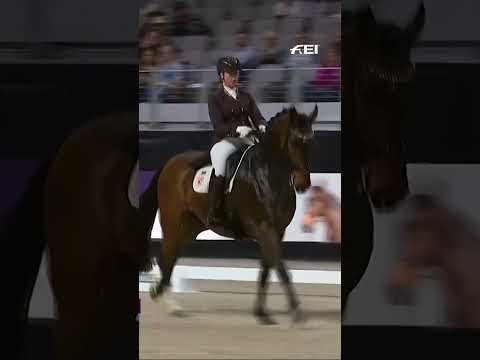
  • Press Conference - Grand Prix | Zen Elite FEI Dressage World Cup Final 2026
    Press Conference with the top three of theGrand Prix Beccy Moody, Patrik Kittel & Christian Simonson Subscribe to our ...
    0 Commentarii 0 Distribuiri 191 Views
  • WWW.JUSTHORSERIDERS.CO.UK
    Headcollaring A Nervous 2-Year-Old Welsh Cob: Calm Steps
    11 min read Last updated: January 2026 Struggling to headcollar a sharp, nervous 2-year-old Welsh Cob without a battle? This guide shows a calm, UK-yard-friendly sequence: relaxation, string-to-rope-to-halter, and the three-finger fit that can get a safe first headcollar on in one patient 3-hour session or a few 10-20 minute sessions, building lasting trust and safer handling. Quick Summary Short on time? Here are the key takeaways. Area: Relaxation First What To Do: Start in a stable or small pen, stand softly, reward attention by stepping back, and scratch the withers to lower tension. Wait for slow breathing and soft ears before progressing. Why It Matters: A relaxed horse can think, reducing flight responses and resistance. Common Mistake: Rushing straight to the headcollar without first settling the horse. Area: String Desensitisation What To Do: Rub a soft string on the neck/shoulder, then slide it round the neck and remove; repeat until the horse stays soft and breathing steady. Why It Matters: Gradual exposure builds confidence before ropes and buckles appear. Common Mistake: Leaving strings or improvised tack on when unattended. Area: Leadrope & Release What To Do: Attach a leadrope to the string, let it move lightly, ask with tiny pressure and release instantly when the horse softens. Keep asks small and end on calm. Why It Matters: Teaches give to pressure without panic for safer control. Common Mistake: Holding pressure too long or escalating when the horse braces. Area: Neck Loop Introduction What To Do: Hold the headcollar by the long crown strap and quietly loop it round the neck with the head down, then guide the nose into the noseband. Why It Matters: Neck-first handling avoids grabbing the face and reduces head-throwing. Common Mistake: Trying to fit from the front without a neck loop. Area: Smooth Buckling What To Do: Buckle calmly away from eyes/ears, then soften the rope and let the horse stand. If calm, remove and refit once or twice to normalise the feel. Why It Matters: Quiet repetition makes the headcollar no big deal and confirms fit. Common Mistake: Clanking metal near the eye or pinching the crownpiece in a rush. Area: Correct Fit Check What To Do: Leave three fingers under the noseband and 12 under the throatlash, then recheck after a few minutes of moving or grazing. Why It Matters: Proper clearance prevents discomfort, rubbing and resistance. Common Mistake: Fitting too tight or forgetting to recheck as head position changes. Area: Sessions & Weather What To Do: Use 1020 minute micro-sessions in a stable or sheltered pen; avoid muddy grass and wear surefooted boots and hivis at dusk. Rug appropriately in wet, cold weather. Why It Matters: Short, safe sessions accelerate learning and prevent slips or stress. Common Mistake: One long, stressful session on slippery ground. Area: Safety & Reading Signs What To Do: Stay on one side with a clear exit; use breakaway gear/panic snaps. If you see bum-turning, diving shoulders or tension, slow down and step back a stage. Why It Matters: Good positioning and timing prevent accidents and setbacks. Common Mistake: Pushing on through clear stress signals instead of pausing. In This Guide Can you headcollar a nervous 2-year-old Welsh Cob in one session? Understanding Welsh Cob behaviour at two years old Step-by-step: from first touch to fitted headcollar How to fit a young horses headcollar correctly Session length, timing and UK weather strategy Safety principles: pressure-and-release without panic Kit that helps: calm handling and UK yard essentials A cheeky, intelligent Welsh Cob at two can go from no way to OK then with the right approach. The secret isnt strength its relaxation, desensitisation and calm, consistent handling tailored to UK yard conditions.Key takeaway: You can fit a headcollar to a nervous 2-year-old Welsh Cob by prioritising relaxation, using a string-to-halter progression, and keeping sessions short and calm often achieving success within one patient 3-hour session, or over a few short sessions across several days.Can you headcollar a nervous 2-year-old Welsh Cob in one session?Yes many handlers succeed in a single, patient 3-hour desensitisation session, but building lasting trust usually takes a few short sessions over several days. This approach reduces flight responses and prevents setbacks that come from rushing.A documented case from the Monty Roberts University forum describes a nervous colt who accepted a headcollar after around three hours of careful, stepwise desensitisation, with follow-up sessions consolidating the learning (source). Early groundwork should emphasise relaxation so the horse can think rather than react, a principle echoed by experienced UK young horse producers in Horse & Hound (source).At Just Horse Riders, we recommend starting in a safe, enclosed space (stable or small catch pen) and planning multiple short sessions rather than one marathon, especially in wet UK weather when footing on grass can be slippery.Understanding Welsh Cob behaviour at two years oldWelsh Cobs are friendly, highly intelligent and spirited; without confident, patient handling at two, they can appear cheeky or nervous. Their robust, pony-like build belies a quick mind they learn fast, for better or worse.The Welsh Section D is renowned for a strong work ethic and characterful presence, typically with a less refined head but unmistakable pony traits. Youngsters can be pushy or wary if theyre uncertain whats being asked, so clarity and consistency matter. Handled calmly, they repay you with trust and try (Mad Barn breed profile).In UK yards where round pens arent always available, a stable-based join-up style approach using body language to invite attention, reward relaxation, and build tactile acceptance suits the Cob temperament well. It channels their curiosity and energy into cooperation rather than confrontation.Step-by-step: from first touch to fitted headcollarStart by creating relaxation, then desensitise with a soft string around the neck, progress to a leadrope, and only then introduce the headcollar by looping the long strap around the neck first. This sequence gives you safe, incremental wins that build confidence.Set the tone: relaxation first. Stand quietly in the stable or small pen, shoulders soft, eyes down; reward attention with a step back. Scratch the withers to lower the heart rate. As young horse producer Will Turnbull notes:Initially, my main emphasis is relaxation. Thats the most important thing to me because it means they can go on and be ridden in all three paces on as light a contact as possible.Horse & HoundIntroduce a string. When the horse accepts touch on the neck and shoulder, rub with a soft string in your hand, then gently slide it around the neck and remove. Repeat until breathing stays slow and ears soften. Experienced handlers advise:If he accepts you touching his neck and maybe head, take a string out of your pocket and rub him with it in your hand and eventually put the string around his neck. Next thing you could tie a leadrope at the end of the string... Make sure you don't leave it on him when you leave him.Monty Roberts University forumAdd a leadrope to the string. Tie a leadrope to one end of the string. Let it drape and move lightly so the youngster feels it without alarm. Use pressure-and-release: a small ask, instant release when they soften. Keep sessions short and end on a calm note.Neck loop with the headcollar. Hold the headcollar by the long crown strap and, with the head down, quietly loop the strap around the neck. This gives you calm control without grabbing the face.Bring the nose through. With one hand steadying the neck loop, use the other to guide the nose into the noseband. Avoid clanking buckles near the eye. Keep strokes slow and scratch the withers when the nose comes forward.Buckle smoothly, then release energy. Buckle the crownpiece without pinching. Immediately soften the rope and allow the horse to stand. If they get stuck or try to rush, remove pace and let them think:If the horse tries to rush, we take all the pace away and let them think about it. If theyre ever in a pickle or not coping well, its so important to give them time to think.Horse & HoundFinish with confidence. Rub the face, slip the headcollar off and on once more if calm, then end the session. Short and successful beats long and stressful every time.Quick tip: If the horse turns their bum, dives away or gets tight, dont fight pause, move their feet in small circles, then return to a simpler step (e.g., string only). Always stay on the same side as your horse for safety.How to fit a young horses headcollar correctlyEnsure at least three fingers under the noseband for freedom to chew and breathe, and always fit from above with the head down and relaxed. Start with the neck loop for control, then guide the nose through and buckle smoothly.The three-finger rule is a simple, reliable safety check corroborated by foal-handling demos (How to Put a Headcollar on a Foal). After fitting:Check clearance: Slide three fingers between noseband and nose, and one to two under the throatlash. Recheck after a few minutes grazing and head-lowering can shift fit slightly.Avoid eye/ear pinches: Lift the crownpiece smoothly over the ears; keep metalwork away from the eye.Supervision matters: Never leave a young horse unattended in a fixed headcollar in the field. If you practice pressure/release in the stable, use safe, breakable attachments and supervision only.Use quality hardware: Quick-release clips or panic snaps on the leadrope reduce risk if the horse startles.Pro tip: Fit and remove the headcollar two or three times per session while the youngster stays soft. The repetition creates a no big deal association much faster than wearing it once for a long time.Session length, timing and UK weather strategyKeep sessions short (1020 minutes) and use a stable or sheltered catch pen during wet, slippery UK weather to prevent accidents and stress. In autumn and winter, protect the skin from rainscald and keep footing secure while you build trust.Young horses learn best in small, positive doses. Plan one to three micro-sessions per day in quiet yard times, rather than a single long session when the yard is busy. In muddy fields, halter work can quickly become a slipping hazard; bring the horse into a hardstanding or stable to work instead. If your horse is living out and the weather is soaking, consider a field-safe rug from our curated range of turnout rugs to reduce chills and skin challenges while you handle.For stabled periods or clipped youngsters, have a well-fitted stable rug ready so the horse stays warm and relaxed through quiet training bursts. Before and after sessions, a quick brush-down helps remove damp and mud; see our practical grooming essentials to make those minutes calm and comfortable.Quick tip: Light is fading earlier? If you must bring in at dusk, wear hi-vis for riders to stay visible on shared lanes and yard approaches, and choose supportive, grippy riding boots for sure footing on wet concrete.Safety principles: pressure-and-release without panicTeach give to pressure with a removable string around the neck before buckles, never leave improvised tack on unattended, and slow everything down if the horse rushes. Always stay on the same side as your horse and keep your exit clear.Start every interaction with the goal of relaxation. When the horse softens, you release pressure immediately thats how they learn what yes feels like. Introduce a string or long strap under the neck first, then a leadrope, then the headcollar. If you practice pressure/release in the stable, you can attach a short length of plaited baling twine to the headcollar under careful supervision so the horse learns not to panic if they step on it and remove it before you leave.On reading the horse: the moment you see diving shoulders, pushing, bum-turning or glassy eyes, change the task. Ask for a small step of the forehand or a yield of the poll, reward, and reset to an easier step. Ginnie, a young horse specialist, explains why this pause matters:If the horse tries to rush, we take all the pace away and let them think about it. If theyre ever in a pickle or not coping well, its so important to give them time to think.These welfare-led methods align with BHS-aligned good practice and the Animal Welfare Act 2006 expectation of positive handling that prevents fear-based behaviours in young horses in UK yards.Common mistakes to avoidRushing the process or making sessions too long; aim for multiple short successes.Trying to fit from the front without a neck loop, leading to head-throwing.Letting metal buckles clink near the eye/ear; keep movements smooth and quiet.Fitting too tight always check the three-finger gap under the noseband.Working in a muddy, open field on a windy day; choose a stable or small catch pen.Leaving strings, rope halters or improvised gear on when unattended remove everything.Standing on the off-side or crossing under the neck; stay on one side for safety.Kit that helps: calm handling and UK yard essentialsBreakaway or adjustable youngstock headcollars, soft cotton ropes, and field-safe rugs all make early handling safer and smoother. Choose calm colours, soft materials and quick-release hardware wherever possible.Breakaway headcollars (1540): Ideal for nervous youngsters and yard practice because they release under pressure to prevent injury if caught. Explore trusted UK brands such as Shires and Weatherbeeta.Foal/youngstock headcollars (1030): Look for multiple adjustment points to suit growing Welsh Cob heads, and opt for quick-release clips to reduce fuss during fitting. Premium comfort options can be found with brands like LeMieux.Leadropes with panic snaps (820): A panic snap lets you release fast if the horse sets back, reducing risk during early lessons.Soft cotton training strings/ropes (515): A soft string is non-intimidating and perfect for neck desensitisation before introducing buckles or nosebands.Field-safe turnout rugs (4080): Keep your youngster comfortable in wet UK weather while you build routines; browse our practical winter turnout rugs and popular Weatherbeeta options.Leg protection for in-hand practice: If youll be moving feet or working on small circles on hardstanding, consider light support from our horse boots and bandages.Grooming and rewards: A soft brush can become a relax cue, and a small nibble helps mark calm behaviour. Stock up on gentle grooming kit and low-key treats for reinforcement.Rider safety for yard work: Stay sure-footed in supportive yard and riding boots, and carry dusk-safe hi-vis if youre crossing lanes to bring in.At Just Horse Riders, we recommend building a small young horse kit box so everything string, leadrope with panic snap, headcollar, brush and treats is within reach when the moment is right.Pro tip: Favour leather or breakaway designs for any gear a youngster might wear unsupervised in a stable (short periods only). Remove everything before turnout.This calm, consistent, welfare-first approach relaxation, string, leadrope, halter, with correct fit is proven, practical and perfectly suited to UK yards. Take your time, and your Welsh Cob will reward you with a lifetime of confident, polite handling.FAQsHow long does it take to headcollar a nervous 2-year-old?It can be achieved in one careful 3-hour session using desensitisation, but for lasting confidence expect a few short sessions over several days (source). Keep each session 1020 minutes and end on a calm success.What if my young horse panics when I start fitting the headcollar?Step back to a soft string around the neck and re-teach pressure/release. Introduce the headcollar again using the neck loop first, and never leave strings or improvised tack on when unattended (source).Is a Welsh Cob naturally nervous at two?No theyre intelligent, friendly and spirited, but without patient, confident handling they may look cheeky or wary. With clear, calm groundwork they settle quickly (breed profile).Where should I handle a youngster in wet UK weather?Choose a stable or small, sheltered catch pen to avoid slipping on muddy grass. Keep the horse comfortable with appropriate turnout rugs and groom off rain before sessions using your grooming kit.How tight should the headcollar be on a young horse?Allow at least three fingers under the noseband and check again after a few minutes of grazing or head-lowering. Ensure smooth, pinch-free buckling and use quick-release hardware where possible (fitting demo).When should I stop a session with a nervous colt?Stop or step back the moment you see distress signs diving away, bum-turning, tense eyes. Redirect to a simple task, reward relaxation, and call it a day on a win (source).What basic kit do I need to start?A soft string, a leadrope with panic snap, an adjustable or breakaway youngstock headcollar, a soft brush and a small bag of treats. For foul weather, add a field-safe turnout rug from brands like Weatherbeeta, and wear supportive yard boots for secure footing. Shop the Essentials Everything mentioned in this guide, ready to browse. Shop Turnout RugsShop Grooming KitShop Stable RugsShop Boots & BandagesShop Riding Boots
    0 Commentarii 0 Distribuiri 224 Views
  • HSI highlights the severe impact of fuel prices on sport horse sector to Government
    Horse Sport Ireland has been engaging with Government since the outbreak of the war in the Middle East in relation to the impact that rising fuel prices are having on the sport horse sector and on equestrian sport.HSI CEO, Denis Duggan, said: Since oil prices have increased sharply, Horse Sport Ireland has been expressing the serious concerns of those in the sector to the Tnaiste and Minister for Finance, Simon Harris TD; the Minister for Agriculture, Martin Heydon TD; and to Department officials.We highlighted that, by its very nature, the sport horse sector requires vehicles and machinery that consume significant volumes of fuel. The movement of horses, both domestically and internationally, for competition and for sale is fundamental to the viability of businesses and individuals across the industry.Rising diesel costs are increasing the cost of attending events, exporting horses, and participating in international competitions, with serious consequences across the industry.Linked to fuel prices, HSI also highlighted the knock-on effect on fodder costs, which is likely to arise in the coming months, noting that the cost of grass-based feed will inevitably increase in line with rising fertiliser and fuel prices.HSI has requested that Government ensure the sport horse and equestrian industries are included in any dispensations or supports afforded to the horse racing sector, the wider agricultural sector, or transport operators.Horse Sport Ireland will continue to highlight the issues facing the sector and to engage with Government on behalf of all those who ensure our sport and sector continue to function as a vital part of Irelands national and rural economy, Mr Duggan concluded.The post HSI highlights the severe impact of fuel prices on sport horse sector to Government appeared first on .
    0 Commentarii 0 Distribuiri 250 Views
  • WWW.JUSTHORSERIDERS.CO.UK
    JavaScript For UK Equestrian Forums: Fix Load Errors Fast
    9 min read Last updated: January 2026 Stuck on the yard, unable to load winter feeding threads or shop pages due to the This site requires JavaScript message? This guide shows you how to enable JavaScript and fix load errors fast with 4 proven steps: update, pause blockers, clear site data, try private mode, so your forums, portals and checkouts load again in under 5 minutes. Quick Summary Short on time? Here are the key takeaways. Area: Enable JavaScript What To Do: Turn JavaScript on in your browser settings and test it by typing alert("JS on") in the Console. Why It Matters: Most forum content, logins and images wont load without JavaScript. Common Mistake: Assuming you need a pluginJavaScript is built in to modern browsers. Area: Update Browser What To Do: Install the latest browser version and set it to update automatically; repeat monthly. Why It Matters: New versions restore broken features, improve speed and security. Common Mistake: Troubleshooting sites first instead of updating an outofdate browser. Area: Disable Blockers What To Do: Temporarily pause ad/scriptblocking extensions or allow the affected site, then refresh. Why It Matters: Blockers often stop essential forum scripts from running. Common Mistake: Leaving strict modes or NoScript rules enabled for trusted sites. Area: Clear Site Data What To Do: Remove cookies and cache for the problem domain only, then sign in again. Why It Matters: Corrupted data causes stuck logins and halfloaded pages. Common Mistake: Clearing all browser data unnecessarily instead of just the site. Area: Try Private Window What To Do: Open an incognito/private window and reload the page to test a clean state. Why It Matters: It bypasses most extensions and cached data to isolate the issue. Common Mistake: Assuming the fix is permanent without adjusting extensions or settings afterwards. Area: Check Network/Device What To Do: Test another browser or device and switch from yard WiFi to mobile data; ask admins if CDNs are blocked. Why It Matters: Local firewalls or old PCs often cause issues that your phone wont. Common Mistake: Blaming the website instead of a restrictive network or ageing machine. Area: Save Data, Go Lite What To Do: Use any lightweight site version, browse on WiFi when possible, and save pages for offline reading. Why It Matters: Heavy pages with images and adverts consume data and load slowly on weak signal. Common Mistake: Forcing full sites on poor connections and burning through mobile data. Area: Use Safety Features What To Do: Keep JavaScript enabled on reputable sites and turn on 2FA for your forum account. Why It Matters: Safety tools and secure login rely on JavaScript. Common Mistake: Disabling JavaScript and losing access to moderation and account controls. In This Guide Why UK equestrian forums now require JavaScript How to enable JavaScript and test your browser Fixing This site requires JavaScript errors quickly Why even simple blogs and shop pages use JavaScript Make your barn techready: devices and data that cope with modern sites Privacy, safety and UK law: what you should know Recommended kit for connected equestrians The bottom line Stuck on the yard, trying to load a forum thread about winter feeding, and all you see is This site requires JavaScript? Youre not alone and its not your device misbehaving. Its simply how todays web works.Key takeaway: To use most UK equestrian forums, shop pages and training portals, you must run JavaScript in a modern, uptodate browser its built in, safe to enable, and essential for content to appear.Why UK equestrian forums now require JavaScriptMost modern forums rely on JavaScript to display posts, handle logins, and load images; without it, pages will often appear blank or partially broken. All major browsers (Chrome, Firefox, Safari and Edge) support JavaScript out of the box, so you dont need any plugins to use it.Across the modern web, the vast majority of new sites (including simple blogs and news pages) now depend on JavaScript for the basics like navigation, comments, search, notifications, and secure authentication. That includes popular UK equestrian communities and resources where you read competition reports, chat about hoof care, or watch training clips. If JavaScript is disabled or blocked by an extension youll typically see requires JavaScript messages or missing content.This shift isnt unique to equestrian sites: its a general web trend driven by the need for responsive interfaces, live updates, and consistent behaviour across phones, tablets, and laptops.How to enable JavaScript and test your browserAll major browsers have JavaScript turned on by default, and you can confirm or reenable it in settings in under a minute. You can also quickly test that JavaScript runs by opening your browsers developer tools (F12 on Windows/Linux, Cmd+Option+I on Mac) and using the Console.Heres the fast route in common browsers: Chrome (desktop/mobile): Settings > Privacy and security > Site settings > JavaScript > Allowed. Safari (iPhone/iPad): Settings > Safari > Advanced > JavaScript > On. Safari (Mac): Safari > Settings (or Preferences) > Advanced > tick Show Develop menu, then ensure Disable JavaScript is not ticked under Develop. Firefox: Settings > Privacy & Security; most setups allow JS by default. If using strict privacy modes or addons, ensure site scripts arent blocked. Edge: Settings > Cookies and site permissions > JavaScript > Allowed.Quick tip: To confirm JavaScript runs, open the developer tools Console and type a simple command like alert("JS on"); then press Enter. If a small popup appears, JavaScript is working. If not, revisit your settings or check for blocking extensions.Fixing This site requires JavaScript errors quicklyUpdate your browser, disable scriptblocking extensions, clear site data, and try a private window; those four steps solve the vast majority of requires JavaScript errors. If you use a privacycentric browser with JavaScript off by default, temporarily enable it for the site you trust.Use this quick, reliable checklist: Update your browser: Install the latest Chrome, Firefox, Safari, or Edge. Old versions can break modern forum features. Temporarily disable extensions: Ad blockers, privacy filters, or script managers (e.g., NoScript) can block essential forum code. Pause them for the affected site and refresh. Clear site data: Remove cookies and cached files just for that domain. This fixes stuck logins and halfloaded pages. Try a private/incognito window: This loads the site with a clean slate, often bypassing extension conflicts. Test another browser or device: If your phone loads the forum but your yard PC doesnt, the issue is local to the PC (often an outdated browser or extension). Check network rules: Yard or office firewalls can block content delivery networks (CDNs) that forums use. Try a different connection (e.g., mobile data) to isolate the cause.Older browsers also lack support for advanced features such as HTML5 desktop notifications (like you might see for new messages) and draganddrop uploads (handy for posting yard photos). Keeping your browser current restores these capabilities along with improved security.Why even simple blogs and shop pages use JavaScriptMost new websites even blogs and news pages rely on JavaScript for navigation, search, comments, and secure logins, so static HTML alone rarely covers todays needs. Thats why youll find JavaScript powering everything from your favourite equestrian forum threads to checkout pages.For many sites, shipping the JavaScript with the page is the most robust route to ensure features work across devices and networks. As one developer succinctly put it on Hacker News: Just sending the scripts with the site is still far, far simpler, and guaranteed to work (provided the user hasnt turned off JS.) krapp on Hacker NewsJavaScript also unifies development across browsers, servers (Node.js), and even desktop wrappers; that consistency means your forum experience can be fast and featurerich whether youre on a phone at a showground or a laptop at home planning your season.Quick tip: If a site gives you the option to use the lightweight version, try it when your signal is weak. Its still JavaScriptpowered, but often reduces heavy imagery and background scripts.Make your barn techready: devices and data that cope with modern sitesA current smartphone or tablet running Chrome, Safari, Firefox, or Edge on a stable 4G/5G connection will handle equestrian forums smoothly. Keeping your OS and browser up to date prevents most compatibility issues and improves battery life and security.Practical steps that make life easier on the yard: Keep one primary browser: Fewer conflicting extensions, predictable results, faster troubleshooting. Update monthly: New versions bring performance boosts and fix broken features on forums and shop pages. Favour strong signal: If WiFi is patchy in the stable block, switch to mobile data for reliable page loads. Save pages for offline reading: Many browsers let you save articles (e.g., farriery tips or BHS guidance) to read later in poor signal areas. Use a protective case and screen protector: Yard life is tough on devices; a small investment prevents costly downtime when you most need advice.At Just Horse Riders, we want your horse comfortable while you deepdive into training ideas or veterinary guidance online. If youre researching winter management at the field, keep your horse cosy with a wellfitted rug; our range of durable turnout rugs for UK winters includes trusted options from leading brands like WeatherBeeta.Quick tip: Heavy pages with lots of images and adverts use more data than simple text threads. If youre on a tight plan, browse on WiFi at the yard office or lorry when possible.Privacy, safety and UK law: what you should knowUK platforms must follow the Online Safety Act 2023, and many of the tools that keep users safe reporting, content filters, and account controls are delivered via JavaScript. If you disable JavaScript, you may hide or break these safety features.When you enable JavaScript on reputable sites, you typically gain access to essential controls such as reporting posts, blocking users, muting threads, and managing notifications for replies to your training or welfare questions. That visibility matters in busy equestrian communities, especially when youre seeking accurate advice, moderation, and a helpful tone.If youre curious about the legal backdrop, you can read the Online Safety Act on legislation.gov.uk. While national bodies such as the British Horse Society (BHS) and British Equestrian share authoritative guidance on training, welfare, and competition, accessing and interacting with that material increasingly relies on JavaScriptenabled platforms for signin, comments, and multimedia.Quick tip: If a forum or training portal offers twofactor authentication (2FA), switch it on. Its a security feature that typically relies on JavaScript and its well worth it to keep your account safe.Recommended kit for connected equestriansThe right yard gear keeps you focused on your horse while you use online resources for training, health, and shopping. Good clothing and safety kit mean you can nip out to the arena, check a video or forum reply on your phone, and get straight back to schooling. Be seen on hacks while you follow a mapped route on your phone: browse our riderapproved hivis and reflective gear. Stay safe when reviewing training clips in the arena between exercises: prioritise a certified fit with our curated riding helmets. Stay comfortable at clinics and competitions where you rely on live scoring and event updates: choose supportive womens jodhpurs and breeches that move with you. Protect your horses legs while you film and review transitions or jump efforts: explore proven horse boots and bandages. Researching winter management on the yard? Keep your horse warm and dry with robust winter turnout rugs, including options from WeatherBeeta built for UK weather.Quick tip: If you store rugs or boots near charging points in the tack room, use tidy hooks and labelled bins so you can grab what you need, check that forum post, and get back to riding without hunting for kit.The bottom lineEnable JavaScript, keep your browser up to date, and youll regain full access to UK equestrian forums, shop pages, training portals and community tools. If something still wont load, work through the quick checklist above update, disable blockers, clear site data, try private mode and youll fix most issues in minutes.While youre there, make your yard routine smoother with reliable safety kit and comfortable clothing, so you can tap into online expertise and get straight back to giving your horse the best care.FAQsHere are concise answers to the most common JavaScript and forum access questions UK riders ask.Why do forums refuse to load when JavaScript is off?Most modern sites rely on JavaScript to assemble the page you see loading posts, images, and buttons dynamically. With JS off, the site often cant display content or process logins at all.Do all browsers on my devices support JavaScript?Yes. Chrome, Firefox, Safari and Edge include JavaScript support by default across Windows, macOS, iOS and Android. If something breaks, its usually due to an outdated browser or a blocking extension.How do I tell if an extension or ad blocker is the problem?Open a private/incognito window (extensions are often disabled there) and reload the page. If it works, turn off extensions one by one in your normal window until the site loads properly again.Why does the forum work on my phone but not the yard computer?Your phone likely runs a newer browser. Yard or office PCs often have older versions or stricter filters that block scripts. Update the desktop browser and try again, or use your phones connection when you need a quick answer.Will enabling JavaScript slow down my browsing or use more data?JavaScript adds interactivity and can load extra assets, so data use depends on the page design. Keeping your browser updated and using lite or mobile versions helps keep things fast and datafriendly.Whats the fastest fix if I see This site requires JavaScript?Do four things: update your browser, temporarily disable ad/script blockers, clear cookies and cache for the site, and try a private window. This resolves most cases quickly.Is enabling JavaScript safe for equestrian sites I trust?Yes. Reputable sites use JavaScript to deliver core features and safety controls. Only enable it for sites you trust, and keep your browser updated for the best security. Shop the Essentials Everything mentioned in this guide, ready to browse. Shop Turnout RugsShop WeatherBeetaShop Riding HelmetsShop Hi-Vis GearShop Boots & Bandages
    0 Commentarii 0 Distribuiri 196 Views
  • WWW.HORSEILLUSTRATED.COM
    Maneuvering Poles in Ranch Horse Classes
    A variety of ranch horse classes continue to gain popularity in American Quarter Horse Association shows. One of these is ranch trail, where horse and rider maneuver through six to nine obstacles simulating everyday riding on a ranch. Riding over logs, through a gate, and over a bridge are some examples. The logs or poles must be natural-looking, mimicking what horses may see around the ranch. Course designers often include brush and tree limbs that may distract your horse. Judges want to see that your horse will willingly cross anything you point him to.When you practice at home with distracting obstacle additions, youll help prepare your horse for anything he may see in a judged event.Photo by Becky Ruehle/Ruehle PhotographixWhat to ExpectTrainer Nancy Nemmers keeps her trail course changing so that her horses see new additions and distractions during each ride. When it comes to the poles, she practices at home with tree trimmings lining the path and even places a tarp under the polesall to help her mount be aware of his hoof placement and stay willing to move forward, even with distraction.A lot of poles in competition have cut-off stumps and brush; they may [also] have a real tree placed around the logs, she says. Thats something horses will look at and may be leery about approaching. There also isnt a set distance between the poles. So, as youre riding, you have to focus and tell your horse where to place his feet. These are all different from typical show-trail classes.Nemmers says its important to practice with different pole setups and to practice your horsemanship at home. When you know that your horse will pick up his feet and cross any obstacle, youll feel confident when being judged.Your horse wont always have a chance to look at the obstacles before a competition, Nemmers says. Its important to work your horse with different obstacles and create that trust that you can cross anything together.Pole PresentationNemmers has a full trail course at her training facility in Longmont, Colo. She says she moves the course obstacles around at least every two weekspresenting new scenes and placements so the horses dont get used to the course. If the family trims a tree or does yard work, she drags the big branches and brush to decorate her pole placements. After the holidays, old Christmas trees line the poles or serve as a pole to drag.You can use anything you have, says Nemmers. If your horse doesnt have shoes on, you can put a tarp under the poles. That tarp makes a sound and gives your horse something different to look at around the poles. The horse may flutter when they hear that sound. You must keep encouraging him to look forward and make him move forward.The distance of the poles is at the discretion of the show committee. Practice at home with the logs spaced differently, and not always measured precisely as you may do for other types of practice.The distance of the poles is at the discretion of the show committee. Practice at home with the logs spaced differently. Photo by Heidi MeloccoThe Forward PositionOnce your horse places that first foot on the tarp or over the poles, youre going to encourage him to move on and take the next step, Nemmers says. If you let up and give him a chance to notice more and resist, he may take the out.Placing a tarp under the poles gives the horse something different to look at. Keep your reining hand forward and look where you want your horse to go. Photo by Heidi MeloccoTo encourage your horse to move forward, Nemmers says to move your upper body slightly forward and keep your legs gently pressed on the horses ribcage to keep him balanced and engaged. Nemmers says she pulses her legs and feet on the horses sides as she looks forward. Your body position and leg cues combined will encourage your horse forward.Nemmers recommends that you look ahead and know where you want your horse to go next. As you approach the poles, you may be able to ride straight forward or may need to pick a path through a serpentine or other obstacle that forces you to approach the poles at an angle. Keep your reining hand forward and your horse well-balanced between your legs so that you can guide his path.Keep your legs gently pressed with your horse balanced between them to encourage forward movement toward a scary obstacle. Photo by Heidi MeloccoWith a bigger log, make sure the horses leg moves up and over the top without brushing. Keep your hand forward and encourage the horse with your legs.Its difficult for your horse because hes trying to judge how high he needs to move to get his hind leg over. Once the horses first leg is over, encourage and use your cues to move the horse forward. If you stall, its hard to get that impulsion back.If the horse resists or moves sideways, Nemmers says to pick up your reining hand to get him focused on your leg cues again. If he gets a little bit sideways, think about moving forward and getting back on the tarp or back in the middle of the poles that you need to cross.If you practice with many course configurations, keep your horse moving forward, and look where you want to go, the horse will continue to move forward over any pole obstacle youll see. This article about pole work in ranch classes appeared in the March/April 2025 issue of Horse Illustratedmagazine.Click here to subscribe!The post Maneuvering Poles in Ranch Horse Classes appeared first on Horse Illustrated Magazine.
    0 Commentarii 0 Distribuiri 367 Views
  • First day in and its already getting emotional
    0 Commentarii 0 Distribuiri 212 Views
  • Becky Moody & Jagerbomb with a bombshell performance
    The first day of the Zen Elite FEI Dressage World Cup Final 2026 is in the books! Next stop: Grand Prix Freestyle on Saturday.
    0 Commentarii 0 Distribuiri 221 Views
  • A Grand Prix horse for 20$?
    Isn't this story just wonderful?
    0 Commentarii 0 Distribuiri 247 Views
  • THEHORSE.COM
    Mulberry-Derived Compound Shows Promise for Managing Insulin Dysregulation in Horses
    Insulin dysregulation (ID), which is a key feature of equine metabolic syndrome, remains one of the most challenging metabolic problems for veterinarians and horse owners to manage. Characterized by an increased insulin response to dietary sugars and starches, the condition can lead to persistently high insulin levels (hyperinsulinemia), exaggerated insulin responses after meals, and an increased risk of laminitis.While management strategies for ID in horses typically focus on diet restriction and exercise, pharmaceutical options continue to be limited. Michelle Coleman, DVM, PhD, Dipl. ACVIM, associate professor at the University of Georgia College of Veterinary Medicine, in Athens, presented new research on the topic during the American Association of Equine Practitioners Convention, held Dec. 6-10, in Denver, Colorado. She suggested a plant-derived compound might offer another tool for veterinarians and horse owners managing ID.Evaluating Mulberry Safety and Efficacy in ID HorsesColeman said the research teams goal was to evaluate the safety and efficacy of mulberry extract containing 5% 1-deoxynojirimycin (DNJ) in horses with ID. Deoxynojirimycin is a naturally occurring compound known to influence glucose metabolism in other species, but until now its effects in horses had not been studied.The scientists conducted a three-phase trial involving both healthy horses and those diagnosed with ID. In the first phase, we gave six healthy horses gradually increasing doses of DNJ over four weeks to evaluate safety, said Coleman. They reported no significant adverse effects, including no concerning changes in clinical parameters, gastrointestinal health, or systemic inflammation.We also tested the compound in five horses with insulin dysregulation at five different dosages, she added. These results showed a dose-dependent effect: As the DNJ dose increased, the horses experienced reductions in post meal (postprandial) glucose and insulin responses.Horses with ID often release excessive insulin after consuming carbohydrate-rich feeds, and reducing those spikes could be important for lowering laminitis risk, said Coleman. Elevated insulin concentrations are strongly associated with endocrinopathic laminitis, a hormonally driven form of laminitis that disrupts the tissues supporting the coffin bone within the hoof.In the third phase of the study, Coleman and her fellow researchers explored whether administration timing affected the compounds efficacy. They gave DNJ to 16 insulin-dysregulated horses at different intervals relative to feeding. They saw the most pronounced reduction in postprandial glucose and insulin when horses received DNJ one hour before feeding, suggesting timing plays a key role in maximizing its metabolic benefits.Practical Uses for Mulberry Extract in ID HorsesMulberry extract containing 5% DNJ appears to be a safe and effective option for managing insulin dysregulation in horses, with the best results observed at a dosage of 500 mg administered orally twice daily one hour before feeding, said Coleman.She emphasized that additional research is needed to determine the compounds long-term effects and whether it can help reduce laminitis risk in horses with metabolic disease. However, the findings provide evidence that targeted nutritional or pharmacologic approaches might eventually complement traditional ID management strategies.
    0 Commentarii 0 Distribuiri 222 Views