• THEHORSE.COM
    Study: Protein After Exercise Might Help Horses Build Muscle
    Feeding a high-protein snack might improve horse muscle health and growth. | Adobe stockResearchers have determined supplementing horses diets with protein within a short but safe timeframe after exercise might help them build muscle mass more than providing the same supplement at regular mealtimes.A high-protein snackgiven as soon as the horse is resting againcould add critical amino acids to the bloodstream when muscles need them for repair and damage control, said Patty Graham-Thiers, PhD, professor and department head of the equine studies program at Emory & Henry University, in Virginia.In a previous study Graham-Thiers and her colleagues found that supplementing young and even senior horses diets with amino acids helped improved their muscle masswhich horses naturally lose with advancing age. It made her wonder whether the supplements might be even more useful if theyre provided right when the body needs them most, shortly after exercise.In humans its common to consume protein post-exercise to help with muscle mass recovery and development, especially in body builders, she said. So, I thought, what if amino acids are delivered (to horses) after exercise when the body is recovering and needs amino acids, either for repair or development of muscle tissue?Feeding Horses a High-Protein Supplement After ExerciseTo find out, Graham-Thiers and Kristen Bowen, BA, an equine exercise and nutrition research assistant at Emory & Henry, tested the effects of supplementation timing on eight healthy adult riding school horses. The horses participated in light to moderate maintenance exercise one to two hours per day, five days per week for 12 weeks.Caregivers provided all the horses morning and evening meals consisting of grass hay, textured feed, and corn. In addition, the animals consumed a daily high-protein pellet made of 32% crude protein.Half the horses received the protein supplement split into their two daily meals, while the other half received the supplement about 20 minutes after exerciseonce their heart rates, breathing, and body temperatures dropped to regular resting levels. On rest days without exercise, these four horses ate their protein pellets as a separate midday snack.The team collected urine and feces from each horse for four days before and after the 12-week experiment. They also took blood samples at the start and end of the study period, which they drew immediately after exercise and one and three hours later.Studying the Effects of Feeding Timing on Muscle HealthThe researchers used the urine and fecal samples to calculate nitrogen balance. Blood plasma samples allowed them to measure amino acid concentrations, albumin, plasma urea N (PUN), creatine kinase (CK), and creatinine.The results of these tests revealed horses receiving supplementation in their meals had higher plasma concentrations of amino acids than those receiving the supplement shortly after exercise. The researchers explained this is likely because the horses had consumed more protein before exercise than the others, which had not yet had their daily protein pellets. The horses receiving the supplement after exercise had rising amino acid concentrations at the one-hour and three-hour post-exercise readingslikely reflecting a beneficial amino acid pool, the team said. The other horses amino acid concentrations, meanwhile, dropped.Additionally, horses receiving the supplement just after exercise retained nitrogen better, which suggests they might have a timelier supply of proteins and amino acids for muscle protein repair and development.The post-exercise supplementation group also had higher creatinine levels (a known marker of muscle mass) in their plasma. And they had less creatine kinasean indicator of muscle protein damage or breakdown. This suggests horses might have been recovering faster after exercise than the other group, the researchers said.Combined, the findings suggest feeding horses a high-protein meal shortly after exercise could help boost levels of circulating amino acids, which could aid muscle protein development while protecting against muscle protein breakdown.Even so, Graham-Thiers said more research is necessary before she and her colleagues can offer concrete supplementation guidelines.Take-Home MessageIdeally, I would suggest providing a small high-protein meal when it is safe to do so after exercise, she noted. However, this is not always practical. I would encourage riders to be aware of the time frame between feeding and exercise; the longer that time has been, the more important it might be for recovery to offer a small high-protein meal after exercise.The study, Timing of feeding a protein supplement on nitrogen balance and plasma amino acids during exercise recovery in horses, appeared in the Journal of Animal Physiology and Animal Nutrition in July 2024.
    0 Комментарии 0 Поделились 436 Просмотры
  • THEHORSE.COM
    Strangles Case Confirmed at Florida Boarding Facility
    On May 30, a 14-year-old mare at a boarding facility in Seminole County, Florida, tested positive for strangles. The horse developed clinical signs on April 11, including fever and nasal discharge. She is now recovering.In addition to the confirmed case, four horses are suspected positive, and 30 horses are exposed.EDCC Health Watch is an Equine Network marketing program that utilizes information from the Equine Disease Communication Center (EDCC) to create and disseminate verified equine disease reports. TheEDCCis an independent nonprofit organization that is supported by industry donations in order to provide open access to infectious disease information.About StranglesStranglesin horses is an infection caused byStreptococcus equisubspeciesequiand spread through direct contact with other equids or contaminated surfaces. Horses that arent showing clinical signs can harbor and spread the bacteria, and recovered horses remain contagious for at least six weeks, with the potential to cause outbreaks long-term.Infected horses can exhibit a variety of clinical signs:FeverSwollen and/or abscessed lymph nodesNasal dischargeCoughing or wheezingMuscle swellingDifficulty swallowingVeterinarians diagnose horses using polymerase chain reaction (PCR) testing with either a nasal swab, wash, or an abscess sample, and they treat most cases based on clinical signs, implementing antibiotics for severe cases. Overuse of antibiotics can prevent an infected horse from developing immunity. Most horses make a full recovery in three to four weeks.A vaccine is available but not always effective. Biosecurity measures of quarantining new horses at a facility and maintaining high standards of hygiene and disinfecting surfaces can helplower the risk of outbreakorcontain one when it occurs.
    0 Комментарии 0 Поделились 455 Просмотры
  • Perfect Ireland win five-star La Baule Nations Cup on zero score
    Fearless, faultless Ireland produced a scintillating display to add a second Nations Cup success in the space of five magical days when winning the five-star Barriere Nations Cup in La Baule, France this afternoon. Michael Blakes team, fresh from a dominant four-star victory in Langley, Canada, last Sunday, were ruthless in France, finishing on a perfect zero score under immense pressure to continue their sparkling run of form. It was a blend of youth and experience in the Irish team as Cian OConnor and Bertram Allen were joined by young guns Seamus Hughes Kennedy and Tom Wachman, with all four contributing clear rounds to keep Belgium and Brazil at bay and land the big prize. Horse Sport Ireland High Performance Show Jumping Manager Blake was understandably delighted after the result, saying: That was phenomenal. We came here with really high expectations but when we saw the start list, with some []
    0 Комментарии 0 Поделились 485 Просмотры
  • BOSANKOSPORTSHORSES.COM
    Impressive win for Nadim il faut!
    Great to see our former stallion Nadim il faut winning the 7yos in traverse city in America today what a horse he is!!!
    0 Комментарии 0 Поделились 601 Просмотры
  • FEI Jumping Nations Cup Youth 2025 - Juniors (1.40m) Bbolna (HUN)
    Enjoy now the Juniors (1.40m) class of the FEI Jumping Nations Cup Youth 2025 Subscribe to our YouTube channel & hit ...
    0 Комментарии 0 Поделились 510 Просмотры
  • Jenny Miller and Finns Pride Capture First Derby Victory of 2025 Summer Series in $5,000 UF Veterinary Hospital USHJA National 3 Hunter Derby
    Ocala, FL The first Hunter Derby Friday of the 2025 Summer Series at World Equestrian Center Ocala (WEC) kicked off inside the cool, air-conditioned comfort of Indoor Arena 1, where competitors vied for top honors in the $5,000 UF Veterinary Hospital USHJA National 3 Hunter Derby. Course designer Dean Reinheimer set the tone for the season with a fresh, nature-inspired track featuring deep[...]Read MoreThe post Jenny Miller and Finns Pride Capture First Derby Victory of 2025 Summer Series in $5,000 UF Veterinary Hospital USHJA National 3 Hunter Derby appeared first on World Equestrian Center.
    0 Комментарии 0 Поделились 533 Просмотры
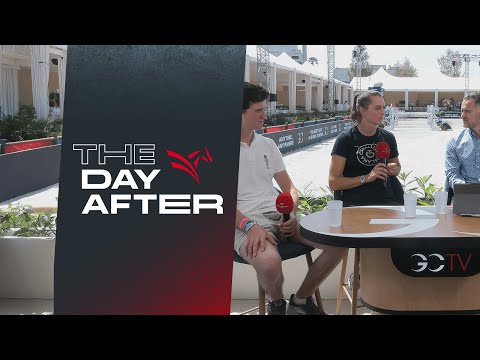
  • The Day After - GCL Cannes 2025
    Keep up to date with GCL by following our social media: Instagram: @GCL_official Facebook: @OfficialGCL Twitter: ...
    0 Комментарии 0 Поделились 525 Просмотры
  • Winning Round - Mariano Martinez Bastida & Belano vd Wijnhoeve Z - CSI5* Prix GC TV
    Catch up on all LGCT events and access exclusive content on GCTV - https://gctv.gcglobalchampions.com Keep up to date with ...
    0 Комментарии 0 Поделились 529 Просмотры
  • ANEQUESTRIANLIFE.COM
    Stus Colic
    This is a depressing follow up to my last post. I actually never imagined that this would happen to me, but here we are, with a thankfully doing-well-now horse, and a dent of over $6k in my wallet.My horses have been mostly healthy. Weve had a few minor colics, one gross cut, and that one time when Berry got stuck on a fence. I truly think thats because they are out on pasture 24/7. It is the healthiest way for a horse to live. And incidentally, the cheapest, which is very nice for my cheapskate self.So it hit me like a stack of brickish pianos when Stu ended up with a medical emergency.To set the scene, it was Friday. I had been texting my trainer earlier. Stu has been in training for a few weeks now, and the following day was going to be my first lesson on him.For petes sake, BRING IN HIS NOSEBAND!!! she had said (Im paraphrasing). For you see, I had lost his noseband when I moved him, and hed been using a Frankenstein bridle made of up parts of my trainers other bridles. Well, really just the noseband, that was the only piece that was missing. But I could have substituted some other parts in there for the giggles.By the way, I did not bring in the noseband, and still havent.When she called me later that day, I assumed it was about the noseband again. I would have rather it been about the noseband. But it wasnt. It was the first call to tell me something was wrong with my horse.He was choking. Hes never choked before. My trainer tried to clear it, and then called the vet out. When the vet arrived, she was surprised to find that my trainer had actually managed to clear it. But now Stu was colicking.They tried to treat him at the barn, but they couldnt get it resolved so they shipped him to our local emergency equine clinic.I arrived at the vet clinic minutes before he did, so I got to see him step off the trailer. He was trembling and definitely in pain. They weighed him and he topped off at a solid 1300 lbs. Hes a big boy, although he did end up losing some weight after this. He lost at least 50-75 lbs from this experience, impressive weight loss for only a week. (The diet industry doesnt want you to know this one trick!)They ran tests on him, with nothing definitively saying what was wrong. The good news was his heart rate, originally 80 (which Im told is very high), went down with sedation. The ultrasound wasnt showing anything wrong, but the vet explained that hes a huge horse and realistically it can only see so far inside of him.It wasnt until the final test that they figured out something was wrong: He was uncomfortable because someone stuck their arm up his bum. He even had a second person join in!In what seems like an incredibly unscientific method, the vet literally stuck her arm up his bum and felt around. Equine medicine sure is amazing. Before all the fancy machines, it was just one person sticking their hand up where it didnt belong. Why does that seem like some weird witch doctor stuff? Are they going to throw some leeches on him now too?But ultimately, yeah, sticking the arm up the butt made the vet realize that the small intestine was too high. Was that causing the distress? Unfortunately impossible to know if thats exactly what it was, but it may have been. The sad thing is that sometimes vets just dont know. Theres a lot of uncertainly.As for what caused it we also dont know. Did the choke cause him enough distress to colic? Was he colicking before the choke, and the colic caused him to choke? Was it something that has been sitting inside of him his whole life and this is the moment it chooses to flair up?Literally dont know. Theres a language barrier, and we can only guess at whats going on.Ultimately the vet said we had two basic options. They could do surgery to figure it out, with the estimate being about $20,000 to fix a small intestine problem. Then afterwards, hed have to spend three months in a stall, with his tummy in a custom sling because hes too giant for any sling thats on the market (didnt know there was a market for horse tummy slings, Im learning so much every day.)Or they would do their best with medicine, and hope it helps.My trainer pulled me aside to discuss this with me. As someone who had been through it before, she wanted to give me some of her wisdom, mainly explaining the practical side of things. I think our hearts would always tell us to try anything to save the animal we love, but we have to look at it from another side, too.$20,000 is a lot of money. Theres no guarantee it would even work, and even if it does, theres a long and painful recovery. The horse may never be the same again. It may not be rideable the way it used to be. It may die of complications later on anyway.Its a depressing thought, but its true. It is a really expensive surgery and there might not be a horse at the end of it. I think its admirable that people are willing to take the risk on their horses, but to be honest, it wasnt even an option for me to begin with because I dont have $20,000 that I can spend on a horse in any way. That saved me from having to literally make the choice between money and saving a horse, because I literally did not have the money to pay for it, it would have been impossible. I had to pick the medicine.Everyone was very understanding of this choice. To be fair, I dont think they were going to try surgery unless Stu got even worse, and at that point he seemed to be doing better anyway. But I had to make a decision before I left him in their care, just in case something happened overnight (because of course this happened in the evening, on a Friday, on a holiday weekend. Impeccable timing.)The good news was I did not get any phone calls overnight. No phone calls is very good news!When they gave me their check in report, it was mostly positive. He had recovered from the colic overnight, and was now resting comfortably. The bad news was he now had pneumonia from the choke. But the good side of that was he was more certain to recover from that than an uncertain, vague but painful colic. Pneumonia was treatable. It just required gallon sized IV bags and medicine.It was relief at this point. He may still be in the hospital but hes stable and not dead, so thats a pretty big improvement. He was in there for a total of 4 days, but he recovered. He wasnt even coughing when he left. The next phase was just rest and recovery.We are now at the point where he can be ridden at a walk and adding in some small trots. We dont want to trigger any coughing. But it stinks that Im paying for board at a training barn where very little training will occur for the next month. Between that and the large vet bills, its been an expensive month for me.Im really hoping that this is just a little blip. Once hes recovered, hell both be working hard, and hell become the well trained horse I know he can be. Literally everything was going so well otherwise. The trainer really liked him, think he has a great brain, and he tries really hard. Theoretically, it shouldnt be long until I have a horse I trust.But who knows what the future holds, as I certainly didnt expect this. I might be bringing him home a lot sooner than I planned, since I wont be able to pay the board anymore. Hopefully Ill be able to hold on for a bit. They times Ive ridden him the incident have made my day. My trainer gives me so much confidence that I know well be progressing fast, as long as nothing else terrible happens.Fingers crossed!The post Stus Colic appeared first on An Equestrian Life.
    0 Комментарии 0 Поделились 1Кб Просмотры
  • WWW.YOURHORSE.CO.UK
    Landmark moment as revolutionary equineinfectious respiratory disease test unveiled
    A new PCR kit which makes testing for equine infectious respiratory diseases easier and quicker has been launched bybioMrieux, a world leader in the field ofin vitrodiagnostics.Vetfire, a ready to use diagnostic test, can simultaneously detect infectious respiratory pathogens in seven equine diseases including equine flu and strangles.Using PCR technologyrenowned for its high sensitivity and reliability, the test can provide results in less than 20 minutes. The speed in which infections can be identified ensures suspected outbreaks can be managed more effectively and quarantine measures implemented quickly if necessary.This new diagnostic test is a landmark moment in equine healthcare, said David Smart, global veterinary business developer at bioMrieux.By providing rapid and accurate results, this simple test, which uses a nasopharyngeal swab, empowers veterinarians to make informed decisions about treatment and management, improving overall animal health.Distinguishing between viral and bacterial infectionsVetfire can identify whether the infection is caused byone of six viruses and/or a strain of bacteriaand consequently it can help inform the course of treatment.bioMrieux draws on more than 60 years of innovation in the field of infectious diseases to bring the same level of expertise to veterinary diagnostics as it does to human health and we are excited about the opportunities offered by the veterinary market to extend the footprint of our Vetfire technology,said Pierre Rouppert, global Vetfire product manager.In the future it is hoped that Vetfire could become part of a standard testing process for horses travelling abroad to compete, ensuring they and healthy and fit for their upcoming endeavours.Related contentEquine flu: experts explain how to lower the risk to your horseStrangles in horses: equine vet explains how to prevent, manage and treat this contagious diseaseFeed 80% of forage during the day to reduce ulcer risk, says vetWhy saliva is key to preventing gastric ulcersHow a horses digestive system worksThe post Landmark moment as revolutionary equineinfectious respiratory disease test unveiled appeared first on Your Horse.
    0 Комментарии 0 Поделились 443 Просмотры