• THEHORSE.COM
    Performance Horse Lameness Problems
    Photo: Shelley PaulsonLameness is the most common cause of poor performance in equine athletes, and researchers have shown that many behavioral issues under saddle are caused by physical pain. Proactive treatment strategies can help extend your horses competitive career and improve his overall wellbeing.Join us for this Ask TheHorse Live event where two experts will answer your questions about equine performance problems and how veterinarians prevent and treat them.Register NowAsk The Horse Live begins on Thursday, Nov. 13 at 8:00 p.m. EST Days Hours MinutesAbout the Experts: Beau Whitaker, DVM, CERPBeau Whitaker, DVM, CERP, grew up near Nashville, Tennessee on his familys farm, developing a love for horses and livestock. He obtained a degree in Animal Science from Oklahoma State University, in Stillwater, after which he trained quarter horses in Gainesville, Texas for a short time. Whitaker graduated from Texas A&M University College of Veterinary Medicine, in College Station, in 2005. Whitaker moved to Salado, Texas, and joined Dr. Ts Equine Clinic in 2007 (which later became Brazos Valley Equine Hospitals-Salado) where he established a busy lameness and sports medicine part of the clinic. He received his CERP in 2014 from the University of Tennessee, in Knoxville. Whitaker enjoys drawing, the outdoors, and spending time with his family when not working with horses.James D. Conway III, DVMJames D. Conway III, DVM, is the Director of Veterinary Professional Services with Contura Vet. Conway has been an industry veterinarian for the past eight years. Prior to his role in industry, he served as an associate veterinarian at a large regional referral lameness and rehab facility in north Texas. Conway is a 2012 graduate of Colorado State University Veterinary School, in Fort Collins, where he was heavily involved with equine stifle and condylar fracture research. Conway completed an internship at Equine Sports Medicine and Surgery in 2013 and upon completion started his own lameness and sports medicine practice in the panhandle of Texas and Oklahoma. Conway has been invited to speak at numerous universities in the U.S. and Canada and at the ACVS and AAEP national conferences. His publications over bisphosphonates, the equine stifle ethesis, and medial condylar fractures can be found in the Equine Veterinary Journal and Equine Veterinary Education.
    0 Commentarii 0 Distribuiri 253 Views
  • LIVE STUDIO - GCL of Riyadh - Post-Show Round 2
    Longines Global Champions Tour.
    0 Commentarii 0 Distribuiri 221 Views
  • LIVE STUDIO - GCL of Riyadh - Post-Show Round 2
    Tune in now: https://gctv.gcglobalchampions.com.
    0 Commentarii 0 Distribuiri 259 Views
  • THEHORSE.COM
    Tracking Progress in Equine Rehabilitation: The Rise of Objective Technologies
    Your veterinarian will regularly assess your horses progress during rehabilitation. | Shelley PaulsonHistorically, veterinarians have gauged rehabilitation success by watching a horses gait and behavior. However, interobserver variability often undermines the reliability of these assessments.Over the past decade the equine rehabilitation landscape has undergone a significant transformation, driven by the integration of objective monitoring technologies. Immobile, lab-based tools have now been replaced with more practical, field-ready equipment.These tools can support practitioner decision-making and facilitate the development of individualized recovery protocols.The Shift Toward Objective Measurement in Equine RehabObjective tools allow us to track changes in gait and performance over time, which is invaluable for assessing progress during rehabilitation, says Vicki Walker, DPhil, MSc, FHEA, senior lecturer in the equine department at Hartpury University, in Gloucester, U.K. Establishing a baseline when the horse is sound and healthy also makes it easier to identify early deviations that might indicate a developing problem.These data complement the clinical observations of the horses support team, providing evidence-based context for decision making, she says.Force and Pressure Plate Systems in Equine RehabWhile force plates remain the gold standard for objective kinetic assessment, providing high-resolution, three-dimensional data on ground reaction forces (GRFs), they are not very practical for day-to-day use, which is why portable, easy-to-use systems are becoming increasingly popular in rehabilitation and training settings, says Walker. Recent developments include portable, wireless force platforms and pressure mats that facilitate field use without sacrificing data quality.Technological innovations such as the instrumented horse boot (a smart hoof boot embedded with GRF sensors) or training-monitoring apps (which might also include wearable sensors) can record stride length, limb loading, stride regularity, time spent in each gait, time spent going each direction, and even heart rate, Walker says. These technologies help objectively quantify weight-bearing improvements and postural stability, which are critical parameters in rehabilitation. For example, veterinarians might use the smart hoof boot to determine if a horse with an injury is placing equal weight on all limbs or if he is favoring the injured limb, even if slightly. This information can help them determine when the horse is ready to progress in the rehabilitation process.Inertial Measurement Units in Equine Rehabilitation ProgramsInertial measurement units (IMUs) have emerged as a pivotal tool for field-based gait analysis. These lightweight wearable sensorstypically placed on the horses poll, withers, limbs, or trunkcapture acceleration and angular velocity data in real time. Researchers on recent studies have validated these sensors accuracy in measuring horses stride symmetry, phase durations (how long the horse spends in each portion of one stride), and vertical displacement (how much the body rises and fall with each step), with performance comparable to that of lab-based force plate systems, which can help veterinarians objectively quantify a horses soundness.1Equine Video Gait Analysis and AI-Based DetectionWith the help of artificial intelligence (AI), computer vision systems can analyze a horses gait from video without using markers, a process called pose estimation. These systems detect anatomical landmarks and compute stride parameters automatically. Researchers on comparative studies have shown that AI-based video analysis aligns closely with IMU outputs and, in some cases, demonstrates greater sensitivity in detecting gait asymmetry.2 Still, reliance on technology should not replace careful observation of the horses behavior and clinical signs, says Walker.Multimodal Integration and Predictive AnalyticsBuilding on this, recent research supports integrating multiple monitoring modalities in addition to clinical observation to capture a holistic view of the horses recovery. Systems that combine IMUs, force data, heart-rate monitoring, and AI analytics generate comprehensive profiles of a horses locomotor and physiological status.Machine learning algorithms can identify movement anomalies, classify exercise intensity, and track deviations from normative baselines.3 These capabilities support real-time decision making and allow veterinarians and owners to adjust a horses rehabilitation program dynamically based on objective progress metrics.Many of the more advanced systems are designed for professional use, but a growing number of apps and consumer-friendly tools are available to riders, trainers, and owners, says Walker. These can be used to monitor session details such as duration, time spent on each rein (going each direction), gait distribution (how much time spent at each gait), and heart rate.These systems can ensure horses receive consistent care and exercise across handlers during rehabilitation with less variation. They help guide decisions but always in the context of veterinary and professional assessment, she adds.Limitations of Technology in Equine Rehab ProgramsDespite their potential, these technologies are not without limitations, says Walker. Not all commercial systems have been validated against gold-standard methods, she explains. Also, if a tool is not sensitive enough to detect small but meaningful changes, users might draw misleading conclusions.Therefore, veterinarians still play a critical role in interpreting the data because, for example, sensitive systems can flag minor gait asymmetries that might not be clinically relevant for every horse.These systems are best seen as one piece of the overall rehabilitation puzzle; they are helpful for guiding decisions, but always in the context of veterinary and professional assessment, says Walker.Take-Home MessageObjective tracking technologies give veterinarians new ways to measure equine rehabilitation and provide a clearer picture of recovery. Inertial measurement units, portable force plates, AI-based gait video analysis, and integrated analytics platforms can enhance the precision and efficacy of equine rehabilitation programs.These technologies, when appropriately validated and interpreted within a clinical context by professionals, can enable earlier interventions and safer return-to-work decisions for equine athletes.ReferencesBlake R, Marlin D. From Biomechanics to Welfare: Integrative Advances in Equine Sports Medicine and Rehabilitation. Animals. 2025;15(18):2706.Fercher C, Bartsch J, Kluge S, et al. Applying Multi-Purpose Commercial Inertial Sensors for Monitoring Equine Locomotion in Equestrian Training. Sensors. 2024;24(24):8170.Calle-Gonzlez N, Lo Feudo CM, Ferrucci F, et al. Objective Assessment of Equine Locomotor Symmetry Using an Inertial Sensor System and Artificial Intelligence: A Comparative Study. Animals. 2024;14(6):921.
    0 Commentarii 0 Distribuiri 257 Views
  • THEHORSE.COM
    Kentucky Mare Dies After Contracting WNV
    On Oct. 29, a 6-year-old Percheron mare in Christian County, Kentucky, tested positive for West Nile virus (WNV). The unvaccinated mare developed clinical signs on Oct. 21, including muscle fasciculations and recumbency. She is now deceased.This is Kentuckys 15thconfirmed equine WNV case in 2025.EDCC Health Watch is an Equine Network marketing program that utilizes information from the Equine Disease Communication Center (EDCC) to create and disseminate verified equine disease reports. TheEDCCis an independent nonprofit organization that is supported by industry donations in order to provide open access to infectious disease information.WNV 101West Nile virusis transmitted to horses via bites from infected mosquitoes. Not all infected horses show clinical signs, but those that do can exhibit:Flulike signs, where the horse seems mildly anorexic and depressed;Fine and coarse muscle and skin fasciculation (involuntary twitching);Hyperesthesia (hypersensitivity to touch and sound);Changes in mentation (mental activity), when horses look like theyre daydreaming or just not with it;Occasional drowsiness;Propulsive walking (driving or pushing forward, often without control); andSpinal signs, including asymmetrical weakness; andAsymmetrical or symmetrical ataxia.West Nile virus has no cure. However, some horses can recover with supportive care. Equine mortality rates can reach 30-40%.Studies have shown thatvaccines can be effective WNV prevention tools. Horses vaccinated in past years need an annual booster shot, but veterinarians might recommend two boosters annuallyone in the spring and another in the fallin areas with prolonged mosquito seasons. In contrast, previously unvaccinated horses require a two-shot vaccination series in a three- to six-week period. It takes several weeks for horses to develop protection against the disease following complete vaccination or booster administration.In addition to vaccinations, owners should work to reduce mosquito population and breeding areas and limit horses mosquito exposure by:Removing stagnant water sources;Dumping, cleaning, and refilling water buckets and troughs regularly;Keeping animals inside during insect feeding times (typically early in the morning and evening); andApplying mosquito repellents approved for equine use.
    0 Commentarii 0 Distribuiri 258 Views
  • Winners Interview - Valkenswaard United - GCL Riyadh 2025
    Keep up to date with GCL by following our social media: Instagram: @GCL_official Facebook: @OfficialGCL Twitter: ...
    0 Commentarii 0 Distribuiri 275 Views
  • Winning Rounds Gilles Thomas & Hans-Dieter Dreher - GCL Riyadh 2025
    Keep up to date with GCL by following our social media: Instagram: @GCL_official Facebook: @OfficialGCL Twitter: ...
    0 Commentarii 0 Distribuiri 272 Views
  • WWW.YOURHORSE.CO.UK
    Dispute over horses grazing on Welsh common
    The future of horses roaming on common land in Rhosili, South Wales, has come under question following a dispute over herd numbers and risk to public safety.Horses currently graze on the cliffs of the Welsh headland, but National Trust are reviewing numbers of the herd as well as requesting the removal of a stallion following complaints from members of the public.The charity told Your Horse that the stallionin question has been escaping from the common via a pedestrian gate on the public right of way, pushing his way through visitors onto the road, car park and into the village, as well as approaching riders on the common. They said they were concerned for public safety and the horses welfare.Following complaints about a stallion, which is part of the herd of horses on the common, we have written to the commoner who owns the horse asking them to move itelsewhere due to public safety concerns, said a National Trust Cymru spokesperson.We are also reviewing the number of horses currently grazing on the common, which we believeexceeds the agreed limit in the commoners rights to graze.Our priority is to ensure the safety of visitors, the welfare of the grazing animals and the ecological health of Rhosili, we are therefore engaging with the owner of the horses to further understand the number that can remain on the common.While the National Trust owns the common land at Rhosili, the management and care of livestock, including the horses, is the responsibility of commoners, who each have rights to graze a certain number of animals on the land.The horses owner, farmer Nick Beynon told the BBC that removing the animals would be a loss for the community. He said the horses had roamed the area for more than 100 years and his family had been farming land for generations.He also said fencing was an issue and there was a foot gate that was not suitable as it had been a problem for people all summer.The National Trust spokesperson added that they were in conversation with Mr Beynon and subject to the outcome of the check on grazing rights, some horses should remain on the common.More from Your HorseBeware autumn laminitis: expert advice to keep your horse safe this seasonHorses and fireworks: how to survive the season aheadWhy schooling is fundamental to a confident relationship so you both enjoy hackingExperts advise how to choose the best type of bedding to suit your horseThe post Dispute over horses grazing on Welsh common appeared first on Your Horse.
    0 Commentarii 0 Distribuiri 254 Views
  • Live Studio - Mid-Studio Round 2 - GCL Riyadh 2025
    Keep up to date with GCL by following our social media: Instagram: @GCL_official Facebook: @OfficialGCL Twitter: ...
    0 Commentarii 0 Distribuiri 246 Views
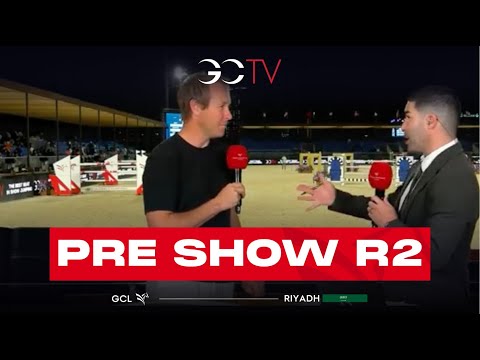
  • Live Studio - Pre-Studio Round 2 - GCL Riyadh 2025
    Keep up to date with GCL by following our social media: Instagram: @GCL_official Facebook: @OfficialGCL Twitter: ...
    0 Commentarii 0 Distribuiri 249 Views