0 Kommentare
0 Anteile
561 Ansichten
Verzeichnis
Entdecken Sie neue Leute, neue Verbindungen zu schaffen und neue Freundschaften
-
Please log in to like, share and comment!
-
EQUIPEPPER.COM7 Must Read Horse Fiction BooksThis post contains Affiliate Links. This means we may receive a small commission on any sales you make after clicking on these links. For more details please see our Privacy Policy.For anyone who didnt know, I am an avid reader. While I tend to lean towards Fantasy & Romance, nothing quite beats a good horse themed story. Some of my all time favourite books have revolved around horses. So if you are like me and love a good read, these are my must read horsey books and series by genre.Continue reading 7 Must Read Horse Fiction Books at EquiPepper.0 Kommentare 0 Anteile 540 Ansichten
-
WWW.YOURHORSE.CO.UKCan you recognise pain in your horses face? New study explores how well we detect discomfortChecking our equines for signs of pain or discomfort is an important part of daily horse care, but are we as successful at reading our horses signals as we think? A new study hasexamined the effectiveness of humans in recognising pain in horses by looking at their faces, and it has found we may be less proficient at doing so than previously thought. Scientists at Bournemouth University (BU) conducted a study where a group of people, some with experience of horses and others with nonewere shown pictures of humans and horsesfaces and asked if they could tell whether the horse or human was in pain or not.Their responses were compared with those of 10 equine behaviour experts.Overall, the accuracy of pain recognition was higher for those studying human faces than horse faces, but participants with equestrian experience were more accurate at pain recognition in horse faces, with the accuracy increasing with the more experience they had.Humans depend on horses as work animals and are used in leisure and sportacross the world, but theextent to which we can recognise pain in horses has never been studied, said Nicola J. Gregory, Principal Academic in Psychology who led the study. We showed that people are generally very poor at seeing pain in horses, but people who have a lot of horseexperience were a great deal better at recognising these subtle signs of pain.The study involving a team of psychologists from BU,Anglia Ruskin University and Sao Pauo Universitylooked athow experiences of social anxiety influenced peoples ability to see pain in horses and human faces. We werent surprised that pain was easier to recognise in human faces, as we are exposed to these much more than animals, buta veryinteresting finding was that people who were more socially anxious were more accurate at recognising pain in the human faces butalso saw more pain in the horses faces even when it wasnt there, added Nicola.It is hoped that the findings will helpbuild up a picture of which factors are important in recognisingemotions in horses so that better supportcan be given to owners to help them notice changes which might indicate pain.Lead image by ShutterstockRelated contentEquine vet explains how to keep a horses joints healthyHow much weight can a horse carry?These are the pros and cons to consider before keeping a horse barefootHorses show subtle signs of stress long before the bad behaviour stage, says expertThe post Can you recognise pain in your horses face? New study explores how well we detect discomfort appeared first on Your Horse.0 Kommentare 0 Anteile 209 Ansichten
-
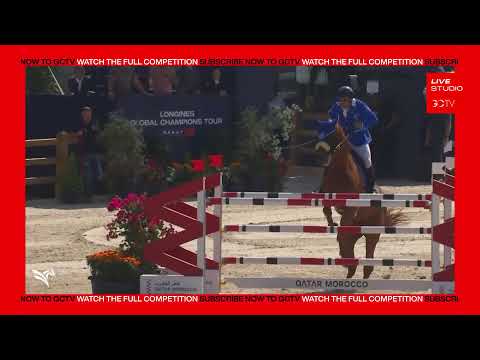
LIVE STUDIO - GCL of Rabat - Pre-Show Round 1Longines Global Champions Tour.0 Kommentare 0 Anteile 209 Ansichten -
LIVE STUDIO - GCL of Rabat - Pre-Show Round 1Tune in now: https://gctv.gcglobalchampions.com.0 Kommentare 0 Anteile 199 Ansichten -
WWW.HORSEILLUSTRATED.COMGet to Know Your Horse with These Groundwork ExercisesTable of ContentsToggleUsing Groundwork to Build TrustThe ExercisePart One: SensitizingPart Two: DesensitizingGetting to Know YouEvery horse is different. Some prefer moving fast, and some favor a slow stroll. Some enjoy crunching carrots, and others delight in gobbling grain. Some love crossing creeks, while some prefer to brave bridges. Its safe to say no two horses are alike. For this reasonand many othersequestrians can benefit from investing time in getting to know their horse, and there is no better way to do that than the right groundwork exercises.Photo by Cavan for Adobe/Adobe Stock2022 Fort Worth Extreme Mustang Makeover Champion and horse trainer Camille White uses groundwork as a tool to help her learn more about a horse, and shares with us one of her favorite exercises.Using Groundwork to Build Trust In Whites experience, groundwork is an essential part of building trust with a horse. When on the ground, you have a good read of your horses facial expressions and can observe how he is carrying himself. She adds that it can be helpful to see a horses reaction to something from the ground before observing it from the saddle. One of her favorite get-to-know-you groundwork activities is a longeing exercise that teaches the horse how to relax and involves both sensitizing and desensitizing components. White describes sensitizing as getting a horse sensitive to cues and teaching him how to move his body, while desensitizing is teaching a horse to accept new and scary things. She explains that many of a horses opinions, personality, and coping mechanisms become apparent when he is moving, making this a great exercise to help you learn how your horse thinks and what things he prefers.Its a lot harder for horses to hide what theyre thinking when theyre moving, as opposed to standing still, says White.When teaching the exercise, White says to be clear and consistent with your horse by communicating the same way every time. By doing this, he will learn what he can and cant expect from you, and his trust in you will grow.The ExerciseThe following steps outline a two-part longeing exercise that White uses to get to know the horses she works with. To perform this exercise, you will need a rope halter, a 12-to-16-foot lead rope, and a flag.Photos by Shoshana RudskiPart One: SensitizingStep 1: Walk to the middle of the arena. Have your horse stand at the end of the lead rope, facing you. Hold the rope in the hand you will use to point in the direction you want him to go. Hold the flag in your other hand.Step 1.Step 2: Ask the horse to move by using your rope hand to point in the direction you want him to go. The horse should move his shoulders away from you and start to walk in a circle around you. Keep your feet planted. Once the horse moves in the direction you pointed, relax your rope hand to let him know he responded correctly.Problem solving: If the horse doesnt move after you point, increase the pressure of your ask by wiggling the flag toward his shoulder. If there is still no movement, tap his shoulder with increasing pressure until he moves in the direction you asked. If the horse moves in the wrong direction, keep applying steady pressure until he steps in the correct direction. Once he responds correctly, drop your flag hand and relax your rope hand.Step 3: Allow the horse to keep moving forward. Once you ask him to walk in a circle around you, he should continue walking until asked to stop or given another command.Problem solving: When learning the exercise, your horse may walk a few steps, then stop and face you. If this happens, repeat step 2 until he walks on the circle without stopping.Steps 2 and 3.Step 4: Ask the horse to stop. Once he understands step 3, teach him to stop by sliding your rope hand up the rope and taking one step toward the horses hindquarters. He should move his hindquarters away and turn to face you. In response, walk to the horse and rub his face to let him know he responded correctly. Problem solving: If the horse doesnt move away after you take a step toward him, take another step toward the hindquarters. Keep walking toward the hindquarters until he stops and turns to face you. White notes that you may need to step toward the hindquarters and wave the flag when first teaching this step.Step 5: Repeat steps 2-4 in opposite direction.Step 5.Part Two: DesensitizingOnce your horse understands how to complete part one going both directions, its time to introduce a final step to the exercise.Step 6: Ask your horse to walk in a circle around you like you did for step 2. Then, reach out with the flag and gently rub his shoulder while the horse is walking. He should stay relaxed at the walk while the flag rubs his shoulder.Problem solving: If your horse jumps or speeds up when the flag moves toward his shoulder, bring the flag back and keep it at the distance where he started to get nervous. Once he relaxes, take the flag away. Wait a bit, then re-introduce the flag and attempt to bring it closer than last time. Repeat this process and bring the flag closer each time you re-introduce it.Step 6.If your horse stops or freezes when the flag touches him, return to steps 2 and 3 before attempting to rub his shoulder with the flag again.Getting to Know YouHumans dont become experts on each other after one meeting, and neither do humans and horses. Getting to know a horse takes time and effort. Whether your horse is a carrot cruncher that loves to cross creeks or a grain gobbler that prefers a slow stroll, groundwork can be a great tool to help you learn more about him.This article about using groundwork exercises to get to know your horse appeared in the November/December 2024 issue of Horse Illustratedmagazine.Click here to subscribe!The post Get to Know Your Horse with These Groundwork Exercises appeared first on Horse Illustrated Magazine.0 Kommentare 0 Anteile 222 Ansichten
-
LIVE | Dressage Day 6yo horses - FEI WBFSH Eventing World Breeding Championship for Young HorsesIt's time for the youngest stars to shine Enjoy now the first Dressage day for the 6y/o horses at the FEI WBFSH Eventing World ...0 Kommentare 0 Anteile 248 Ansichten -
LIVE STUDIO - GCL of Rabat - Mid-Show Round 1Longines Global Champions Tour.0 Kommentare 0 Anteile 214 Ansichten -
LIVE STUDIO - GCL of Rabat - Mid-Show Round 1Tune in now: https://gctv.gcglobalchampions.com.0 Kommentare 0 Anteile 209 Ansichten -
WWW.BRITISHHORSEFEEDS.COMDont let less forage worry you heres how to keep your horse happy and healthyThe winter months can be a tough time for horse owners, especially when it comes to thinking about how to keep our four-legged friends well-fed and comfortable. Forage think hay, grass and other fibrous feeds is at the heart of most horses diets, especially when thinking about veteran vitality. But after the dry summer of 2025, finding good-quality hay might be trickier (and pricier) than usual. So, what can you do to prepare?What happens to grass in a drought? What does that mean for your horse?DDepending on how long a period of drought lasts, grass and broadleaf plants can change quite a bit. Grass species can end up with higher protein but less energy, whilst legumes and broadleaf plants can show lower protein, but higher levels of key macronutrients. Though more protein might sound like a win, it usually comes alongside less fibre, lower quality energy output, more water-soluble sugars and reduced levels of minerals like phosphorus.Hay cut from stressed grass due to hot, dry conditions can suffer from the same issues as the grass it came from. This means horses may face lower energy intake, and a hindgut imbalance due to excess protein and fibre changes, resulting potentially in reduced overall condition.Why forage matters - especially in winterHorses are built to graze almost constantly up to 20 hours a day in some cases. In the colder months, when turnout is limited and grass is scarce, they need even more fibrous food to keep warm and maintain their condition. Thats why hay, haylage and other fibrous feeds are so important during winter. But if your hay supply isnt what it was, there is a simple solution.Meet your winter helpers: Speedi-Beet and Fibre-BeetThis is where British Horse Feeds Speedi-Beet and Fibre-Beet step in, as the forage supplementers and hay replacers of choice. These beet-based soaked fibre feeds are designed to:Improve hindgut fermentation and fibre digestibilityExtend and enhance poor-quality haySupport hydration and gut healthOffset excess protein and sugar levels in stressed forageBoth feeds deliver a similar amount of energy to hay/haylage, just 1kg of dry Speedi-Beet or Fibre-Beet can replace up to 1.5kg of hay after soaking. Feeding it in several smaller meals also mimics a horses natural grazing habits, keeping them happy and healthy.Who is it best for?Speedi-Beet can be added to your hay ration to boost digestibility and increase heat from fermentation in the hindgut helping your horse maintain energy and body warmth. Speedi-Beet is easy to digest and low in sugar and starch, making it ideal for horses prone to laminitis when fed as part of a balanced diet.Fibre-Beet adds to these benefits by providing a more conditioning feed for horses who are poor doers or fussy feeders. It combines original Speedi-Beet with protein-packed alfalfa and oat fibre, making it an easily digestible, nutrition powerhouse. Biotin, calcium and sodium help support muscle tone and overall condition, and the peppermint flavour makes it extra appealing.Plus, the wet mash format helps keep equines hydrated, a big win in chilly winter months.So, if youre facing a lean hay season this winter, dont worry! Speedi-Beet and Fibre-Beet are unbeetable fibre alternatives to help maintain your horses essential daily forage intake of 2% of bodyweight to support a healthy gut function all season long.How to useSoak 1kg dry Speedi-Beet or Fibre-Beet mash to replace 1.5kg of hay after soakingMix with chaff (2:1 soaked:dry) for a hay-like feedIntroduce gradually if your horse is unfamiliar with soaked fibre feedsSpeedi-Beet or Fibre Beet can replace up to 50% of your horses forageand even 100% short-termTip: Some horses may take time to adapt to wet feeds start with a dampened mix and slowly increase the water ratio.To explore effective strategies for coping with hay shortages, consider visiting theBritish Horse Society website.Visit The British Horse Society WebsiteThe post Dont let less forage worry you heres how to keep your horse happy and healthy appeared first on British Horse Feeds.0 Kommentare 0 Anteile 714 Ansichten