• WWW.YOURHORSE.CO.UK
    Its Europeans cross-country day! These are the fences to watch and why
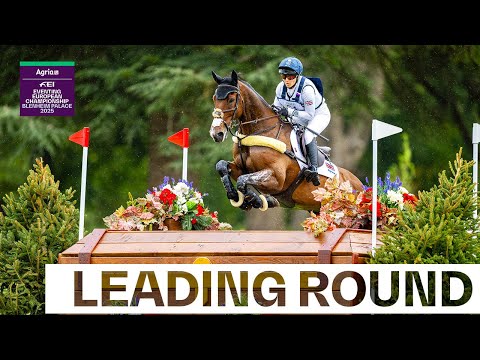
    Today is cross-country day at the Agria FEI European Eventing Championships, with the first rider Switzerlands Nadja Minder on Toblerone due to leave the startbox at 11am.Captain Mark Phillips has designed the 31-fence course, which covers undulating terrain and includes two river crossings. When Your Horse asked the riders which fences they predict will be most influential, they were unanimous in saying that there will be problems all the way round.The Suregrow Dew Pond (fence 6abc, pictured top), Subaru Sensation (11abc) in front of Blenheim Palace, the GFS Saddles Water (20abc) and the LeMieux Wedge (23ab), which Mark Phillips called naughty during our course walk with him, were all highlighted as interesting fences to watch.How watch at homeIf you cant be here in person today, remember you can watch from home via ClipMyHorse.TV/FEI.TV(UK and international viewers) or via the BBC if youre in the UK. More details here.One to watch: Subaru Sensation (11abc) in front of the palace is likely to draw a big crowdIts a cumulative effectI know its a get out card, but I think youll find problems all the way round, said British team rider Tom McEwen, who lies third after dressage with JL Dublin. There will be people that will probably take alternatives and think, Oh, this is easier, and have problems like that. Its a consecutive effect, for sure.Tom highlighted the Subaru Sensation, a large chest to two corners, as being big and technical and said the waters are decent.He added:Its all the way around and its the little things, like the little skinny coming out the dip [LeMieux Wedge]. Its meant to be a run jump fence, but its not a run, jump fence. Youve always got to keep your keep your wits about you.One to watch: LeMieux Wedge is sited on the other side of a gullyA spiced up BlenheimThere are a few sneaky problems to be had anywhere, agreed fellow British team rider Piggy March. Its a championship track; a spiced up Blenheim for sure. I think well see bits and pieces spread out. Definitely a thrills and spills day hopefully my thrill, not spill.I think its crafty coming out of the main water, over a little angled brush [GFS Saddles Water], which we jump lots of, but I think theyve been very clever with the [position of a] flower pot coming out there. Then at the far end, the oxer to the corner [FEI Mounds, 22ab], and even the coffin [Cross-Country App Wooded Hollow, 25abc], which just is a rail to a ditch on its own, but we could easily have a pin. We havent had [the Suregrow Dew Pond] in for ages, so its cool to have it back, but you have to take notice of the pins and flags, which are all a part of the sport that we all have to think about.One to watch: Suregrow Dew Pond (6abc). Pictured is part a; part c is another skinny coming out of the waterTypical Mark PhillipsIrelands Padraig McCarthy described it as a serious track.Its an easy enough start to let the horses breathe and get into a good rhythm, but when you come up to the main arena and out onto the front lawn there, it really smacks you in the face, he said.Its very typical Mark Phillips. He puts you on one line and you have to accept a lot of angle and theres no deviation from it. I think were going to see plenty mistakes. Its a championship and its going to be good sport.Italys Daniele Bizzarro also predicts that this phase will be influential. It is very tough compared to normal Blenheim, he said. Theyve definitely beefed it up. From fence number 10, there are 11 or 12 fences in a row that are very intense, lots of big efforts. I think horses that have got a big, rangy canter and lots of scope will really benefit from it. Mine struggles a little bit with the distances, but weve got alternatives if we want to make it a bit easier for our horses.One to watch: FEI Mounds (22ab), an oxer on a mound to a corner on a different moundTime will be a factorTom McEwen also believes that time-penalties will be plentiful.Its wheeled 10mins 1secs officially, but I would say it feels more like a 10mins 15secs course, said Tom. Time will definitely be a factor. Two things that are positive is the ground is going to be very good and the distances are very positive, so there will be a few rounds that make it look as easy as horses should be able to make it look, while others find the time a harder.He added that the distances are big and ultra positive.With the Captains courses, if you can get into his flow and his state of mind, its a really positive way of going, added Tom. The ground is perfect, but the consecutive effect of so many combinations and little bits everywhere, its a really interesting course and hopefully people on the outside will see it for how good a job hes done.Well need a bit of luckBelgiums Lara De Liedekerke-Meier, lying fifth after dressage with Hooney DArville, believes riders will need a bit of luck on their sides.Its really attacking. I had a chat with Captain Mark yesterday, and he said, Are you surprised? I said, no, Im not, said Lara.All the lines are asking for forward riding, but its really clear for the horses. If we trust our horses it should be fine, but, as always in sport, we will need a bit of luck too.Useful linksCross-country start timesHow to watch from homeCross-country course mapFull individual standings after dressageFull team standings after dressageThe post Its Europeans cross-country day! These are the fences to watch and why appeared first on Your Horse.
    0 Commenti 0 condivisioni 220 Views
  • WWW.YOURHORSE.CO.UK
    Two horses rescued in as many days: trapped horses saved by Cheshire crews
    Cheshire Fire and Rescue Service were called out to two equine emergencies in as many days when a mare fell into a brook and another horse got stuck in a bog.Knutsford Fire Stations watch manager, Stuart Stenhouse, said it was an exceptionally hectic few days for his crews.We had a busy weekend in mid-September with two horse rescues in two days, he confirmed.The first incident occurred on Saturday (13 September), when Rosie, a 13-year-old mare, fell into a brook in Tabley.Specialist animal rescue firefighters from Knutsford were joined by crews from Bollington and Lymm to assist. Using strops and a telehandler, they were able to safely secure the horse before lifting her up the embankment to solid ground.Working with colleagues from Bollington and Lymm, we used the equipment to lift Rosie to safety. She was soon back on her feet and, remarkably, showed no signs of injury, said Stuart.Rosie was later checked over by her owner and found to be in good health. She was safely returned to her stable after the ordeal.The mare was lifted back on to solid groundHindlegs deep in the mudThe following day (Sunday 14 September), firefighters responded to a second emergency in Siddington, where Gem, an 18-year-old mare, had become stuck in a bog and her hindlegs sank deep into the mud.With support from Macclesfield and Bollington crews, plus a local vet, specialist equipment and a tractor were used to free her.Stuart said the joint effort paid off, noting that its always a great outcome when the animals are unhurt and can return to their stables after such a stressful experience.During the rescue, the mares welfare was monitored by the attending vet. Once freed, she was walked around the field to ensure she was steady on her feet before being returned to her stable to be washed and warmed up.Gems hindlegs sank deep into the mudWelfare firstThe veteran horses owner, Catherine Sims, was away on holiday at the time of the accident. In her absence, Gem was being cared for by family friend Nic Pakenham-Walsh, who praised the emergency services for their calm and professional approach.Thank you so much for your support and professionalism whilst rescuing Gem yesterday, she said. You made sure she was kept calm throughout and put her welfare first. We will forever be grateful.Catherine has since shared her gratitude as well, describing the mare as her precious unicorn.Thank you all so much for saving our precious Gem yesterday, she said.Images by Cheshire Fire and Rescue ServiceRelated contentFirefighters rescue horse who got stuck in a muddy bog while out hackingPregnant Belgian Draft saved from bog ordeal by fire and rescue serviceThis is why its so important to ride horses on varying terrainPrevent mud fever by doing this (spoiler: it isnt actually caused by mud!)The post Two horses rescued in as many days: trapped horses saved by Cheshire crews appeared first on Your Horse.
    0 Commenti 0 condivisioni 247 Views
  • WWW.YOURHORSE.CO.UK
    Britain crashes out of contention for a European team medal
    Britain is no longer in the running for a team medal at the Agria FEI European Eventing Championships following falls for its first two team members, Yasmin Ingham and Piggy March, this morning.Yasmin and Rehy DJ were the first British pair to take on Captain Mark Phillips 31-fence cross-country course and their round came to an abrupt end at fence 22, the FEI Mounds.This combination involves a large oxer on top of a mound (part a), followed by a curving left line to a corner (b) on another mound.It is currently unclear which element Yasmin was eliminated at. We will update with more information when we have it.The next British pair on course were individuals Caroline Harris and D.Day, whose campaign came to a premature end at part b (the corner) at the same fence.Yasmins elimination meant that the three remaining British team riders had to complete in order to remain in the team competition.However, Piggy March and Halo made a mistake at a brush corner out of the GFS Saddles water complex (22abc) and the rider was ejected from the saddle, landing in the water.Piggy was straight back on her feet and Halo cantered away.It means Britain is no longer in contention for a team medal.Tom McEwen, lying third overnight on JL Dublin, is due out at 2pm. Laura Collett and London 52, second after dressage, will go at 3.10pm.Both riders are now riding for individual honours only.The second British individual, Bubby Upton aboard Its Cooley Time, will leave the startbox at 2.40pm.Related contentIts Europeans cross-country day! These are the fences to watch and whyHow to watch from homeTo win medals, youve got to go the quick way: Mark Phillipsreveals the Europeans cross-country courseThe post Britain crashes out of contention for a European team medal appeared first on Your Horse.
    0 Commenti 0 condivisioni 250 Views
  • THEHORSE.COM
    Protecting Your Horse From Poisonous Fall Leaves
    Some trees have leaves that are particularly poisonous to horses as they are wilting. | Photo: iStockQ: I recently moved my horse to the East coast. There are many trees around his new pasture. Should I be concerned about my horse eating leaves that fall from those trees?A: The answer to your question is going to depend on the types of trees the leaves are coming from, which means you need to identify the trees. The easiest way to do this is to use an online identification tool or one of the many good identification books available. If you do not want to buy a book, your local library is likely a good resource with books covering trees common to your region.Once you have identified the trees you can look them up in an online database and find out if they are poisonous. The American Society for the Prevention of Cruelty to Animals has an extensive list of poisonous trees and plants at www.ASPCA.org.Acer and Prunus trees are often found around horse pastures and have leaves that are particularly poisonous to horses as theyre wilting.Acer rubrumcommonly known as red maple, soft maple, or swamp mapleare native to the Eastern United States and Canada and stunning in the fall with their showy red leaves. While on the tree and alive, the leaves are fine; but once fallen and wilting, these leaves can be fatal to horses in relatively small quantities. As little as 1.5 to 3 grams per kilogram (thats about 0.05 to 0.11 ounces per 2.2 pounds) of body weight can cause hemolytic (red blood cell-destroying) disease. Wilting leaves are thought to contain gallic acid, which can lead to red blood cell breakdown and hemolytic anemia (in which the bodys immune system attacks and kills its own red blood cells). While leaves that fall from the tree and wilt are poisonous year-round, it appears that those falling after mid-September contain the greatest concentration of gallic acid. Wilted leaves remain toxic for several weeks.Horses that consume maple leaves often die within a couple of days. Initially after ingestion, a horse generally shows severe depression and becomes weak due to reduced oxygen flow around the body. Heart rate and respiration increase in an attempt to circulate oxygen, red or dark urine is often observed, and their mucus membranes (including the whites around the eyes) might appear slightly yellow. Ultimately, this inability to carry adequate oxygen via the blood leads to death.The prognosis is typically poor. In a retrospective study of 32 equine cases of maple poisoning, 19 died. A number of clinical signs were observed including colic, fever, and laminitis. There is no cure, so horses that have eaten red maple leaves receive supportive care, including fluid therapy.Not all red maples are toxic, however other speciesincluding sugar maples and silver mapleshave been found to contain gallic acid and should be avoided. To be safe, I would suggest trying to avoid having all maples in areas where horses could consume the leaves.The Prunus family, of which there are 200 species, include the stone fruit trees: plums, apricots, peaches, and cherries. While less toxic to horses than cattle, the fruit stones contain cyanide and the leaves are particularly toxic while wilting. Choke cherries and black cherries are considered the most dangerous of the Eastern wild cherries.Clinical signs of cyanide poisoning include increased heart and respiration rates, with horses breathing heavily trough flared nostrils. Cyanogenic glycosides cause bright red mucus membranes, dilated pupils, difficulty breathing, and shock. Its possible to treat horses found early in the disease course by using chemicals that bind the cyanide, allowing cellular oxygen transport to be unblocked.In the case of both Acer and Prunus trees, look for leaves that have fallen off these trees, as well as branches with leaves that have blown down and become available for horses to eat.As we move in to fall, the nutritional value of pasture grass, even grass that looks green and plentiful, drops dramatically. As a result your horse might be more inclined to look for things to eat that would not normally interest him, including leaves. You can make leaves less appealing by supplementing pasture intake with good-quality hay.
    0 Commenti 0 condivisioni 256 Views
  • THEHORSE.COM
    Riding Broodmares
    Post-pregnancy, dont separate the mare and foal when riding. Instead, you might allow the foal to be at the mares side. | Photo Courtesy Tera GehringKnowing when to stop riding your pregnant broodmare can be a debatable topic. While this article will review general recommended time points, each broodmare and pregnancy will be different. Always consult your veterinarian when deciding on a plan of action for riding your broodmare and how strenuous the activity should be.Before PregnancyEvery horse should be in their optimal body condition score range. An obese broodmare is more at risk of having a difficult pregnancy due to the preexisting stress on her joints in addition to the weight of a growing foal. Conversely, an underweight broodmare might have a difficult time conceiving or keeping the pregnancy. Ideally, a broodmare should be healthy and have regular conditioning work before pregnancy to ensure her muscles will have the fitness they need to help her carry a foal. Mares that are in good condition before and during their pregnancy often recover faster after foaling, as well.During PregnancyLight work, training, and travel are all okay for pregnant mares in the first six to eight months of gestation, and they might even benefit from the continued exercise. However, it is crucial that the health of the mare or foal never be compromised. Riding should not be so strenuous as to cause the mare additional stress or to work up a full sweat. Overexertion in hot weather and/or high humidity can cause dehydration or heat exhaustion, putting both the mare and foal at risk.There are many pros and cons to riding a pregnant broodmare. The pros often occur in the early stages of pregnancy, when the lack of an estrous cycle in a difficult or temperamental mare might improve her willingness to work and reduce distracting interactions with other horses. The cons often come later in the pregnancy, at around eight months, when the broodmare might become less accepting of work due to physical discomfort. Bending might become more difficult, and she might be reluctant to collect. Because her body is changing, the saddle or other tack might not fit correctly, causing painful pressure points. Simple conditioning with straight movements, frequent walk breaks, and short bareback hacks are appropriate during this period.The mares abdomen is at its largest during late gestation, when the foal does most of its growing. We recommend reducing riding activity at this point; however, the mare still benefits greatly from adequate turnout, such as in a large pasture, to move around. Continuous movement helps aid circulation and reduce fluid retention. The broodmare should have the last six weeks of gestation off from riding, with continued pasture turnout. Overall, do not require her to do any strenuous activity other than what she feels comfortable doing on her own.Post-PregnancyThe broodmare will need time to recuperate after giving birth. When deciding on an appropriate time to return to work, there are several factors to consider, including the birthing experience, physical changes, and weaning.Your mares birthing experience might be uncomplicated or it could result in excessive bleeding, tearing, a retained placenta, or an infection. Each of these postpartum complications could affect her return to work, depending on the severity and response to treatment. Normal physical changes after foaling also require a few weeks to resolve. These include the gradual resolution of fluid accumulation in the lower legs and belly and the shifting of the mares internal organs back into their pre-foal positions, as they were slightly displaced by the large space the foal occupied.Once your broodmare has recovered physically, resuming riding depends on the plan for weaning. While the foal is still nursing, separating them completelyeven for just a few momentscan be very stressful, making work unproductive. Instead, riding or working with the mare in an enclosed arena or field will allow the foal to be at the mares side. Another option is to use a babysitter, such as a gentle gelding, the foal is comfortable being left with. After weaning, putting the mare back to her conditioning work might be the best option, because it can help distract her from the removal of her foal. Riding your broodmare before, during, and after her pregnancy can be extremely beneficial for her if done with appropriate attention to her limits as they change throughout the pregnancy. Always consult your veterinarian when creating a conditioning strategy for your broodmare.
    0 Commenti 0 condivisioni 269 Views
  • LIVE | 36 - Challenge Cup - Young Riders - FEI Jumping Nations Cup Youth Final
    Lean back and enjoy now the Challenge Cup for Young Riders of the FEI Jumping Nations Cup Youth Final Subscribe to ...
    0 Commenti 0 condivisioni 366 Views
  • WWW.JUSTHORSERIDERS.CO.UK
    Celebrate Every Step: The Importance of Small Victories in Horse Riding for Physical and Mental Growth
    Section Key Points Celebrating Small Victories in Horse Riding - Importance of celebrating incremental milestones in horse riding - Contribution to physical and mental development - Role of local experts like "Just Horse Riders" Understanding the Physical Demands - Horse riding as a rigorous physical activity - Balance, coordination, and strength required - 45-minute session can burn up to 200 calories Importance of Balance - Improved through posture and stirrup adjustments - Enhances core strength and riding proficiency Psychological Rewards of Small Wins - Elevated cheerfulness and relaxation - Boosts self-esteem and problem-solving skills Confidence Building - Accomplishments strengthen belief in abilities - Essential for safety and achieving riding goals Boosting Cognitive Abilities - Riding enhances attention-demanding tasks - Unique movements stimulate the nervous system Task-Based Learning - Rides improve mental agility - Contributes to sharper focus and mental exercises Cumulative Impact of Small Victories - Aggregate of small skills leads to overall proficiency - Keeps enthusiasts motivated and engaged Practical Examples of Progress - Riding without stirrups enhances balance and strength - Adapting to riding demands through effective gear use The Journey of a Rider - Filled with numerous small milestones - Celebrating achievements combats discouragement Conclusion: Importance of Honoring Small Wins - Essential for physical health, emotional well-being, and cognitive enhancement - Supports skill development and motivation Celebrating Small Victories: Why Every Tiny Achievement in Horse Riding Matters Horse riding is not just a sport; it's a journey filled with incremental milestones that deserve celebration. In this article, we'll explore why these small victories are so crucial for both physical and mental development, and how they can fuel continued enthusiasm and participation in horse riding. We'll also see how local experts like "Just Horse Riders" provide essential support in this journey through equipment and resources. Understanding the Physical Demands of Horse Riding Though riding a horse might look seamless from afar, it is a rigorous physical activity that demands balance, coordination, and strength. A single 45-minute session involving walking, trotting, and cantering burns up to 200 calories, making it a potent form of exercise. The action of riding engages the core muscles, inner thighs, and pelvic muscles, promoting significant physical gains over time. Moreover, these victories in physicality often go unnoticed but are crucial for long-term success. The Importance of Balance in Horse Riding A key achievement for many riders is enhancing their balance. By adjusting stirrup lengths, ensuring an upright posture, or riding without stirrups, riders improve their core strength. Eventually, these physical attributes not only contribute to riding proficiency but also positively affect day-to-day health as well. The Psychological Rewards of Small Wins Beyond the physical aspects, horse riding is a form of psychological enrichment. More than 80% of riders experience elevated levels of cheerfulness, relaxation, and happiness during sessions. This mental elevation, sparked by mastering small milestones like a new gait or successfully maintaining a trot, has a domino effect on self-esteem and problem-solving skills. Why Confidence Building Matters Confidence plays an integral role in horse riding. When a rider accomplishes a minor task, such as keeping the horse under control during a spook, it consolidates a belief in their abilities. This confidence is pivotal for both maintaining safety and achieving more substantial riding objectives. Boosting Cognitive Abilities Interestingly, horseback riding can also improve cognitive functions. Research indicates that riding enhances a person's capacity to perform attention-demanding tasks such as arithmetic problem-solving. These cognitive improvements can be attributed to the unique movements experienced during riding, which stimulate the nervous system. The Role of Task-Based Learning Learning tasks while riding, such as guiding the horse precisely, are often overshadowed by broader goals. However, these small victories contribute to increased mental agility and a sharper, more focused mind. As these patterns build and develop, riders find themselves more adept in both riding nuances and mental exercises. Cumulative Impact of Small Victories Every small victory adds up to substantial progress. Riding is essentially a sport of many small skills that, when mastered, contribute to overall proficiency. This aggregate of minor achievements keeps enthusiasts motivated and engaged in their equestrian endeavors. Practical Examples of Progress - Riding without stirrups for short periods can enhance both balance and strength. Jodhpurs specifically designed for comfort can aid this practice. - Successfully fitting into gear, such as riding boots or gloves and using them effectively, reflects adaptation to riding demands. - Effectively handling unexpected horse behavior while maintaining control exhibits newfound problem-solving skills and is a significant confidence booster. The Journey of a Rider Whether you're a beginner mastering the basics or an advanced rider honing complex maneuvers, the journey in horse riding is punctuated by numerous small milestones. Recognizing these achievements is critical for combating discouragement, fostering patience, and further solidifying the bond between rider and horse. Embracing Every Step Forward Riding offers a natural metaphor for life; each small step forward is a victory worth celebrating. Whether it's holding a trot longer, completing a new pattern, or simply feeling more connected with your horse, every small achievement amplifies your love for the sport. Conclusion: Why Honoring Small Wins Is Essential In summary, small victories in horse riding are vital for physical health, emotional well-being, cognitive enhancement, and overall skill development. By celebrating these achievements, riders maintain their motivation, passion, and commitment to this rewarding sport. With outlets like "Just Horse Riders," equestrians can also find the proper equipment and supplements to support their journey and related goals. To experience this journey yourself, check out our collection of gloves, socks, treats, and supplements today! Additionally, ensure a comfortable environment with our range of stable and turnout rugs and fly protection. ```html```
    0 Commenti 0 condivisioni 249 Views
  • WWW.YOURHORSE.CO.UK
    Tom McEwen gets first score for Britain on the cross-country leaderboard
    Tom McEwen and JL Dublin were the first British pair to complete the cross-country phase at todays Agria FEI European Eventing Championships.They jumped clear and finished with 6.8 time-faults to add to put them in the hunt for an individual medal. Its amazing the English public here today. It is actually completely full all the way around and theres definite little hubs of areas where its completely packed out and Dubs was just loving it, said Tom. For me it was just settling him down for the first couple of minutes. All these combinations are built with positive distances and I was actually holding through all of them, so he was loving it.It well suited his way of going and I could just settle him down for the latter part of the course.Marks allowed you from beginning to end to be in a flowing rhythm, so the horses were in that state of mind all the way and the bigger distances later on come up pretty easy.I just focus on my own stuffPathfinder Yasmin Ingham and Piggy March both fell off during their rounds, meaning Britain is out of contention for a team medal.Individual Caroline Harris also fell off during her round.To be honest, I just focus on my own stuff. All six of us have been a great team, but were all doing our own individual stuff so for me personally, I like to focus on my own bits and bobs, said Tom. I thought, watching them, they all rode fantastic rounds and, like Ive had many of them, its not been their day today.Tom picked up 6.8 time-faults one of the quickest rounds of the day. He said he thinks the optimum time is getable.I think there is a possibility that someone as quick and smooth as Ill just say Mickey [Jung]. I wont say the other rider I was thinking of. If you can trust, like Mickey said in the press conference yesterday, that you can recover a horse quickly, theyre actually recovering up the hills as much as down the hills. It is possible, but you have to be as quick as you are smooth, which is a tough combination.Tom said the earlier rounds of his fellow squad mates did not affect his plans for his round.Its a massive shame, but not at all. Im riding Dubs and thats all Ive got to focus on and concentrate on. It makes no difference what anyone else is up to.Since Tom finished, the second British individual, Bubby Upton, fell off Its Cooley Time coming out of the Agria River Crossing (fence 19). Both were uninjured.Related contentBritain crashes out of contention for a European team medalIts Europeans cross-country day! These are the fences to watch and whyHow to watch from homeTo win medals, youve got to go the quick way: Mark Phillipsreveals the Europeans cross-country courseThe post Tom McEwen gets first score for Britain on the cross-country leaderboard appeared first on Your Horse.
    0 Commenti 0 condivisioni 263 Views
  • European championship history within reach for Irelands eventers
    Irelands senior eventers are on the cusp of a historic result at the FEI Eventing European Championships in Blenheim.Dag Alberts team lie in second place after a dramatic day of cross country and a first team medal since 1995 is within touching distance.Germany lead the team standings with what looks an unassailable lead on 113.7 penalties with the Irish on 150.7. Switzerland sit in third on 161.3.Surprisingly, hosts Britain are out of contention after eliminations for Yas Ingham and Piggy March.Individually, Ian Cassells and Millridge Atlantis (ISH) are best of the Irish in 10th position on a score of 46.2, having picked up 13.6 time penalties. Sarah Ennis is also very well placed in 14th with Dourough Ferro Class Act (ISH).Padraig McCarthy and Robbie Kearns are 16th and 18th respectively after also only picking up time faults and what was ultimately an excellent showing.Team manager Dag Albert heaped praise on his squad, saying: That was probably about as good as we could have hoped for today Im delighted with the guys.We knew it was going to be extremely hard work out there, so for us to be in second place now ahead of tomorrows jumping is great.Four combinations inside the top 20 is great so we just have to keep focused and have a few nice rounds jumping tomorrow to hold on to our position and bring home that medal.The post European championship history within reach for Irelands eventers appeared first on .
    0 Commenti 0 condivisioni 304 Views
  • Look at Laura Collett & London 52 smashing the XC of the FEI Eventing European Championship 2025
    Subscribe to our YouTube channel & hit the bell! http://go.fei.org/YouTube?d Exclusive videos on #FEItv: ...
    0 Commenti 0 condivisioni 333 Views