0 Kommentare
0 Anteile
278 Ansichten
Verzeichnis
Entdecken Sie neue Leute, neue Verbindungen zu schaffen und neue Freundschaften
-
Please log in to like, share and comment!
-
WWW.NOELLEFLOYD.COMWhy Play Is Key for Building “Try” in Your Horse, and How to Do It with Tik MaynardWhen you picture adding “play” into your horse’s training, what comes to mind? Do you imagine your horse chasing around a large ball or nosing carrots out of a container? Or maybe you see your horse trotting joyfully behind you as you run?The fact is, play can look like a lot of different things, but it doesn’t have to be any of the above. Play’s purpose is to teach your horse how to “try”–and in the process, both horse and trainer achieve a cooperative partnership.Equestrian Masterclass instructor (immediately off his 2024 Road to the Horse Colt Starting competition win) Tik Maynard is a horsemanship and upper-level eventing coach who sees ‘play’ not as a series of exercises, but as a beneficial mindset. In the final episode of Equestrian Voices, Tik and Caroline discuss why play is crucial to horse training and how to incorporate it into daily interactions can teach us to be better observers, facilitate better communication, and reignite our passion for horses.. They also cover: The difference between anxiety and playfulness in horses, and why it’s easy to confuse them. Using the social rules of play to ensure both you and your horse are winning the game. Bringing play and thoughtfulness into daily activities like leading your horse. What play is not–drilling, a chore, or hard work! Why it’s important to slow down and take a puzzle-solving approach. Rewarding softness and effort during play. Thank you to our sponsors, Equestrian Masterclass and Nikovian (use code noellefloyd15 at checkout for 15% off).0 Kommentare 0 Anteile 121 Ansichten
-
WWW.JUSTHORSERIDERS.CO.UKThe Secrets Behind Understanding Horse Behavior: Insights for RidersSection Key Points Communication Horses communicate through body language, vocalizations, and scent. Recognizing these signals is crucial for understanding and bonding. Social Structure Horses are social animals with a complex herd hierarchy. This influences their feeding, mating, and grooming behaviors. Feeding Behavior Proper feeding mimics natural grazing patterns, is crucial for health, and influences behavior. Inconsistencies can lead to stress and aggression. Reproductive Behavior Understanding hormonal influences and changes can prevent misunderstandings and ensure safety during breeding seasons. Behavioral Issues Identifying the root causes of issues like aggression and fear is crucial. Changes in environment, routine, or training can help address these. Environment and Care A stable and enriching environment is key to preventing behavioral issues and ensuring the wellbeing of horses. Patience in Training Approaching horse behavior with patience and empathy fosters a deeper connection and understanding, enhancing welfare and happiness. Understanding Horse Behavior: A Journey into Their World Welcome to the fascinating world of horses! Whether you're a seasoned equestrian or just starting out, understanding horse behavior is like decoding a secret language. It's not just about riding; it's about building a relationship based on trust and respect. So, grab your helmet, and let's dive into what makes these magnificent creatures tick. Communication: More Than Just Neighs and Whinnies Imagine walking into a party where you don't speak the language. That's a horse in the human world. Horses communicate through body language, vocalizations, and even scent. A flick of the tail or a prick of the ears can speak volumes about their mood and intentions. By tuning into these subtle cues, you're one step closer to understanding your equine friend. For example, a horse laying its ears back might not be giving you the stink eye but expressing discomfort or fear. Recognizing these signals is crucial, not just for bonding but for safety. On the flip side, a relaxed posture and soft gaze can mean you're in the good books. Here's a great resource for getting started on horse body language. The Social Life of Horses: It's All About the Herd Horses are social animals by nature, thriving in a structured group dynamic known as a herd. Within this community, there's a pecking order that dictates everything from feeding to grooming. Understanding this hierarchy is not about playing favorites; it's about maintaining peace and harmony among your hoofed companions. Did you know that horses can form lifelong friendships? Yes, BFFs aren't just a human thing! These bonds are crucial for their mental and physical health, emphasizing the importance of social interactions in their daily lives. For those looking to dive deeper into equine social structures, this study offers some insightful findings. Now, before we move on to the next section, let's take a moment to appreciate the complexity of horse behavior. It's a blend of instinct, learning, and individual personality. As we peel back the layers, remember that patience and observation are your best tools. After all, every horse is a world unto themselves, full of surprises and quirks that make the journey all the more rewarding. Feeding Frenzy: Understanding Equine Diets Ever noticed how much time horses spend eating? There's a good reason for it. By nature, horses are grazing animals, and their stomachs are designed for a slow and steady intake of food. This isn't just a dietary preference—it's a survival strategy. Domestication hasn't changed this fundamental need, which is why proper feeding behavior is crucial for their health and well-being. A horse's feeding regimen can greatly influence their behavior. For instance, irregular feeding times can lead to food aggression and stress, underscoring the importance of a consistent schedule. Offering free access to hay or pasture mimics their natural grazing patterns and helps keep them content. Dive into Merck Vet Manual's guide for more insights on equine feeding behavior. Love in the Time of Stallions: Reproductive Behavior When spring is in the air, so is love, or at least equine courtship. Understanding reproductive behavior in horses is vital for breeders but also for any horse owner. Seasonal changes can bring about significant shifts in behavior, particularly in stallions, which may become more aggressive or challenging to manage. Mares aren't left out of this behavioral shift, often becoming more protective of their young or more sensitive during their cycles. Recognizing these changes can prevent misunderstandings and ensure the safety of both horses and handlers. The University of Pennsylvania offers a comprehensive overview of equine reproductive behavior for those curious about the science behind it. Decoding Behavioral Issues: When Horses Act Out Just like humans, horses can have bad days—or even bad habits. But there's always a reason behind behaviors like aggression, fear, and stereotypies (repetitive or compulsive behaviors, such as cribbing). Often, these are signs of stress, confusion, or unmet needs. For example, aggression might indicate pain or fear, while stereotypies could suggest boredom or frustration. Understanding the root cause is the first step in addressing these issues. A change in routine, an adjustment in diet, or even a new training approach can make a world of difference. For an in-depth look at common behavioral problems and solutions, PetMD's article is an excellent resource. In this journey of understanding horse behavior, we've covered communication, social structures, feeding, and even love. Yet, the tale doesn't end here. Horses, with their nuanced personalities and behaviors, continue to teach us about patience, care, and the depth of non-verbal communication. Stay tuned for the final installment where we delve deeper into the heart of equine behavior, uncovering the subtleties that make each horse unique. The Subtleties of Horse Language: Beyond the Obvious Understanding horse behavior goes beyond the basic cues. It's about noticing the subtle signs that signal their mood and intentions. A horse might not be able to say "I'm happy" in so many words, but a nuzzle, a soft snort, or even a relaxed stance can speak volumes to those who know how to listen. It's these subtle languages that strengthen the bond between horses and humans, transforming routine interactions into meaningful conversations. Creating a Happy Space: The Environment's Role in Horse Behavior The environment plays a pivotal role in shaping horse behavior. A stable and pasture that meet their physical and psychological needs can prevent many behavioral issues. This includes providing adequate space for movement, social interaction, and access to food and water, which are fundamental to their wellbeing. Ensuring a comfortable and enriching environment is key to a happy and healthy horse. For more on creating the perfect horse habitat, check out Dodson & Horrell's insights into feeding and environment. Patience and Understanding: The Key to Unlocking Horse Behavior At the heart of understanding horse behavior lies patience and empathy. Every interaction with a horse is an opportunity to learn and grow together. Remember, it's not just about correcting what we perceive as 'bad' behavior but understanding the why behind their actions. This approach not only fosters a deeper connection but also ensures the well-being and happiness of these magnificent creatures. For those keen to delve even deeper into equine behavior, recent research provides fascinating insights into the cognitive and emotional capacities of horses, offering a new perspective on our equine companions. Conclusion: A Journey of Mutual Respect and Understanding In this exploration of horse behavior, we've uncovered the layers that make up the complex emotional and social lives of horses. From their communication cues to the environmental factors that influence their behavior, understanding these aspects is crucial for anyone involved in the care, training, or riding of horses. As we close this chapter, remember that the journey to understanding horse behavior is ongoing. Each horse is an individual, with their own personality, likes, and dislikes. By approaching them with patience, respect, and curiosity, we open the door to a more harmonious and fulfilling relationship. So, saddle up and enjoy the ride—it's sure to be an enriching one! For the best in horse care, behavior supplements, and more, be sure to check out Just Horse Riders. From novice riders to seasoned equestrians, we have everything you need to keep your horse healthy, happy, and ready for whatever adventures lie ahead. How do you read a horse's behavior? Reading a horse's behavior involves observing their body language, vocalizations, and interaction with their environment and other horses. Look for cues such as ear position, tail movement, and eye expression to gauge their mood and intentions. How do you know if a horse really likes you? A horse that likes you will show signs of trust and affection, such as nuzzling, following you around, and a relaxed demeanor when you're near. They may also show a willingness to be led and respond positively to your commands and presence. How do you tell if a horse is happy to see you? A horse happy to see you will often greet you with perked ears, a lifted head, and sometimes even a nicker. Their body language will be open and relaxed, and they may approach you for attention or affection. How do you understand what a horse is saying? Understanding what a horse is saying requires paying attention to their body language and vocal cues. Each gesture and sound can indicate different needs or feelings, such as comfort, discomfort, curiosity, or alertness. Familiarizing yourself with these signs and spending time observing and interacting with horses will deepen your understanding of their communication style.0 Kommentare 0 Anteile 255 Ansichten
-
WWW.NOELLEFLOYD.COMWhy I Went to Europe to Find a Horse Without a TrainerThis blog post is written by Jessica Abrahamse, and photos are also provided by her. Let me start this story with a bit of background. I am a rider in my 40’s with over 30 years of experience in the jumper, hunter, equitation and dressage rings. I bought an amazing imported Dutch Warmblood mare with FEI experience up to 1.45m in Canada as a 14 year old. She was my heart horse, exceptional and talented. I had a great trainer at the time who helped me find her through a situation that in normal circumstances would not have been in my budget. After several successful years of showing in the jumper ring, I stepped her down to an easier job, and it was time to find my next competition horse. The problem? Because my mare was so exceptional, I had a hard time finding anything locally that met my standards that wasn’t excessively pricey (over six figures in Canadian dollars). After several disappointing trials and failed vet checks (cha-ching!), I concluded that my best course of action was finding a young two or three-year-old with no proven show record, and hope that after several years of training, the horse would have the potential to get into the upper level jumper ring. This seemed like a risky proposition. I started asking some knowledgeable horse people in my network about Europe and what you could find for a modest budget. I was surprised to learn that there were several well bred athletic jumpers for a fraction of the costs that I was looking at in North America. My first step was getting very clear about what my deal breakers were, what type of horse I was looking for, age, height, ability, and the costs for importing including worse case scenarios. The summer I conducted my research, as I wasn’t riding with a trainer, I instead had a few trusted friends help me review videos for their opinions. Even though this was the fifth horse that I would be purchasing over my lifetime, I was new to the concept of doing it on my own. It was a little scary as an amateur who always had the guidance of a trainer previously for this type of big decision, however I also felt empowered, trusting my intuition and judgment. I was looking forward to having an experience where I could choose my horse based on the feeling and connection I had with them. My vet was supportive of my journey to find a horse and looked over dozens of X-rays for me. This was a key part of the process in figuring out which horses to try, and I learned quickly that North American standards differ from European standards of vetting. Several horses were eliminated right away. The other difficulty was that I would find horses that I liked, and they had good X-rays, but they sold before I could come over and try them. This happened a few times, and so the next time I found a horse I liked and the X-rays were good – I put a small deposit of $1000 euros to hold her until I came over to try her. This turned out to be an expensive lesson. When I went to try the horse in real life, she was smaller than advertised and I did not click with her at all. The owner would not refund my deposit. Finally in September 2021 during the COVID-19 pandemic, I set up the appointments, booked my flight and started my adventure to find my new horse.. One noteworthy mention is how different it is to see a horse on video than trying the horse in real life. There were several horses that I was tempted to just buy and save myself the hassle of traveling overseas, but when I tried these horses in real life, some were dead off the leg, some were too sharp for me, some had a spook and a bolt, some horses bulged to one side. This is information that you cannot quantify without trying a horse in real life. It cannot be overstated that the European style of riding is different and most of the horses will not be used to the North American style right away, so it’s important to find a horse that can adapt. I was nearing the end of my so far unsuccessful trip and I was off to try the 11th horse. He was a last minute addition, as the private farm was not located close to anything else I had tried, but something about his ad pulled at my heartstrings - he had such a big kind eye . . I pulled up to the farm and met the owner of the horse, an 18-year-old boy who had trained the horse himself. The horse was a statuesque beautiful dark bay gelding with a star. He was tall, 17.2h and a bit gangly. His owner got on first and I was instantly taken by how big his movement was and how even his canter gait was. He put him over some jumps, and it was clear that 1m was a piece of cake for him. The horse had competed to 1.20m and was schooling higher. When I got on, I found him to be just the right amount of sensitivity and very nice to ride. I rode over a few jumps and was instantly smitten. He forgave my amateur chips and didn’t miss a beat. He was perfect. I finally found my horse! His name, fittingly, was Hope. I went through the process of importing Hope, and he finally made it home to Canada. While it took him some time to settle and for him to find the right program, we have an amazing partnershipI have owned him now for two years and I can truly say that I am happy that we found each other. I won’t say that I decided on buying my horse completely on my own, as I had my close friends and my vet weigh in with their opinions – but the ultimate decision was mine and I am happy with my decision. Going on this trip independently taught me something invaluable, to believe in my ability as a rider, my judgment and horsemanship from the years that I have put into this sport, and to take a chance and believe in the connection with my horse when I felt it. It changed my mindset of what a trainer’s role is in the process of buying a horse with an amateur. I see a trainer as a conduit to finding a horse and assisting in filtering out unsuitable prospects, however the role is not to dictate or control the process rather provide their experience and knowledge to help the amateur rider make the best informed decision. Amateur riders should have the ability to provide their trainer with potential horses that they find interesting and request feedback from their trainers. Transparency about commissions and fees should be discussed up front, the focus should be on finding a quality horse for the rider and adding a good horse to their program. About the Author: Jessica Abrahamse is lifelong rider who loves competing in the jumper ring and dressage ring with her horse Hope. If her car doesn’t smell like a barn and there isn’t a random piece of hay in her hair something is wrong. Outside of horses, she is an avid traveler and likes to explore different cultures and urban and rural landscapes. An animal lover in general, she lives with a Shephard, a Boerbel and a husband who supports her horsey lifestyle. You can follow her on FB or Instagram @european_equestrian_experience.0 Kommentare 0 Anteile 184 Ansichten
-
0 Kommentare 0 Anteile 957 Ansichten
-
-
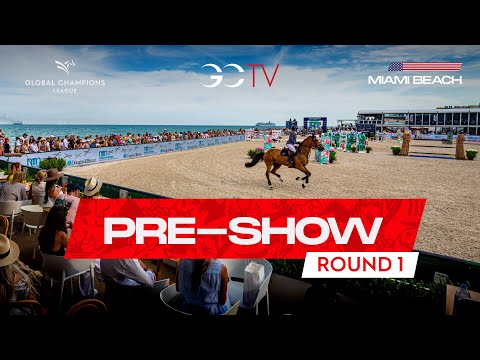
Global Champions League - Miami Beach - Round 1Tune in now: ➡ https://gctv.gcglobalchampions.com.0 Kommentare 0 Anteile 152 Ansichten -
WWW.NOELLEFLOYD.COMGoodbye, For Now, to Equestrian VoicesIf you haven't yet heard, our latest episode of Equestrian Voices was also, at least for now, our last. This podcast has been a driving source of meaningful, and sometimes difficult, conversations in the equestrian community, since its launch in January of 2021, and host Caroline Culbertson certainly achieved her original goal of bringing together diverse, expert points of view to discuss a wide range of topics, from the student/trainer relationship to flying lead changes to saddle fit to horse welfare.Since the announcement, many of you have reached out to let us know how much it's meant to you over the years, and we want to take a moment to share some of the stories and testimonials from its listeners as we wish Caroline all the best while she steps away for a bit to focus on her young children. Kendra Crossman - "I started riding in 2021 and listening to EV every other Tuesday became a huge part of my journey into the horse world. Caroline is such a gifted host, every episode is truly a case study in how to be an engaged and empathetic listener. I have revisited most episodes, especially the two on processing grief which I listen to whenever I need them. I love how each topic is approached with curiosity without judgement and each guest treated with kindness and dignity, no matter their background or discipline. It has truly opened my eyes to so many aspects of the equestrian space. I am very grateful to Caroline and the many guests she has befriended over the years and wish her the very best."Rys Richardson - "I loved the Podcast and listened to it all the time. It was so well done. I loved the interviews and all of the ideas."Allison Bannister - "This is me and my heart horse - Spike. He passed away last spring, at the age of 22. The Equestrian voices episode on grief, really helped me cope with his sudden and unexpected loss, after 19 years together."Alissa Porter - "I was so sad to hear this news. I love Equestrian Voices and this last episode is so good. As an R+ dog trainer who incorporates play into all my dog training, I’ve been struggling as I re-enter the horse world and how to incorporate those skills into my horsemanship. So impressed that Tik Maynard went to Chicken Clicker Camp! Thank you for all the wonderful podcasts and best of wishes to Caroline!" Heather Ann James - "On training days for my young hunter I love to sit on the porch and listen to Caroline’s latest podcast. There have been many times where I’ve had to pause, write down what has been discussed and then re-wind and gather whatever other amazing nuggets to discuss with my trainer after her ride. This podcast will be sorely missed and I hope all the past episodes will remain so I can go back and re-listen again 😊"Sophie Coffey - "I listened to the Equestrian Voices podcast as soon as it came out in 2021, and I instantly knew there was nothing else like it. Finally, an honest equestrian podcast that wasn't afraid to get into the weeds on real issues facing the industry. I became an instant fan, and it changed my whole outlook on horses after listening to Tik Maynard's first episode. You could even say it changed my life, since after serving as Podcast assistant for 1 year, I joined the NOËLLE FLOYD team full time in 2023. I will deeply miss this podcast, but am so thankful for the conversations it produced and the seeds of change it planted for so many equestrians."Heather Donovan (not pictured) - "I’m so sad to hear that equestrian voices is coming to an end. I listened to many of them. It was through the podcast that I found Natalie Hummel. I took her course and it completely changed my riding as i no longer let fear and doubt rule me. It was a complete game changer! I am doing things now, I only dreamed about for years. I never would have found Natalie if it had not been for the Equestrian Voices episodes! Please send best wishes to Caroline. She did such a great job getting to the heart of what us ammies really want and need to hear. I’m going to really miss it!"If you want to leave your own testimonial, please feel free to leave it in the comments below!0 Kommentare 0 Anteile 192 Ansichten
-
WWW.NOELLEFLOYD.COMWhat’s the Point of Riding Bridleless? A Q&A with Brendan WiseThis blog post is written by Brendan Wise's student, Laurie Berglie, and photos are provided by Brendan Wise. Brendan Wise began his bridleless work years ago while training with his mentors, John and Josh Lyons. Josh especially was an expert bridleless rider, and Brendan became fascinated by these principles. At that time, Brendan primarily focused on western horsemanship and reining, but as he moved into English disciplines, such as dressage and show jumping, he brought those same bridleless principles with him. Currently, Brendan is competing mostly bridleless on the winter circuit in Ocala, Florida with his jumper, Lyric. Laurie Berglie: What is the point of riding a horse bridleless? Brendan Wise: There can be many purposes for riding bridleless, but I’ll break them down into two categories. The first is that it benefits the horse. Most of the time riders get in the way of their horses. That’s just the fact of it, and we as riders, for the most part, readily acknowledge that fact. We hope that over time we learn to be better riders, and, consequently, get in our horse’s way less! However, in the meantime, bridleless can be a way to free up our horses and allow them to move and learn to balance themselves more independently. It’s amazing how many anxious and stressed-out horses I run across that become relaxed and happy within a short time of my removing the bridle. I am not anti-bit. Never have been, never will be. But through time, I’ve seen firsthand the benefits of cross training bridleless.The second category is that riding bridleless benefits the rider. In my bridleless work, I have the same expectation for bending, balancing, collection, roundness, flexibility, movement...all of it! So when riders start to learn how to accomplish these things without a direct connection to the horse’s face, it opens up a whole new world of understanding and riding. Purely for their education, I believe all riders should at least learn to guide, bend, balance, and create round posture in a horse bridleless. We would all be a lot better for it! LB: Why do you choose to ride some horses, over others, bridleless? Do you know of any who are bridleless full-time?BW: There can be a variety of reasons to take away the bridle, either permanently or temporarily. I wholeheartedly believe that every horse should be able to walk, trot, and canter on the buckle, loose rein, and maintain its paces by itself in a relaxed manner. For some horses, taking the bridle away forces us to focus on that primary and elementary goal, and it’s an important one. Also, yes! There have been circumstances where I have trained or coached students with horses that just went all around better bridleless, and they are full-time that way. So this is not out of the question! These horses are fully functioning members of society, training, trail riding, competing, all the things bridled horses do! For these horses, we have found that they are happier without anything on their face. If they can do the job well, then why not let them go the way they are happiest? Full-time bridleless is certainly not for all, but it is definitely an option for some.LB: Why have you chosen to ride your horse, Lyric, bridleless?BW: For Lyric, bridleless was not something he necessarily “needed,” but it is something that he enjoys, and has become quite proficient at. It takes a special horse to do the things that Lyric and I do, and he certainly is a special horse. For me, working to bring Lyric into the competition ring bridleless is personal. It’s never been done in history to the level that we have done it, nor to the level that I want to push to. Lyric is a sensitive animal who struggles with confidence and can be quite peaky on course. For him, being in the bridle in many ways is easier at times, because I can hold his hand a bit more. But the bridleless causes him to have to stretch himself and improve himself mentally, to become more independent, and to grow in critical thinking.LB: Why are you competing bridleless? Is it more for the "wow" factor? Or are you using this as a teaching moment?BW: Maybe a little bit of both? It’s a teaching moment and challenge for myself, and for Lyric. But it’s also a challenge to show the world it is possible, and that there are better ways to do things. Certainly, if I can go out bridleless and be competitive against horses that have all sorts of barbaric things on their face, maybe the world can start to ask questions about the way we ride. If I can at all spark a flame that makes some people think a little deeper about their riding, I think it’s worth it. So perhaps this is an opportunity to show the world something different. It also comes down a bit to Lyric. He’s such an incredible animal and is so brilliant in his abilities. I want the world to see what I see and to experience what I experience. I want him to be remembered for something spectacular because he certainly is. LB: When the horse community sees you ride/train/compete bridleless, what are you hoping will be their ultimate take-away?BW: I hope they take away the idea that we can do better. That there is always a better way, a kinder way. I want the horse to be relaxed, happy, and confident in their job, and that needs to be at the forefront of everyone’s mind: the integrity of the horse’s mind and body. So if I can make people sit back and think for a few moments, then maybe they will start asking questions. When we start evaluating and critically questioning ourselves, there’s an opportunity for growth. Sometimes that growth affirms that we are on the right path. Other times, it may challenge us to dig deeper and search for a better way. So ultimately, I want to challenge myself, and I want to inspire others to perhaps dig deeper.0 Kommentare 0 Anteile 256 Ansichten
-
WWW.NOELLEFLOYD.COMYou Can't Skip Your Flatwork - Why It's Non-Negotiable**Please note - this blog is written by Equestrian Masterclass instructor Peter Wylde** I believe you can really learn a lot about a rider based on how they approach flatwork. Most people will know me as a rider who found career success in the jumping arena, and certainly the technicality and adrenaline of mastering a big course is an unparalleled experience. However, what I think sets successful riders apart is not only their competitive results, but the time they put in at home, when the jumps are put away. This month on NÖELLE FLOYD Equestrian Masterclass, I’m releasing my 5 ride Training Program all about flatwork “non-negotiables” that I feel every rider should be comfortable with. Am I turning the notion of flatwork on its head and introducing a radical new concept? Of course not. The reality is that flatwork is simple. Some may confuse simple with “boring”, but I firmly believe that not to be the case. The best riders in the world look as if they are doing nothing in the saddle. That fine-tuning and refinement comes from practice on the flat, which does the double duty of strengthening the horse’s body while also reinforcing the relationship between horse and rider. Establishing quiet, seamless communication on the flat translates into smoother jump rounds. So, in my new Training Program, I’ll show you my go-to flatwork warm-up and some foundational exercises that will benefit any horse and rider. We’ll cover things like transitions, lengthening/shortening the canter stride, incorporating poles, and using flatwork to troubleshoot. This program is simple and effective, and it should become a part of your riding routine. I encourage you to return to it time and time again, and watch your horse become more rideable as you go. Success starts with the simplest work. See you out there! To learn more about Peter's new training program, Flatwork Non-Negotiables, click here.0 Kommentare 0 Anteile 202 Ansichten